
What Is Cardiac Rehab for Heart Failure and How Does It Work?
#
Cardiac rehab for heart failure is a medically supervised program that helps you build strength and stamina, manage symptoms, and lower the chance of another hospital stay. It combines a personalized exercise plan with education, nutrition support, medication guidance, and help for stress or depression.
For many people with heart failure, fatigue and shortness of breath can make everyday tasks feel hard. Rehab starts at your current ability level, often with simple walking or cycling, then progresses safely while the care team watches for changes in heart rhythm, blood pressure, symptoms, and recovery.
Cardiac rehabilitation is not a replacement for heart failure medicines or regular medical care. It is an added layer of support that can improve exercise capacity, quality of life, and confidence in being active. It may be offered in a clinic, through a hybrid program, or at home when appropriate.
At Halifax Heart Center, we provide personalized cardiovascular care for patients across South Boston, Halifax County, and surrounding Southside Virginia communities. Our experience with cardiac rehab for heart failure centers on helping patients understand their symptoms, access the right testing and treatment, and take practical steps toward safer daily activity.
Cardiac rehab for heart failure word roundup:
- congestive heart failure coronary artery bypass surgery
- coronary artery disease treatment
- exercise prevents heart disease
Decades ago, medical advice for heart failure was simple: stay in bed and rest. Today, cardiology has flipped that script entirely. Bed rest actually causes physical deconditioning, weakens skeletal muscles, and makes shortness of breath worse.
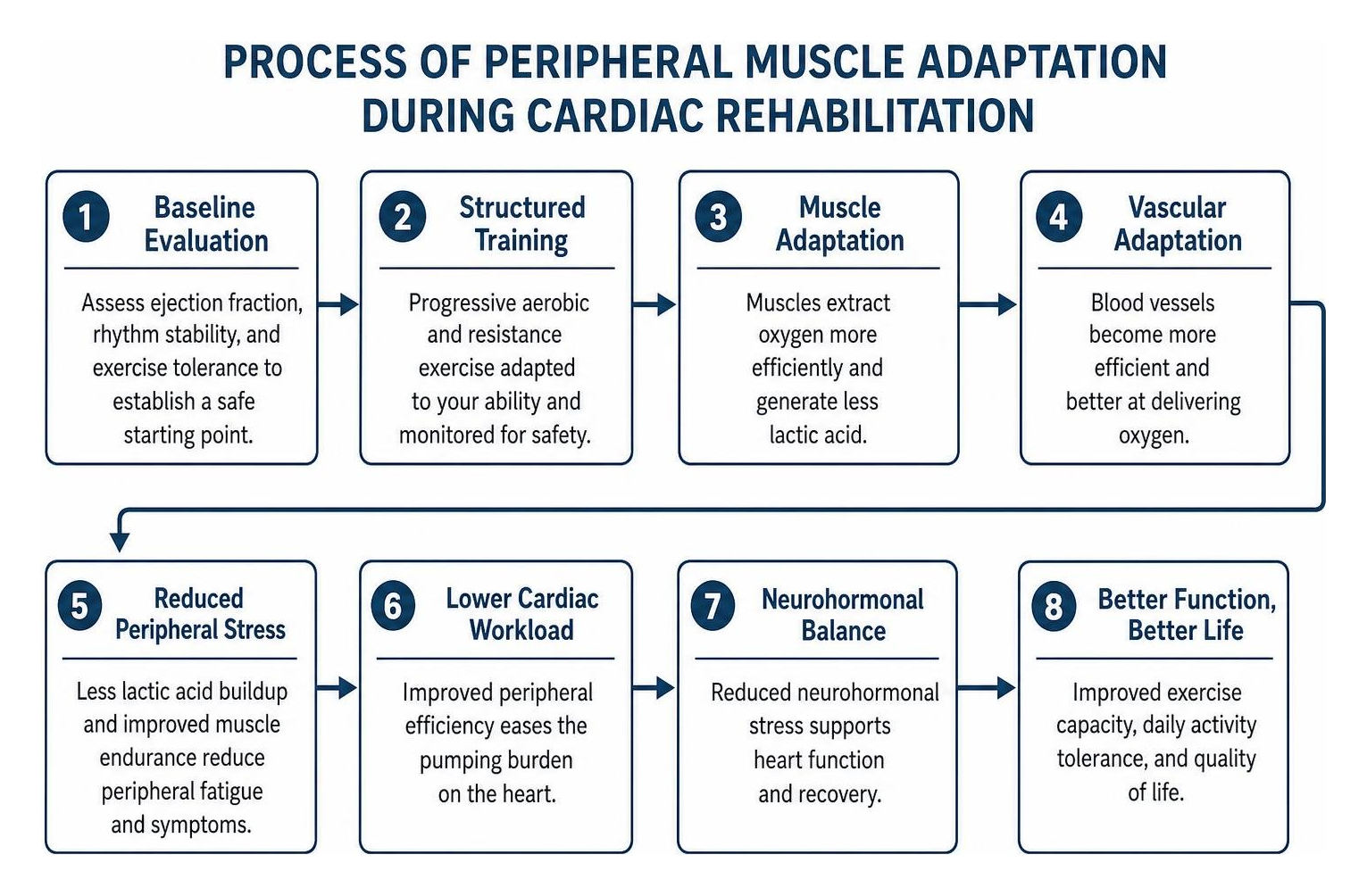
When you live with heart failure, your symptoms are not caused solely by a sluggish heart pump. The limitation involves both central hemodynamics (how much blood your heart pumps per beat) and peripheral adaptations in your body’s muscles and blood vessels. In chronic heart failure, skeletal myopathy occurs—muscles lose mass, blood vessels become less elastic, and mitochondria struggle to extract oxygen efficiently from circulating blood. This causes rapid lactic acid buildup, making a simple trip up the stairs feel like scaling a mountain.
Cardiac rehab works by retraining these peripheral muscles and blood vessels. As you undergo structured training, your muscles learn to extract oxygen far more efficiently. This eases the pumping burden on your heart, lowers neurohormonal stress, and improves your functional capacity.
Before starting, a baseline evaluation is vital. At our clinic in South Boston, VA, we perform diagnostic heart testing to evaluate your baseline ejection fraction, rhythm stability, and exercise tolerance. As detailed in the JACC Expert Panel consensus on heart failure rehabilitation, structured physical training reverses vascular dysfunction and helps patients safely advance across New York Heart Association (NYHA) functional classes.
Core Components of a Comprehensive Program
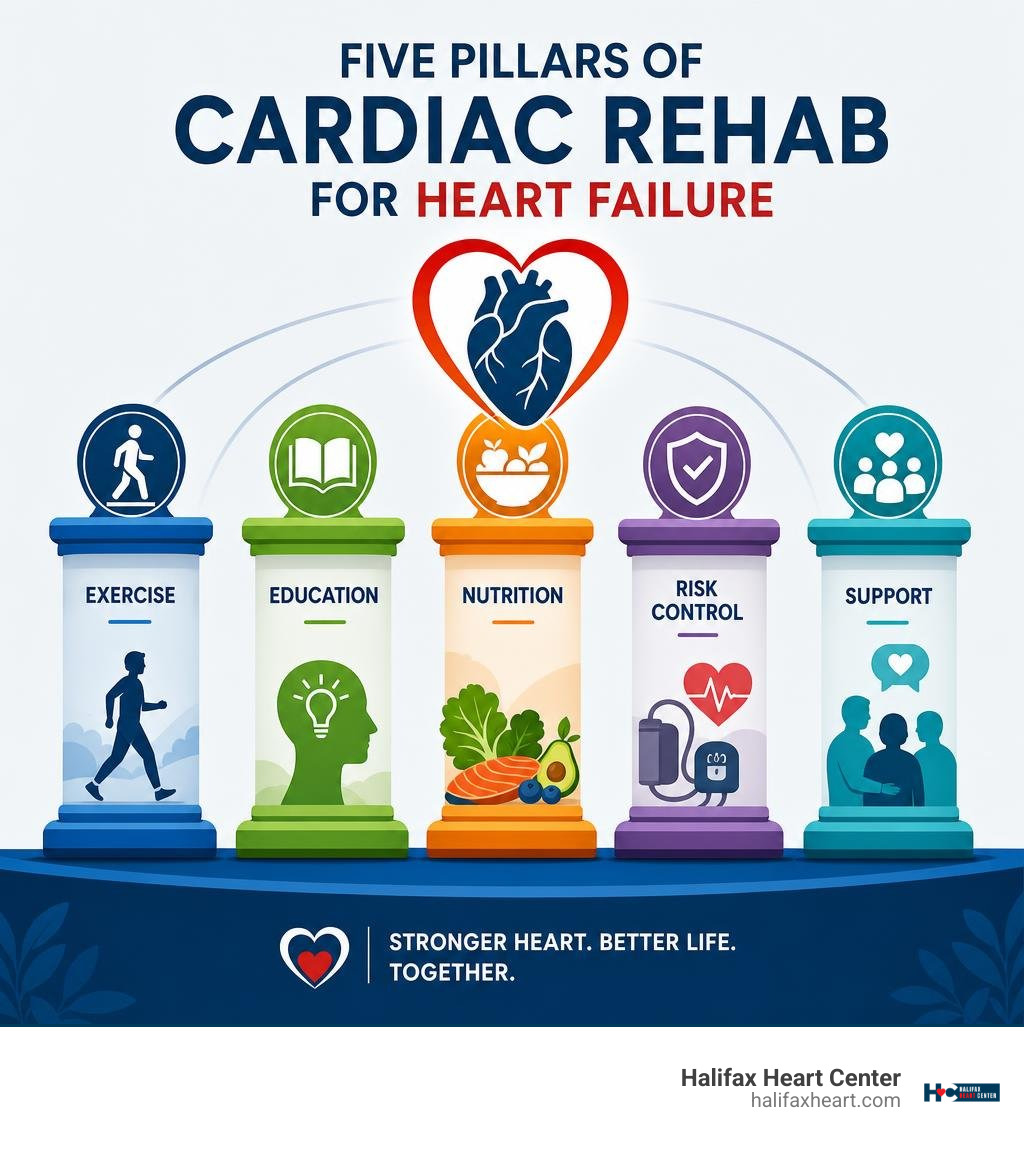
A genuine cardiac rehab program is much more than a gym membership with heart monitors. It is a structured, five-component medical intervention:
- Tailored Exercise Training: Progressive aerobic, resistance, and flexibility workouts designed specifically for your cardiovascular limits.
- Nutritional Counseling and Fluid Management: Learning practical strategies to manage dietary sodium (typically under 2,000 mg daily) and monitor fluid intake to avoid dangerous fluid overload.
- Medication Adherence & Education: Understanding how guideline-directed medical therapies (like beta-blockers, ARNIs, and SGLT2 inhibitors) protect your heart.
- Symptom Monitoring & Daily Weights: Recognizing early signs of fluid retention—such as gaining 2 to 3 pounds overnight or swelling in the ankles—before it turns into an emergency.
- Smoking Cessation & Lifestyle Risk Control: Eliminating tobacco use and addressing underlying metabolic conditions like diabetes.
- Psychosocial Counseling: Dedicated emotional support to tackle the anxiety, fear of exertion, and depression that frequently accompany heart conditions.
The Multidisciplinary Cardiac Care Team
Cardiac rehabilitation takes a village of specialized medical professionals working in unison:
- Cardiologists & Medical Directors: Oversee your clinical stability, review pre-rehab stress testing, and supervise overall safety.
- Exercise Physiologists: Design your daily workout parameters, monitor telemetry strips, and adjust exercise intensity based on real-time physiological response.
- Cardiac Nurses: Track vital signs, coordinate symptom changes with physicians, and reinforce medication schedules.
- Registered Dietitians: Help you craft delicious, low-sodium meals that fit your budget and cultural preferences.
- Physical & Occupational Therapists: Assist patients with severe deconditioning or orthopedic limitations in rebuilding mobility for daily tasks.
- Behavioral Health Specialists & Social Workers: Provide coping strategies for emotional distress and assist with community resources or transportation logistics.
Clinical Benefits and Evidence for Heart Failure Recovery
Clinical guidelines consistently classify cardiac rehabilitation as a Class IA recommendation. In fact, leading cardiologists view it as an essential non-pharmacological pillar of care alongside standard heart failure medications, as highlighted in clinical evidence on cardiac rehabilitation as a pillar of care.
Participating in structured rehab lowers sympathetic nervous system overdrive, dampens systemic inflammation, improves endothelial function, and supports long-term recovery, especially along established congestive heart failure recovery pathways.
Mortality Reduction and Hospitalization Rates
The clinical numbers behind cardiac rehab are striking:
- 58% Reduction in Cardiovascular Death Risk: Completing a full rehab course dramatically lowers cardiac mortality.
- 25% to 30% Fewer Hospital Readmissions: Structured conditioning prevents the fluid accumulation and decompensation cycles that lead to emergency room visits.
- 30% Lower Risk of Heart Attack & 60% Lower Risk of Stroke: Secondary prevention stabilizes atherosclerotic plaques and improves vascular tone.
- Adds Up to Five Years to Life Expectancy: Long-term clinical registries confirm that graduating from a formal program extends both lifespan and healthspan.
Landmark research, such as the multi-center HF-ACTION clinical trial, demonstrated that exercise training is safe and significantly reduces cardiovascular hospitalizations and mortality in adherent patients.
Evidence in HFrEF vs HFpEF Phenotypes
Heart failure is broadly categorized into two primary types: Heart Failure with Reduced Ejection Fraction (HFrEF) and Heart Failure with Preserved Ejection Fraction (HFpEF). Cardiac rehab provides distinct, powerful benefits for both:
| Metric / Clinical Outcome | Heart Failure with Reduced Ejection Fraction (HFrEF) | Heart Failure with Preserved Ejection Fraction (HFpEF) |
|---|---|---|
| Primary Underlying Deficit | Impaired systolic contraction (LVEF 40% or lower) | Impaired diastolic relaxation and stiff ventricles (LVEF 50% or higher) |
| Ejection Fraction Impact | Clinically meaningful gains in LVEF (especially with supervised interval protocols) | Improves ventricular filling dynamics and compliance without altering baseline LVEF |
| Cardiorespiratory Fitness | Increases peak oxygen uptake by improving peripheral oxygen extraction and stroke volume | Enhances peak oxygen uptake by improving vascular stiffness and peripheral perfusion |
| Hospitalization Reduction | Proven 25%–30% drop in recurrent heart failure admissions | Reduces all-cause hospital readmission rates and exertional dyspnea |
| Functional Mobility | Increases 6-minute walk test distance by 40 to 50+ meters | Alleviates chronotropic incompetence and improves daily walking endurance |
Mental Health and Quality of Life Improvements
Living with chronic heart disease can take a heavy psychological toll. Up to 40% of heart failure patients struggle with clinically significant anxiety or depression. When you feel short of breath, it is completely normal to develop a fear of moving, which isolates you at home and worsens low moods.
Cardiac rehab breaks that cycle:
- Reduces Depression Symptoms by 63%: Regular physical activity stimulates neurochemical endorphins and builds confidence.
- Meaningful Gains on Quality of Life Scales: Rehab delivers an average 7.4-point improvement on the Minnesota Living with Heart Failure Questionnaire (MLHFQ)—a shift that exceeds the quality-of-life gains seen in many pharmaceutical trials.
- Restores Self-Efficacy: Exercising under the watchful eye of a cardiac nurse reassures you that your heart is strong enough to handle exertion, restoring peace of mind for daily activities like gardening or playing with grandchildren.
Exercise Protocols and Prescription in Cardiac Rehabilitation
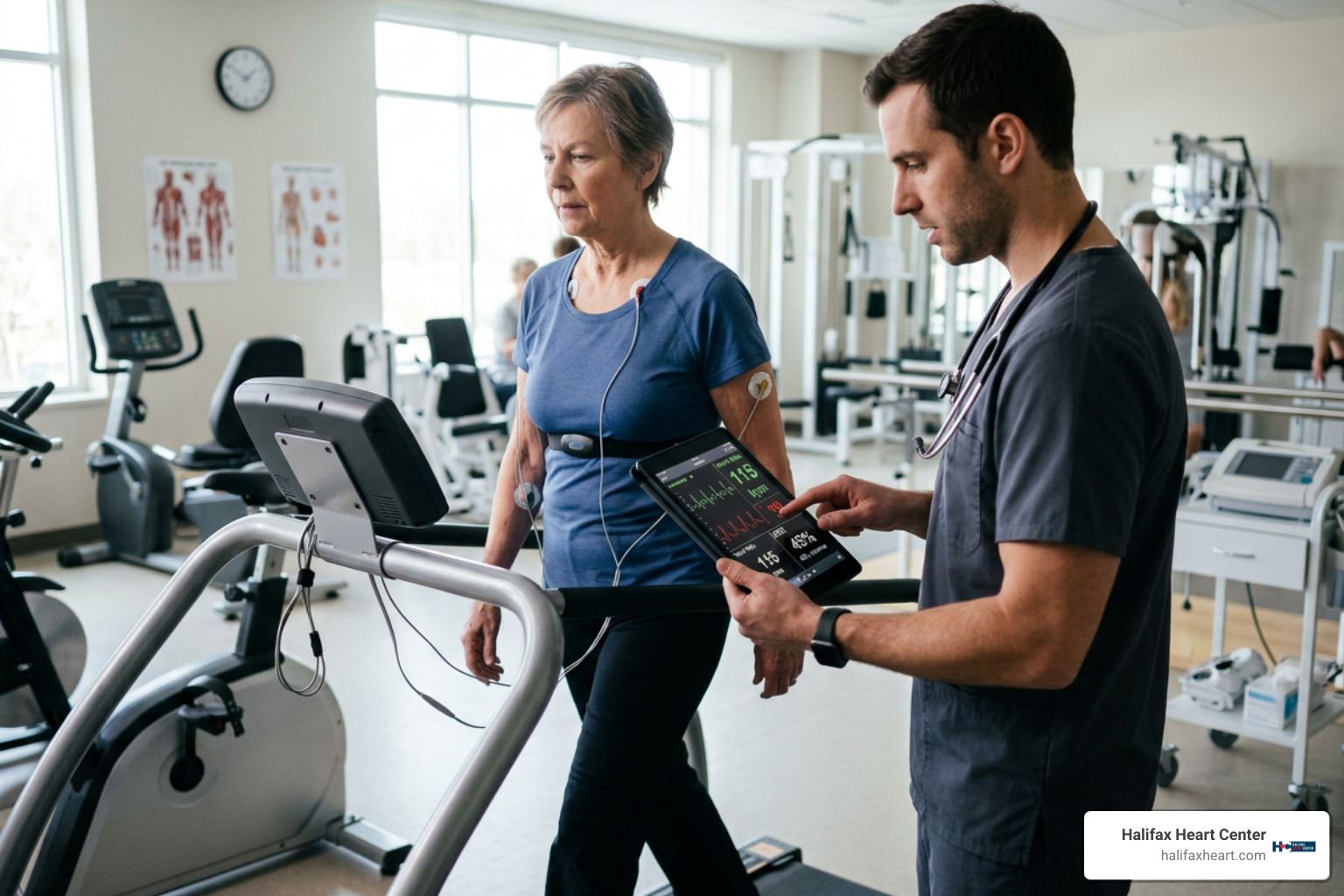
Starting an exercise program when you have heart failure might sound intimidating, but every movement is carefully calculated. Safe progression is built upon comprehensive coronary artery disease treatment protocols and tailored specifically to your physical baseline.
Tailoring the FITT Exercise Prescription in Cardiac Rehab for Heart Failure
Exercise prescriptions follow the time-tested FITT framework (Frequency, Intensity, Time, Type), tailored to your clinical status:
- Frequency: Typically 3 days per week in a supervised clinical setting, gradually building toward 5 days of moderate physical activity weekly.
- Intensity (Borg RPE & HRR): We often target 60% of Heart Rate Reserve (HRR) in initial sessions, moving to 60%–70% as conditioning improves. However, because most heart failure patients take beta-blockers (which naturally blunt heart rate response) or experience atrial fibrillation, standard pulse formulas can be misleading. Instead, we use the Borg Rating of Perceived Exertion (RPE) on a 6–20 scale, aiming for a rating of 12 to 14 (“somewhat hard”). You should always be able to pass the “talk test” without gasping.
- Time: Sessions start at 15 to 20 minutes of aerobic activity and gradually advance to 30 to 45 minutes over 6 to 12 weeks.
- Type: A balanced mix of continuous aerobic conditioning, light dynamic resistance, and specialized breathing exercises.
Aerobic, Resistance, and Respiratory Training Modalities
A comprehensive session integrates multiple exercise formats to deliver total-body conditioning:
- Moderate Continuous Training (MCT): Low-impact walking on a treadmill or pedaling a recumbent stationary cycle at a steady, manageable pace.
- Dynamic Resistance Training: Utilizing elastic bands, light hand weights (2 to 5 lbs), or bodyweight movements 2 to 3 days per week. This combats sarcopenia (muscle wasting), stabilizes joints, and makes lifting groceries or climbing stairs much easier. To learn more about optimal cardiovascular routines, read our guide on how exercise prevents heart disease.
- Inspiratory Muscle Training (IMT): Breathing through a handheld resistance device strengthens the diaphragm and respiratory muscles, reducing that feeling of breathlessness when sitting or walking.
- Localized Muscle Conditioning: Ultrashort intervals (10 to 20 seconds of movement followed by rest) designed for frailer individuals to safely condition arms and legs without straining cardiac output.
Safety Monitoring, Risk Stratification, and Precautions
Patient safety is the absolute cornerstone of cardiac rehab. Every session begins with a mandatory 10-minute warm-up to allow coronary blood vessels to dilate smoothly, and concludes with a 10-minute cool-down to prevent blood pooling and dizziness.
Workouts are conducted under continuous or intermittent ECG telemetry monitoring. Exercise target heart rates are deliberately set at least 10 beats per minute below any documented threshold of exercise-induced angina, ischemia, or significant ventricular ectopy.
Sessions are temporarily paused or modified if a patient presents with warning flags such as acute decompensation, sudden unexplained weight gain, resting systolic blood pressure over 180 mmHg (or under 90 mmHg with dizziness), or uncontrolled arrhythmias.
Delivery Models: Center-Based, Hybrid, and Home Programs
Traditionally, cardiac rehab required attending an outpatient hospital facility three mornings a week. While center-based rehab remains the gold standard for high-risk patients needing close telemetry, modern cardiology has evolved to offer flexible delivery models.
As published in a recent network meta-analysis on cardiac rehabilitation delivery modes, hybrid and home-based models achieve clinical and quality-of-life gains comparable to hospital-only programs:
- Center-Based Cardiac Rehab (CBCR): In-person, fully monitored clinical sessions. Best for initial risk stratification, complex arrhythmias, or patients needing hands-on supervision.
- Home-Based Cardiac Rehab (HBCR): Structured home routines guided by heart-rate tracking watches, exercise logs, and weekly phone check-ins.
- Combined / Hybrid Programs: Patients attend the clinic once a week for supervised progression and complete 2 to 3 structured sessions at home. Hybrid models overcome scheduling constraints while keeping costs at roughly 38% of traditional center-based care.
- Tele-Rehabilitation: Virtual check-ins and remote physiological monitoring enable rural patients to consult exercise physiologists directly from their living rooms.
Authoritative guidelines, such as the NICE guidelines on home-based versus centre-based rehabilitation, emphasize that the setting should match patient preference and mobility needs to encourage long-term completion.
Overcoming Accessibility Barriers in Cardiac Rehab for Heart Failure
Despite proven, life-saving benefits, only 20% to 30% of eligible patients enroll in cardiac rehab nationwide. In rural and community settings across Southside Virginia, logistical hurdles often get in the way:
- Transportation Challenges: Long drives to regional medical centers can make attending 36 in-person appointments difficult. Hybrid tele-rehab and coordinating family carpools provide practical solutions.
- Referral Deficits: Many patients are discharged from hospitals without a formal referral. If your doctor has not brought up rehab, do not hesitate to ask if you qualify.
- Gender & Age Disparities: Women and older adults are historically referred less often. Modified chair exercises and community walking groups help make training approachable for every age and fitness level.
- Fear of Movement: Many people worry that exercising with a weak heart is dangerous. Exercising under medical supervision provides a safe space to regain confidence.
Program Duration, Insurance Coverage, and Phase 3 Maintenance
A standard Phase 2 outpatient cardiac rehabilitation program consists of 36 one-hour sessions, typically completed three times per week over 12 weeks (with flexibility up to 36 weeks).
- Insurance & Medicare Coverage: Medicare, Virginia Medicaid, and most private insurance plans cover Phase 2 cardiac rehab for patients with stable chronic heart failure (specifically HFrEF with an ejection fraction $le 35%$ and NYHA Class II–IV symptoms on stable medical therapy for at least 6 weeks), as well as those recovering from heart attacks, bypass surgery, or valve replacements.
- Transitioning to Phase 3: Graduating from Phase 2 is an incredible achievement, but maintaining lifelong heart health is a permanent journey. Phase 3 consists of independent, unmonitored home or community gym exercise. Because clinical trials show that long-term exercise adherence drops below 30% without structure, keeping up with regular home walking routines and periodic cardiology follow-ups is vital for protecting your progress.
Frequently Asked Questions About Heart Failure Rehabilitation
How soon after a heart failure hospitalization should cardiac rehab begin?
Phase 1 mobilization begins gently while you are still in the hospital, focusing on light room walking and breathing exercises. Outpatient Phase 2 rehab typically starts within 2 to 6 weeks after discharge, once your diuretic and cardiac medications are stable and your cardiologist confirms you are clinically compensated.
Is exercise training safe if I have a low ejection fraction?
Yes. Extensive clinical trials demonstrate that supervised exercise is remarkably safe for patients with low ejection fractions, including those with severe systolic dysfunction (EF under 30%). By carefully tracking telemetry and keeping exertion within an RPE range of 12 to 14, exercise strengthens peripheral muscles and eases the strain on your left ventricle without triggering adverse events.
What happens if I cannot attend all 36 outpatient sessions in person?
Every single session you attend provides real cardiovascular benefits. If transportation, caregiving duties, or work schedules prevent you from making three in-person visits per week, speak with your care team about a hybrid model. Many centers allow you to combine weekly clinic sessions with structured, monitored home workouts.
Conclusion
Living with heart failure requires continuous attention, but you do not have to navigate recovery on your own. Cardiac rehabilitation provides the structured physical training, nutritional education, and emotional reassurance you need to regain your stamina, reduce hospital stays, and get back to enjoying life.
At Halifax Heart Center, our dedicated cardiology team provides compassionate, personalized cardiovascular care right here in Southside Virginia. Whether you need baseline diagnostic evaluations, medical optimization, or guidance on safe physical activity, we are here to support your journey every step of the way.
Take charge of your cardiovascular health today by consulting a South Boston heart specialist or contacting us to learn more about comprehensive heart disease diagnosis and treatment in South Boston, VA.