
Heart Palpitations: What They Mean and When to Get Help
Heart palpitations are the feeling that your heart is racing, pounding, fluttering, or skipping beats. They are often harmless and may happen after stress, poor sleep, caffeine, exercise, alcohol, or hormone changes. But seek emergency care right away if they occur with chest pain or pressure, fainting, severe shortness of breath, severe dizziness, or sweating and nausea.
If episodes keep coming back, last more than a few minutes, worsen, or happen with a history of heart disease, high blood pressure, diabetes, or a family history of heart problems, schedule a medical evaluation. An ECG and heart monitor can help tell the difference between a harmless extra beat and an abnormal heart rhythm.
At Halifax Heart Center, we provide local, patient-centered cardiovascular care for people throughout South Boston, Halifax County, and Southside Virginia. We help patients with heart palpitations find answers through prevention, early detection, accurate testing, and personalized treatment.
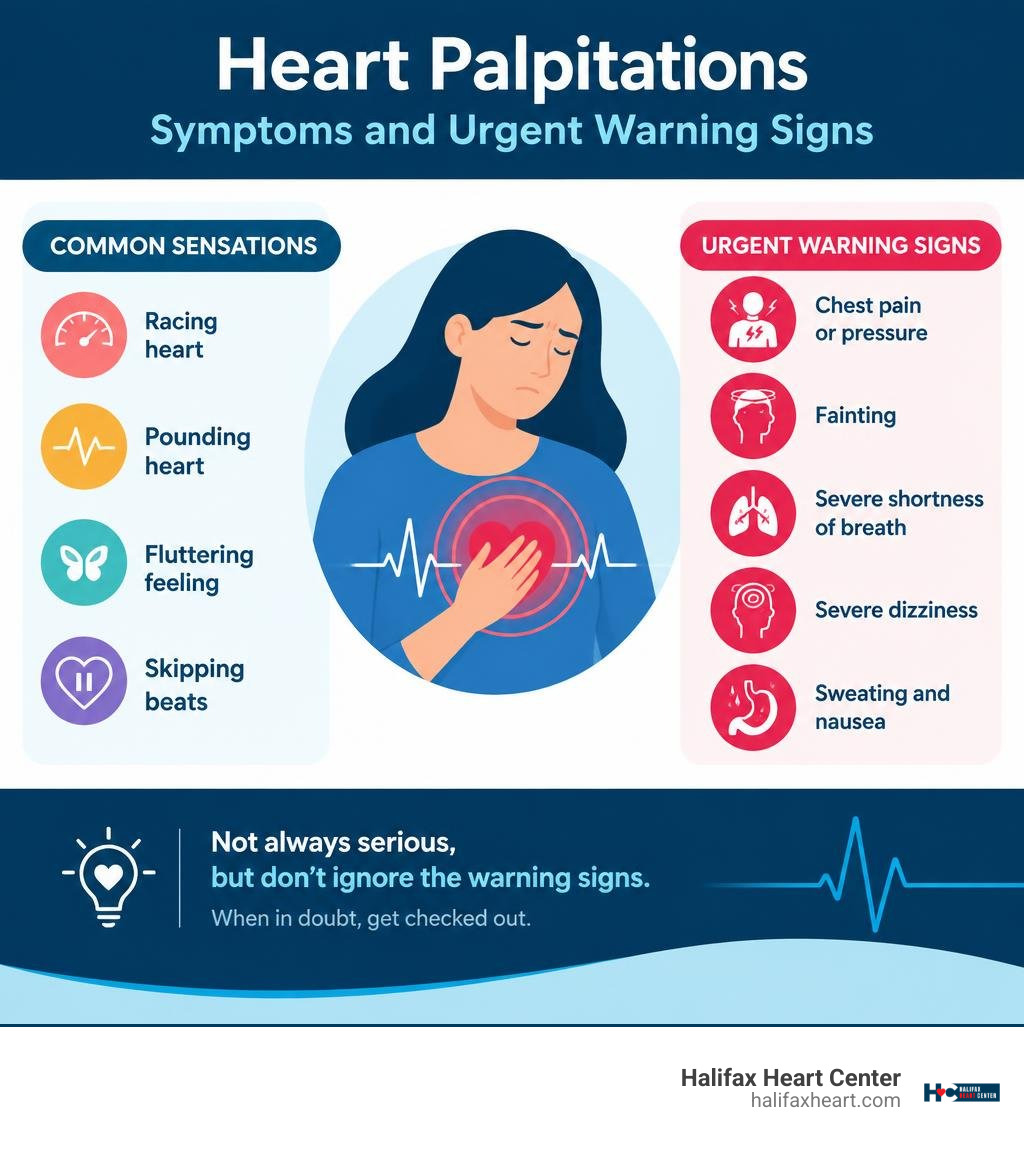
Understanding Heart Palpitations: Sensations and Clinical Overview
Palpitations represent a heightened perception of your cardiac activity. Under baseline conditions, the autonomic nervous system quietly regulates the sinus node—the natural pacemaker located in the right atrium—pumping blood without conscious awareness. When that rhythm shifts, beats harder, or fires early, you notice it instantly.
Patients describe this feeling in various ways:
- A momentary “flip-flop” or hard thump in the mid-chest
- A sensation of skipped or missing heartbeats
- Rapid racing, pounding, or vibrating in the chest, throat, or neck
- A sensation akin to a fluttering bird trapped inside the rib cage
These sensations are exceptionally common. Medical research indicates that approximately 16% of people visit their primary care provider specifically because they experience palpitations, making it one of the top reasons patients consult a general practitioner or cardiologist. The Merck Manual Professional Edition notes that a patient’s awareness of cardiac motion varies significantly depending on stress levels, posture, and environmental quietness; lying on one’s left side at night often amplifies normal cardiac contractions.
Benign Ectopy vs. True Arrhythmias
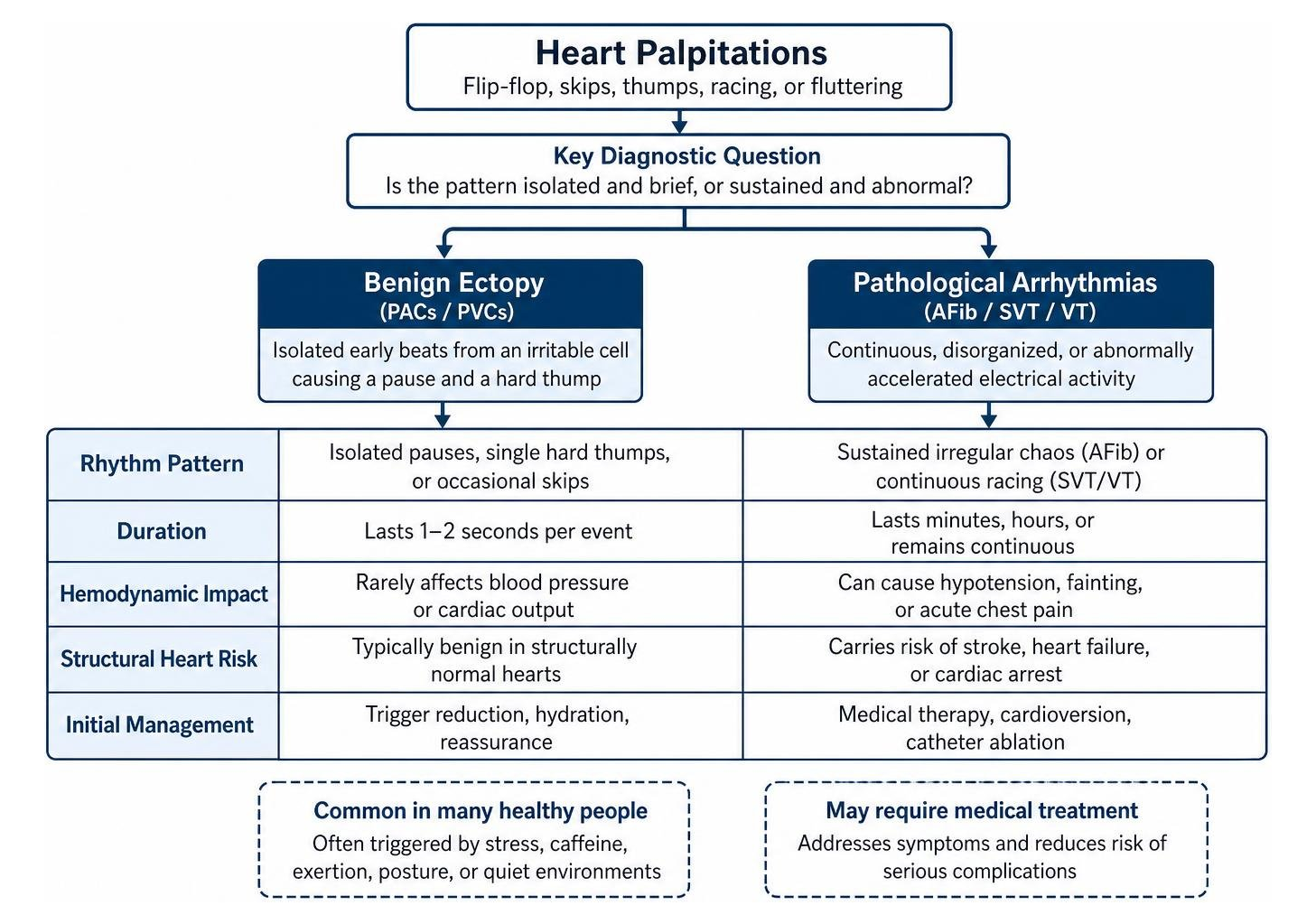
The essential distinction during any cardiovascular assessment is separating benign ectopy from sustained pathological arrhythmias.
Benign ectopy includes Premature Atrial Contractions (PACs) and Premature Ventricular Contractions (PVCs). These occur when an isolated irritable cardiac cell fires slightly before the sinus node discharges its scheduled electrical pulse. The heart takes a brief pause before resuming its regular rhythm, causing the ventricles to fill with extra blood. The subsequent beat contracts more forcefully, creating the hallmark “skipped beat followed by a hard thump” sensation. Most individuals have occasional PACs or PVCs without any underlying heart disease.
In contrast, clinical arrhythmias represent continuous, disorganized, or pathologically accelerated electrical pathways:
- Sinus Tachycardia: A normal rhythm that accelerates beyond 100 beats per minute (bpm) due to fever, exertion, stress, or caffeine.
- Supraventricular Tachycardia (SVT): An abnormal rapid rhythm originating above the ventricles, causing sudden episodes of racing (often 150 to 220 bpm).
- Atrial Fibrillation (AFib): Disorganized, chaotic electrical signals in the upper chambers causing an irregular, often rapid heartbeat that significantly increases the long-term risk of stroke and heart failure if left untreated.
- Ventricular Tachycardia (VT): A rapid, potentially life-threatening rhythm originating in the lower ventricles, requiring immediate intervention.
| Feature | Benign Ectopy (PACs / PVCs) | Pathological Arrhythmias (AFib / SVT / VT) |
|---|---|---|
| Rhythm Pattern | Isolated pauses, single hard thumps, or occasional skips | Sustained irregular chaos (AFib) or continuous racing (SVT/VT) |
| Duration | Lasts 1–2 seconds per event | Lasts minutes, hours, or remains continuous |
| Hemodynamic Impact | Rarely affects blood pressure or cardiac output | Can cause hypotension, fainting, or acute chest pain |
| Structural Heart Risk | Typically benign in structurally normal hearts | Carries risk of stroke, heart failure, or cardiac arrest |
| Initial Management | Trigger reduction, hydration, reassurance | Medical therapy, cardioversion, catheter ablation |
Common Underlying Causes and Daily Triggers
Palpitations frequently arise from non-cardiac physiological triggers. In many cases, everyday environmental exposures and metabolic changes overstimulate the nervous system, prompting extra beats.
Common triggers include:
- Adrenaline and Stress: Emotional stress, panic attacks, and anxiety surges flood circulation with catecholamines, increasing cardiac excitability.
- Dehydration and Electrolyte Imbalances: Low potassium (hypokalemia) and low magnesium (hypomagnesemia) impair myocardial cell membrane stability, provoking ectopy.
- Dietary Stimulants: Excessive caffeine intake from coffee, energy drinks, and pre-workout supplements, as well as high-dose chocolate consumption.
- Alcohol and Nicotine: Nicotine directly stimulates adrenergic receptors. Heavy alcohol use can irritate atrial tissue—a phenomenon often called “holiday heart syndrome.”
- Over-the-Counter Medications: Oral decongestants containing pseudoephedrine or phenylephrine, certain asthma rescue inhalers (beta-agonists), and certain diet pills.
- Systemic Illness: High fevers, hyperthyroidism (overactive thyroid), severe iron-deficiency anemia, and hypoglycemia.
For more information on general triggers, see the clinical overview from Harvard Health and guidance provided by the NHS.
Hormonal Shifts and Heart Palpitations in Women
Hormonal variations significantly influence cardiac electrophysiology. Estrogen and progesterone receptors exist within vascular and cardiac tissues, meaning shifts in these hormone levels can alter autonomic tone.
Clinical studies demonstrate that up to 42% of perimenopausal women and 54% of postmenopausal women report frequent palpitations, often occurring alongside nocturnal hot flashes. During pregnancy, systemic blood volume increases by 40% to 50%, elevating baseline resting heart rates and increasing the likelihood of benign PACs and PVCs. Understanding how heart disease symptoms differ in women ensures subtle cardiovascular warning signs are not mistakenly dismissed as simple hormonal stress.
Pediatric and Adolescent Considerations
Children and adolescents can also experience fluttering sensations. While benign sinus tachycardia from vigorous play or mild dehydration is most common, pediatric evaluations must rule out congenital accessory electrical pathways, such as Wolff-Parkinson-White (WPW) syndrome. Young patients describing their chest as “beeping fast” or feeling lightheaded during physical sports require prompt pediatric or cardiology evaluation, alongside careful review of stimulant medications used for conditions like ADHD.
Recognizing When to Seek Medical Attention
While the vast majority of fluttering episodes are harmless, establishing clear safety parameters is vital for heart health.
According to guidelines from the American Heart Association, individual episodes lasting more than 30 sustained seconds, or clusters of palpitations that increase in frequency and intensity, warrant thorough medical investigation.
When Are Heart Palpitations an Emergency?
Call 911 or visit the nearest emergency department immediately if heart fluttering occurs alongside any of the following red-flag symptoms:
- Sudden chest pain, pressure, heaviness, or tightness
- Pain radiating to the left arm, shoulder, back, neck, or jaw
- Syncope (unexplained fainting or brief loss of consciousness)
- Severe, sudden shortness of breath at rest
- Profound dizziness, confusion, lightheadedness, or sudden diaphoresis (cold sweats)
- A sustained resting heart rate exceeding 120 bpm or dropping below 45 bpm
These presentations can indicate acute coronary ischemia, unstable atrial fibrillation, or sustained ventricular tachycardia. You can read our educational review on the essential guide to emergency treatment for cardiac arrest to learn how acute cardiac rhythm emergencies are stabilized.
Scheduling a Non-Urgent Cardiac Evaluation
If your fluttering beats are brief, resolve spontaneously, and occur without chest pain or dizziness, you should still schedule a non-emergency appointment with a cardiovascular specialist. Tracking your triggers in a symptom log helps your physician identify patterns. Learning what to expect during your South Boston cardiac consult can help you prepare questions and medical records prior to your visit.
Diagnostic Testing and Cardiology Evaluation
Identifying the precise origin of irregular rhythms requires systematic diagnostic testing. Because palpitations are often intermittent, capturing the heart’s electrical rhythm during an episode is the gold standard of clinical assessment.
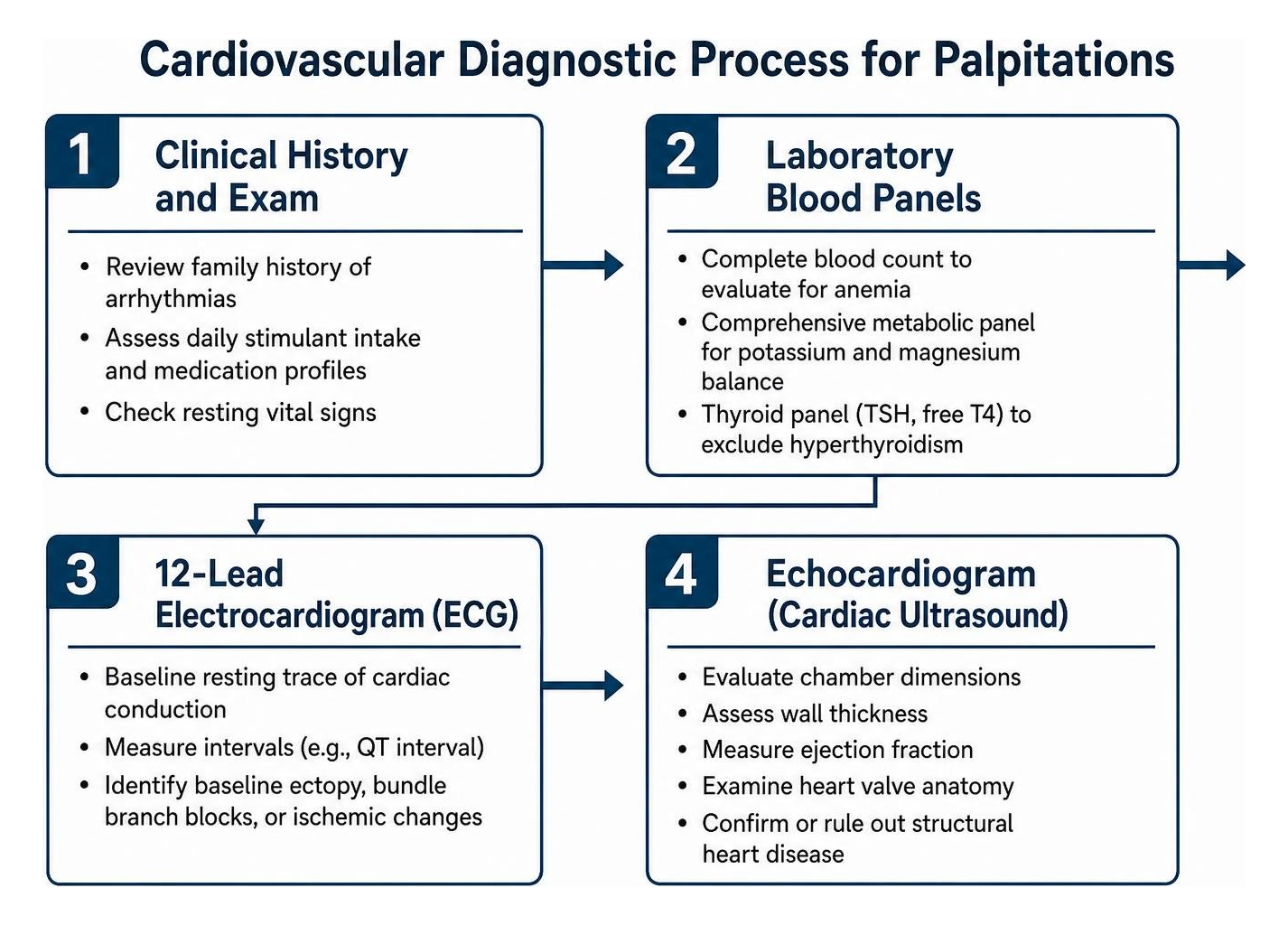
A comprehensive evaluation includes:
- Clinical History and Exam: Reviewing family history of arrhythmias, daily stimulant intake, medication profiles, and resting vital signs.
- Laboratory Blood Panels: Complete blood counts to evaluate for anemia, comprehensive metabolic panels for potassium and magnesium balance, and thyroid panels (TSH, free T4) to exclude hyperthyroidism.
- 12-Lead Electrocardiogram (ECG): A baseline resting trace recording cardiac conduction, measuring intervals (such as the QT interval), and identifying baseline ectopy, bundle branch blocks, or ischemic changes.
- Echocardiogram (Cardiac Ultrasound): Evaluates chamber dimensions, wall thickness, ejection fraction, and heart valve anatomy to confirm or rule out structural heart disease.
For an overview of testing technologies, read about how patients get ahead of heart disease with the right diagnostic tools and see the diagnostic resources summarized by the Mayo Clinic.
Ambulatory Monitoring and Cardiac Imaging
When a resting 12-lead ECG is normal but symptoms continue, extended rhythm monitoring is necessary:
- Holter Monitor: A wearable, continuous ECG device worn across 24 to 72 hours, capturing daily PVC/PAC burdens and correlating symptoms with actual rhythms.
- Event Recorder / Patch Monitor: Adhesive sensors worn for 7 to 30 days that record intermittently when activated by the patient or triggered automatically by abnormal rates.
- Exercise Stress Testing: Treadmill testing to determine if physical exertion provokes arrhythmias or indicates exercise-induced coronary ischemia.
- Consumer Wearables: Modern smartwatches equipped with single-lead ECG capabilities can record rhythms during episodes to share with your cardiologist.
Our local practice provides a comprehensive diagnostic pathway; explore your complete guide to South Boston cardiovascular testing and consults and see our South Boston cardiac testing locations and what to expect during your workup.
Evidence-Based Management and Prevention Strategies
Treatment for palpitations depends on the underlying mechanism identified during clinical monitoring. If no structural disease or serious rhythm disorder is present, reassurance alongside structured lifestyle modifications is often sufficient.
Key preventive habits include:
- Restricting Dietary Triggers: Moderating or eliminating caffeine, energy drinks, and alcohol, while avoiding all nicotine and vaping products.
- Hydration and Mineral Balance: Drinking adequate water throughout the day to support vascular volume, paired with a balanced intake of mineral-rich foods (such as leafy greens, bananas, and seeds) to sustain potassium and magnesium levels.
- Sleep Hygiene: Targeting 7 to 9 hours of restorative sleep to prevent autonomic dysregulation.
- Stress Reduction: Practicing mindfulness meditation, yoga, or biofeedback to lower sympathetic nervous system tone.
Immediate at-Home Relief and Vagal Techniques
For sudden episodes of benign racing or extra beats, stimulating the vagus nerve can help restore regular sinus control by activating the parasympathetic nervous system and slowing conduction through the atrioventricular (AV) node.
Techniques to try under clinical guidance:
- Valsalva Maneuver: Bearing down gently, as if having a bowel movement, for 10 to 15 seconds while holding your breath.
- Cold Stimulus: Applying an ice pack or a cold, wet washcloth to the face for 10 seconds, which triggers the mammalian dive reflex.
- Controlled Deep Breathing: Inhaling slowly through your nose for a count of 4, holding for 2, and exhaling smoothly through pursed lips for a count of 6.
- Coughing: A series of firm, controlled coughs to transiently increase intrathoracic pressure.
Medical Therapies and Advanced Interventions
When palpitations stem from proven arrhythmias (such as symptomatic AFib, frequent PVC burdens exceeding 10–15%, or SVT), medical interventions are available:
- Prescription Medications: Low-dose beta-blockers (e.g., metoprolol, carvedilol) or calcium channel blockers (e.g., diltiazem) slow conduction and suppress ectopic foci. Antiarrhythmic drugs may be used for complex rhythm control.
- Catheter Ablation: A minimally invasive procedure where an electrophysiologist maps and delivers radiofrequency energy or cryotherapy to neutralize the tiny area of heart tissue generating abnormal electrical impulses.
- Cardioversion: A synchronized electrical shock or medication used to reset chaotic rhythms like atrial fibrillation back into normal sinus rhythm.
- Implantable Devices: Pacemakers or implantable cardioverter-defibrillators (ICDs) used for high-risk ventricular arrhythmias or severe bradycardia.
For individuals experiencing chest tightness alongside arrhythmias, review the South Boston guide to angina treatment and heart risk screening for integrated management pathways.
Frequently Asked Questions About Fluttering Heartbeats
Can anxiety alone trigger sudden rapid pounding in the chest?
Yes. During anxiety or panic attacks, the brain triggers a surge of adrenaline and noradrenaline. This triggers the body’s fight-or-flight response, accelerating sinus node firing, elevating blood pressure, and increasing myocardial excitability. Hyperventilation during panic episodes can also lower carbon dioxide levels in the blood, causing electrolyte shifts that contribute to extra beats.
How do vagal maneuvers help stop rapid fluttering?
The vagus nerve is the main component of the parasympathetic nervous system. Physical maneuvers—such as bearing down or applying cold water to the face—increase vagal nerve tone. This releases acetylcholine, a neurotransmitter that directly slows the electrical conduction speed across the atrioventricular (AV) node, helping terminate re-entrant electrical circuits in conditions like SVT.
Why do fluttering sensations happen frequently after meals?
Postprandial palpitations are common and generally benign. Eating large meals, especially those high in simple carbohydrates or sodium, causes blood to pool in the digestive tract (splanchnic circulation). To compensate and maintain systemic blood pressure, the heart increases its stroke volume and rate. Additionally, gastric distension can put mechanical pressure on the diaphragm near the lower border of the heart, stimulating transient ectopic beats.
Conclusion
A racing, fluttering, or skipping heartbeat can feel alarming, but most episodes are benign and manageable with simple lifestyle adjustments. However, persistent symptoms, prolonged episodes, or palpitations paired with shortness of breath or dizziness should never be ignored. Accurate diagnosis using non-invasive monitoring helps protect long-term cardiovascular health.
At Halifax Heart Center, we offer complete cardiovascular evaluations, diagnostic testing, and personalized treatment plans right here in South Boston, VA. You can follow your step-by-step guide to booking a heart screening appointment in South Boston, meet our top cardiology specialists and preventive care in South Boston team, or use your guide to finding a top-rated South Boston cardiac specialist to find the right care for your needs.
If you or a family member are experiencing unusual heart flutters or skipped beats, contact Halifax Heart Center today to schedule an evaluation at our South Boston clinic.