
Book a Heart Appointment in South Boston Without Delay
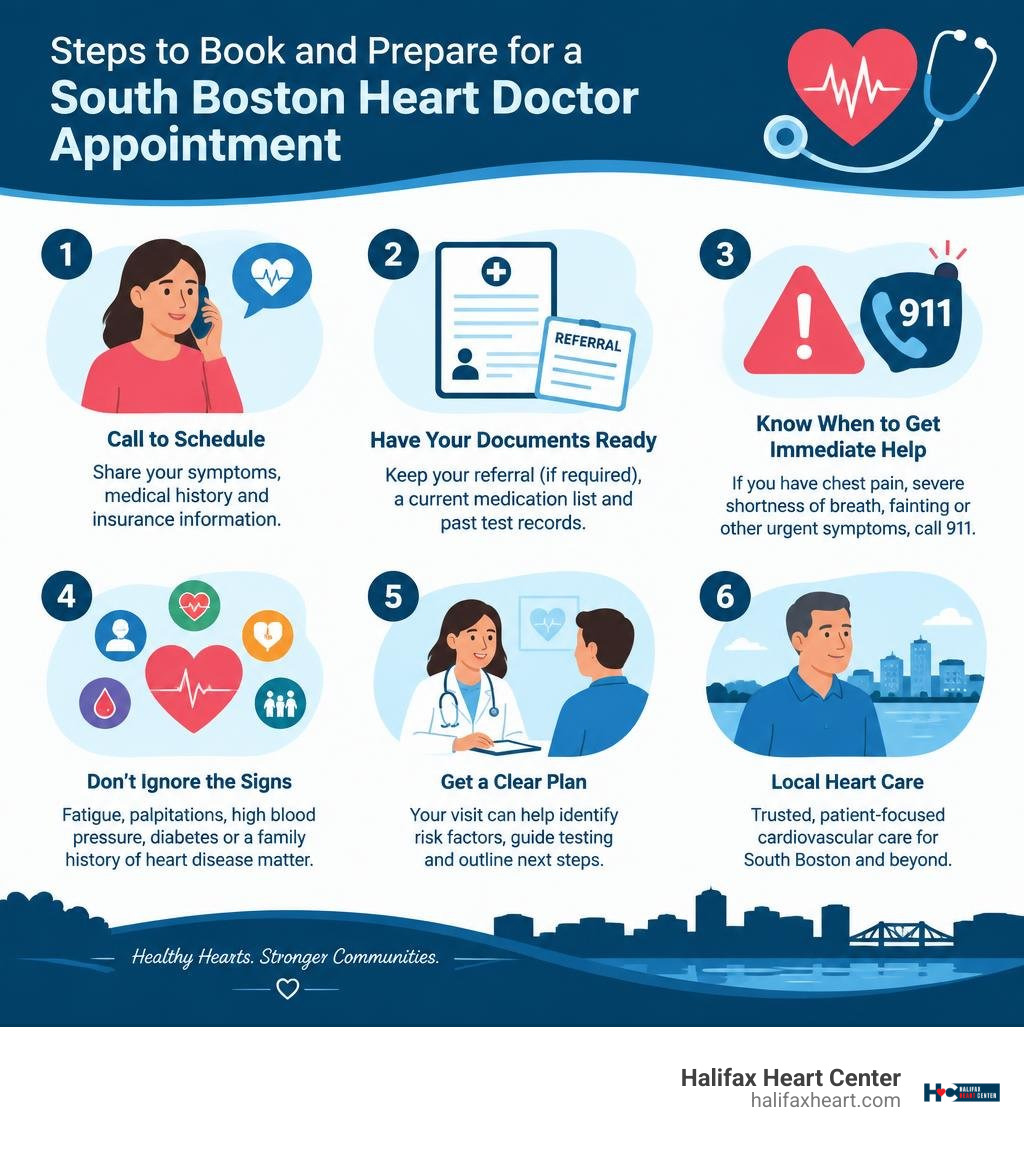
To book a South Boston heart doctor appointment, call a local cardiology practice and explain your symptoms, medical history, and insurance information. Have your primary care provider’s referral ready if your insurance plan requires one, and bring a current medication list and records from past heart tests to your visit.
If you have chest pressure or pain, severe shortness of breath, fainting, or symptoms that may signal a heart attack, call 911 right away. Do not wait for a routine appointment.
Heart concerns such as fatigue, palpitations, high blood pressure, diabetes, or a family history of heart disease deserve timely attention. A cardiology visit can help identify risk factors, plan appropriate testing, and give you clear next steps.
At Halifax Heart Center, we provide local, patient-focused cardiovascular care for people across South Boston, Halifax County, and Southside Virginia. Our experience helping patients arrange a South Boston heart doctor appointment starts with prevention, early evaluation, and a care plan built around each patient’s needs.
South Boston heart doctor appointment terms to know:
- South Boston cardiology appointment
- South Boston cardiac specialist
- South Boston cardiovascular testing
Why You Should Schedule a South Boston Heart Doctor Appointment
Your heart beats roughly 100,000 times a day without taking a single coffee break. When something feels off, paying attention to those subtle cues can protect your long-term vitality. Booking a specialist evaluation allows our clinical team to perform a detailed symptom review and run non-invasive diagnostics before small cardiovascular concerns develop into major complications.
Many cardiovascular conditions develop gradually. Chronic high blood pressure (hypertension), early-stage coronary artery disease, and mild arrhythmias often operate quietly behind the scenes. Scheduling an appointment ensures that you receive tailored preventive cardiovascular care designed to protect your vascular system, stabilize blood pressure, and keep your heart pumping efficiently for decades to come.
Key Warning Signs and Risk Factors
Knowing when to consult a cardiologist makes all the difference. While severe emergency symptoms warrant an immediate call to 911, several persistent or recurring warning signs indicate that you should book a clinical consultation:
- Unexplained Shortness of Breath: Getting winded during everyday activities like walking up the driveway or carrying groceries can signal heart failure or valve dysfunction.
- Heart Palpitations: Sensations of fluttering, racing, skipping, or pounding beats in your chest or neck.
- Unusual Chronic Fatigue: Waking up exhausted or feeling drained despite adequate sleep can point to poor cardiac output.
- Lightheadedness or Dizziness: Feeling unsteady upon standing or experiencing near-fainting episodes.
- Discomfort in the Chest, Neck, or Jaw: Dull aches, tightness, or pressure brought on by exertion that eases with rest.
- Swelling in the Lower Extremities: Fluid buildup (edema) in your feet, ankles, or legs.
Beyond symptoms, your personal health history plays an essential role. If you manage chronic conditions like type 2 diabetes, elevated cholesterol levels, kidney disease, or persistent hypertension, routine specialist oversight is vital. Additionally, if you have a first-degree relative (parent or sibling) diagnosed with early cardiovascular disease, proactive monitoring helps catch hereditary risks long before symptoms surface.
Preventive Benefits of Early Cardiac Consultation
Proactive cardiology is about preserving your active lifestyle, not just treating advanced illness. During a baseline cardiovascular screening, we evaluate vascular elasticity, check arterial health, assess lipid balance, and identify subtle electrical irregularities.
Partnering with a top-rated cardiac specialist in South Boston gives you direct access to evidence-based medical therapies, nutrition guidance, and targeted lifestyle modifications. Catching high arterial plaque scores or early valvular stiffness early gives you the best chance to reverse or halt disease progression through non-invasive interventions.
How to Book and Prepare for Your Cardiology Visit

Arranging a specialist consultation is straightforward when you know the steps. Because navigating healthcare networks can feel daunting, taking a structured approach ensures your visit is smooth, productive, and focused entirely on your health goals.
Step-by-Step Process for a South Boston Heart Doctor Appointment
Securing your consultation involves just a few key stages:
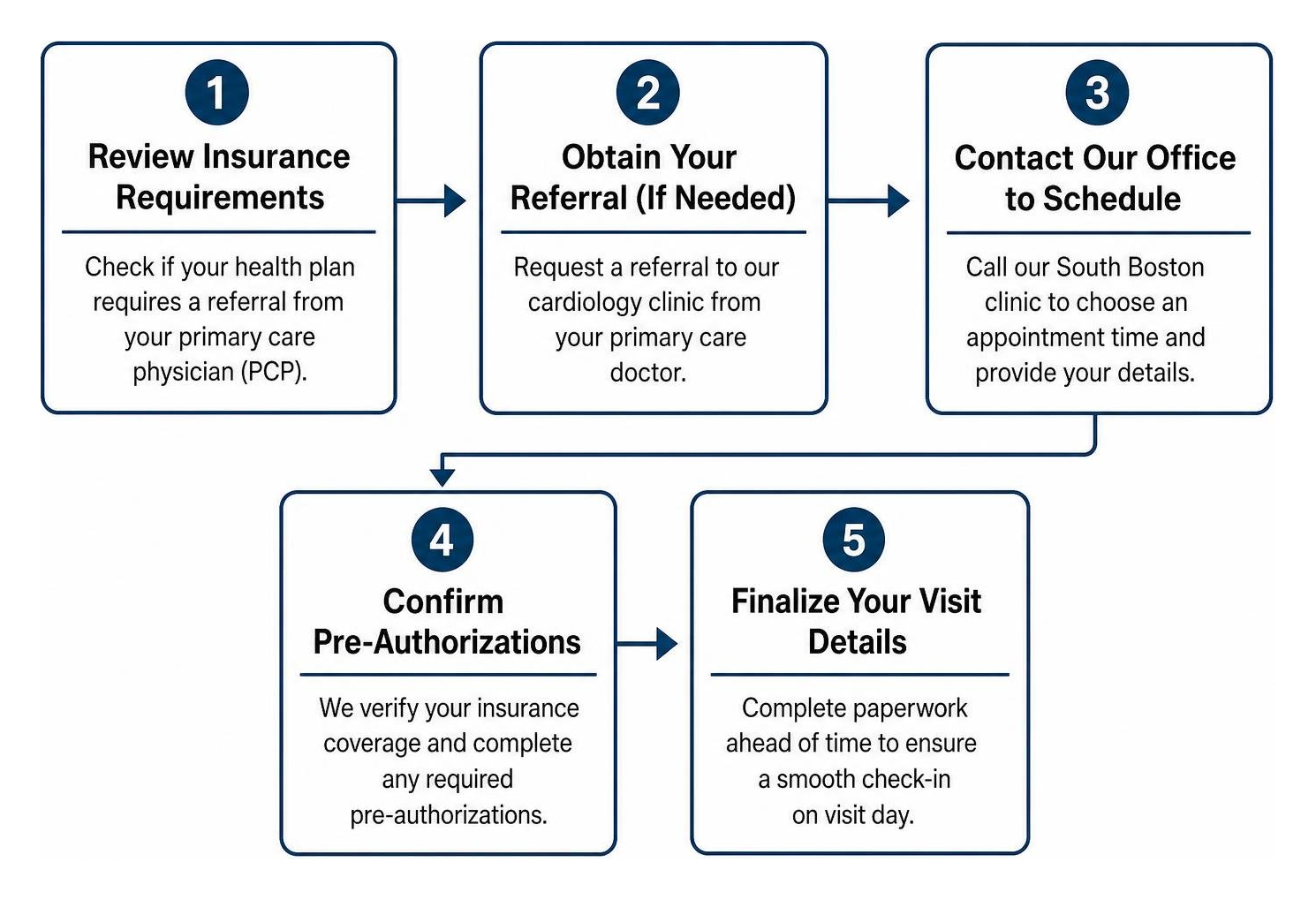
- Review Your Insurance Requirements: Check whether your current health plan requires an official referral from a primary care physician (PCP) to see a specialist. Many HMO and managed-care networks require this step to guarantee specialist coverage.
- Obtain Your Referral (If Needed): If required, contact your primary care doctor’s office or send a secure patient portal message requesting a referral to our cardiology clinic.
- Contact Our Office to Schedule: Call our South Boston clinic at 2232 Wilborn Ave Suite A to select an available appointment time. Our intake coordinators will collect basic health details, your referral documents, and insurance specifics.
- Confirm Pre-Authorizations: Our administrative team coordinates with your insurance provider to verify benefit coverage and complete any necessary pre-authorizations for diagnostic imaging or consultations.
- Finalize Your Visit Details: Following our practical guide on booking a heart screening appointment ensures your paperwork is completed ahead of time, minimizing your waiting room check-in process.
What to Bring to Your First Visit
Being prepared for your consultation allows us to spend more time discussing your symptoms and less time chasing missing records. Use this preparation checklist when packing your documents for your appointment:
| Category | Items to Prepare | Why It Matters |
|---|---|---|
| Identification & Insurance | Photo ID, current health insurance cards, referral forms | Verifies coverage, processes billing, and prevents unexpected out-of-pocket costs. |
| Medication Inventory | Complete list of prescription drugs, dosages, over-the-counter supplements | Prevents dangerous drug interactions and guides blood pressure management. |
| Prior Diagnostic Records | Recent lab panels, past EKGs, echocardiogram reports, hospital summaries | Provides baseline data and avoids unnecessary duplicate testing. |
| Symptom Log | Dates, times, triggers, and duration of chest discomfort, fatigue, or palpitations | Helps our clinicians identify clinical patterns and activity triggers. |
| Personal Questions | Written list of your top 3 to 5 heart-health questions | Ensures all of your specific concerns are addressed during the visit. |
What Diagnostic Tests and Specialist Care to Expect

Walking into a specialty medical clinic should never feel intimidating. When you arrive for your initial consultation, we begin with a comprehensive clinical evaluation. We review your vital signs, listen to your heart and lung sounds, check peripheral pulses in your arms and legs, and discuss your lifestyle, stress levels, and family medical background in a comfortable, relaxed setting. When evaluating your health, you can also consult regional resources like Heart Doctors and Cardiologists near me in South Boston, VA to understand clinical benchmarks across our region.
Common Cardiac Screenings and Evaluations
Depending on your symptoms and clinical history, we may recommend one or more non-invasive diagnostic tests to gather objective data about your heart’s electrical system, blood flow, and structural function:
- Electrocardiogram (ECG/EKG): A quick, painless test using small surface electrodes placed on your chest, arms, and legs to record electrical activity and detect rhythm disturbances or past silent heart damage.
- Echocardiogram: An ultrasound examination of the heart that produces real-time, moving images of your cardiac chambers, muscle thickness, and valve movements.
- Cardiac Stress Testing: Evaluates how your heart responds under physical exertion (typically on a treadmill) to identify restricted blood flow through coronary arteries.
- Holter and Event Monitoring: Lightweight, wearable monitors worn for 24 hours to several weeks to track intermittent palpitations or irregular rhythms during your everyday activities.
- Comprehensive Lipid & Biomarker Panels: Blood tests measuring total cholesterol, LDL, HDL, triglycerides, high-sensitivity C-reactive protein (hs-CRP), and blood glucose markers.
Maximizing Your South Boston Heart Doctor Appointment
To get the most value out of your clinical consultation, communication is key. We encourage open dialogue and invite our patients to ask direct questions about their diagnoses and treatment pathways.
Consider bringing these questions to your visit:
- What is the most likely cause of my current symptoms?
- Which specific diagnostic tests do I need, and what will they tell us?
- Are there lifestyle or dietary modifications that can improve my condition?
- What are the potential side effects of any prescribed medications?
- How often will I need follow-up appointments or monitoring?
At the conclusion of your visit, we provide a personalized care plan outlining clear diagnostic steps, lifestyle goals, prescription instructions, and a defined timeline for your next follow-up.
Frequently Asked Questions About Cardiac Appointments in South Boston
Do I need a primary care referral to see a cardiologist?
Whether you require a referral depends primarily on your health insurance structure. Preferred Provider Organization (PPO) plans and traditional Medicare Part B often allow patients to self-refer directly to a specialist. Conversely, Health Maintenance Organization (HMO) plans, certain Medicare Advantage networks, and Medicaid typically require an official referral from your designated primary care physician before covering specialist visits. Calling our office or checking the customer service number on the back of your insurance card will clarify your specific plan rules.
What insurance plans cover local cardiovascular evaluations?
Most major insurance carriers provide robust coverage for medically necessary cardiology consultations and non-invasive diagnostic testing. We work with a wide range of plans across Southside Virginia, including traditional Medicare, Medicare Advantage plans, Virginia Medicaid, and major commercial insurers such as Blue Cross Blue Shield, Aetna, Cigna, and Humana. Because specific co-pays, deductibles, and pre-authorization rules vary, our billing specialists assist you in verifying your benefits before testing begins.
How quickly can a new patient get scheduled for heart symptoms?
Appointment timing depends on the nature and urgency of your symptoms. For routine preventive screenings or long-term management of stable conditions, appointments are typically scheduled within a few weeks. However, if you are experiencing new, worsening, or concerning symptoms—such as unexplained shortness of breath, new-onset palpitations, or frequent dizzy spells—our clinical team utilizes an intake triage protocol to prioritize your visit and fit you in promptly for a clinical evaluation.
Conclusion
Taking control of your cardiovascular health is one of the most important decisions you can make for your future. Whether you are addressing new symptoms, managing an existing condition, or seeking proactive screenings due to family history, you do not have to navigate your journey alone.
At Halifax Heart Center, we are dedicated to providing accessible, high-quality cardiovascular medicine right here in our community. If you are ready to prioritize your heart health, contact our South Boston clinic today to discuss comprehensive heart disease diagnosis and treatment tailored to you. Let us help you keep your heart strong, healthy, and beating reliably for all the years ahead.