
Find a South Boston Cardiology Clinic Before Symptoms Get Worse
If you have chest pain, shortness of breath, unusual fatigue, dizziness, or an irregular heartbeat, contact a South Boston cardiology clinic promptly. A local heart specialist can review your symptoms and risk factors, perform or arrange tests such as an EKG, echocardiogram, stress test, or rhythm monitor, and create a treatment plan close to home.
Heart disease is linked to nearly one in three deaths in the U.S. each year, according to the Centers for Disease Control and Prevention. That is why it is smart to seek care early, especially if you have high blood pressure, high cholesterol, diabetes, smoke, or have a family history of heart disease. Chest pain is not always heart-related, but it should never be ignored or self-diagnosed.
At Halifax Heart Center, we provide patient-centered cardiovascular care for people in South Boston, Halifax County, and surrounding Southside Virginia communities. As a South Boston cardiology clinic, our experience centers on prevention, early detection, accurate testing, and personalized heart care that helps patients take the next right step.
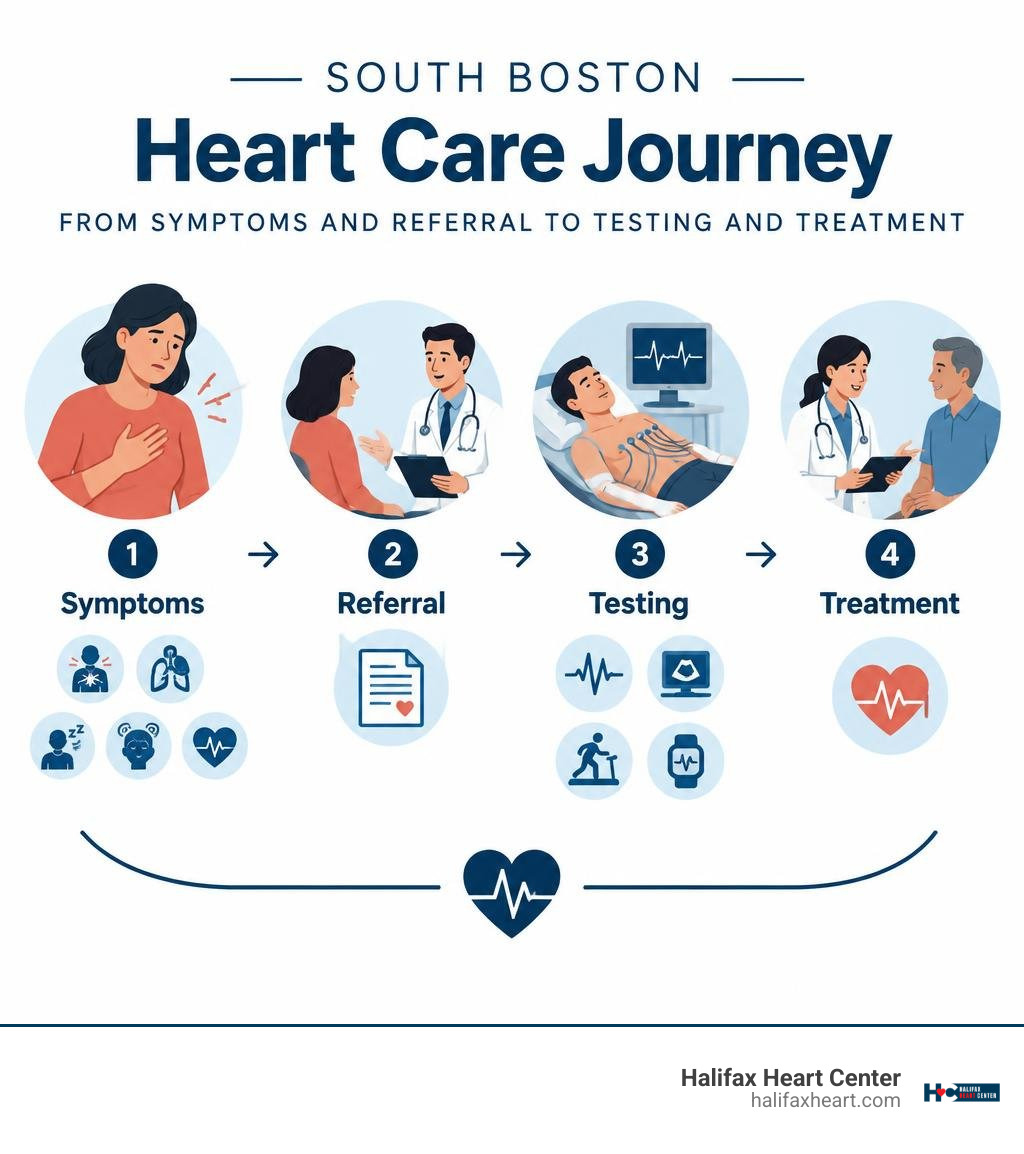
Simple South Boston cardiology clinic glossary:
Comprehensive Services Offered at a South Boston Cardiology Clinic
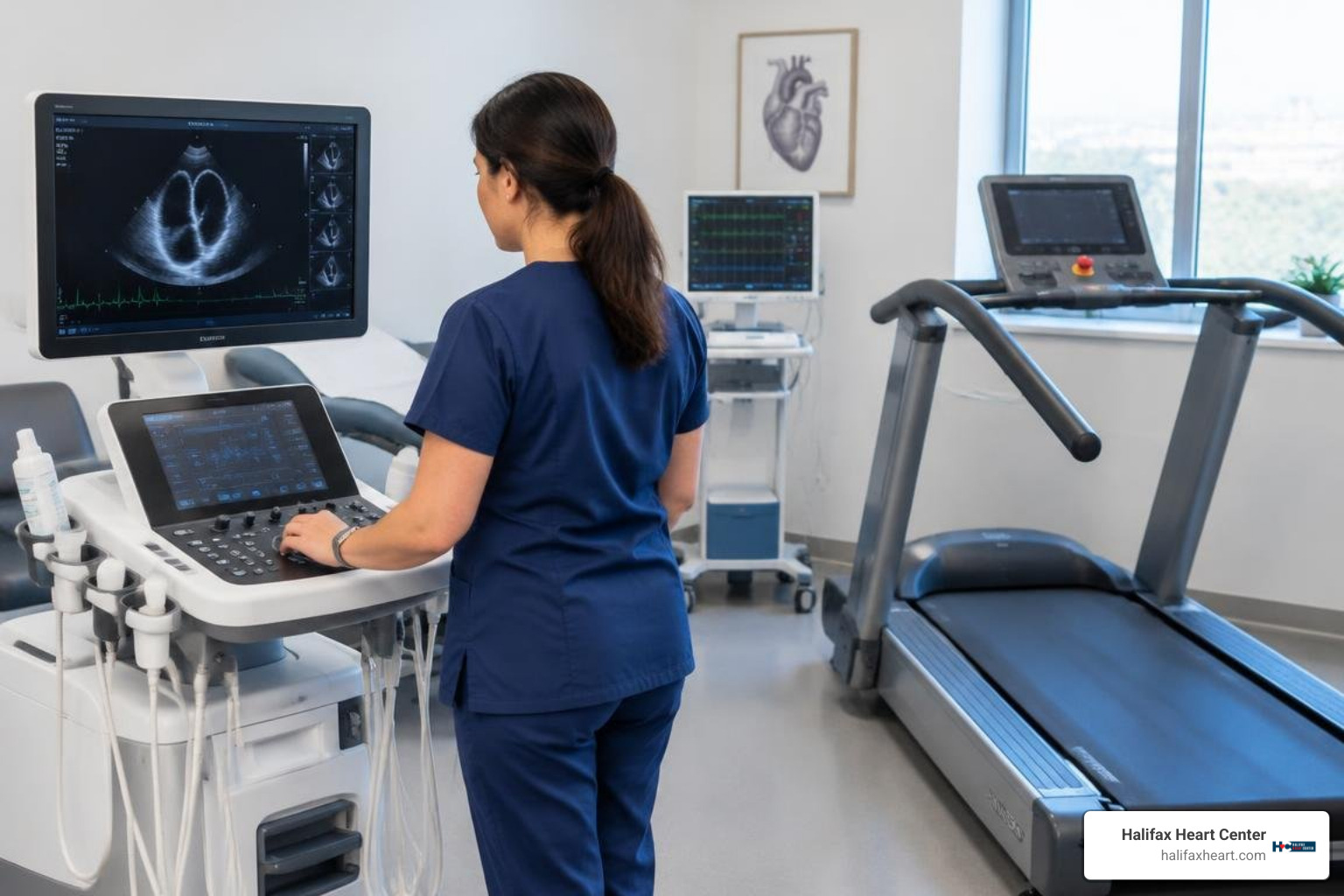
When you walk through the doors of a dedicated cardiovascular practice, you should expect an integrated continuum of care that addresses everything from minor symptom flare-ups to complex, long-term conditions. Cardiovascular disease encompasses a broad spectrum of disorders affecting the heart muscle, electrical conduction pathways, and circulatory blood vessels. Because these systems are intricately linked, managing them requires clinical precision, modern medical technology, and ongoing patient education.
We focus heavily on managing hypertension, which remains one of the most widespread yet silent contributors to heart attacks and strokes. Uncontrolled blood pressure continuously strains arterial walls, accelerating plaque buildup and forcing the heart muscle to work overtime. Through regular evaluations, medication optimization, and lifestyle coaching, we help patients bring their blood pressure back into safe ranges.
Coronary artery disease (CAD) and congestive heart failure (CHF) represent two other major areas of clinical focus. CAD occurs when fatty deposits narrow the coronary arteries, reducing oxygenated blood supply to the heart. When left unmanaged, CAD can lead to angina (chest pain) or myocardial infarction.
Heart failure, on the other hand, does not mean the heart has completely stopped working; rather, it indicates the muscle is not pumping blood as efficiently as it should. Modern treatment protocols combine medical therapy, fluid balance monitoring, and dietary adjustments to keep patients active and out of the hospital.
Accurate diagnosis forms the cornerstone of effective disease management. Through comprehensive diagnostic heart testing, our clinical team can evaluate structural integrity, detect blockages, and track arrhythmias such as atrial fibrillation before they escalate into life-threatening emergencies.
Advanced Diagnostic Testing and Non-Invasive Screenings
Non-invasive cardiac testing allows cardiologists to look deep inside your cardiovascular system without the need for surgical incisions. These diagnostic tools provide immediate, actionable data that guides every treatment plan we build.
- Electrocardiograms (EKG/ECG): An EKG records the electrical signals moving through your heart. It is a quick, painless test that reveals abnormal rhythms, signs of previous silent heart attacks, and acute strain on heart chambers.
- Echocardiograms: This ultrasound of the heart uses sound waves to create moving, real-time pictures of your heart valves and chambers. It shows how well your heart pumps blood and whether any valves are leaking or narrowed.
- Cardiac Stress Testing: By evaluating the heart under physical exertion (typically on a treadmill) or via pharmacological stimulation, stress tests uncover blood flow restrictions that might not appear while you are resting.
- Holter and Event Monitors: Because rhythm irregularities can be intermittent, continuous wearable monitors track your heartbeat over 24 hours, 48 hours, or several weeks to catch fleeting palpitations or dizzy spells.
- Vascular Duplex Ultrasonography: This imaging technique evaluates blood flow through peripheral vessels, checking for blockages or clots in carotid arteries and lower extremities.
By accessing these specialized heart services right here in South Boston, patients avoid long drives out of town for standard diagnostic workups.
Specialized Care: From Rhythm Disorders to Women’s Heart Health
Cardiovascular care is never one-size-fits-all. Different conditions and patient populations require tailored approaches to achieve optimal long-term outcomes.
Heart rhythm management is a vital subspecialty. When the heart beats too fast, too slow, or erratically, it impairs circulatory efficiency. For patients with implanted pacemakers or implantable cardioverter-defibrillators (ICDs), routine device interrogation and management ensure the hardware functions properly and delivers life-saving pacing or shocks whenever needed.
Valvular heart disease is another critical focus area. Whether dealing with aortic stenosis, mitral valve regurgitation, or tricuspid disorders, regular non-invasive monitoring helps determine the exact timing for medical adjustments or surgical interventions.
Furthermore, women’s heart health demands dedicated clinical attention. Cardiovascular disease presents differently in women than in men. While men often report classic crushing chest pressure radiating down the left arm, women frequently experience atypical symptoms such as shortness of breath, unexplained nausea, severe fatigue, back or jaw discomfort, and lightheadedness.
Our experienced heart doctors factor these gender-specific nuances into every assessment, ensuring that subtle warning signs are never dismissed as mere stress or indigestion.
Navigating Appointments, Referrals, and Care Models
Navigating the healthcare system can feel daunting, but scheduling an appointment at a community cardiology practice is straightforward when you understand the pathway.
Cardiology clinics work in close alignment with primary care physicians (PCPs), internal medicine specialists, and regional health systems. Primary care providers serve as the first line of defense, identifying early risk factors such as elevated lipids, abnormal blood pressure readings, or new heart murmurs during routine annual wellness visits.
When a PCP identifies an issue that requires deeper investigation, they initiate a referral to an outpatient cardiology clinic. For patients enrolled in HMOs or specific managed care networks, insurance pre-authorization may be required before the initial specialist consultation.
Our administrative team works directly with referring doctors and insurance carriers to streamline paperwork, verify coverage, and minimize out-of-pocket surprises. If you are proactively finding a cardiologist near you, checking your insurance policy’s referral requirements is always an excellent first step.
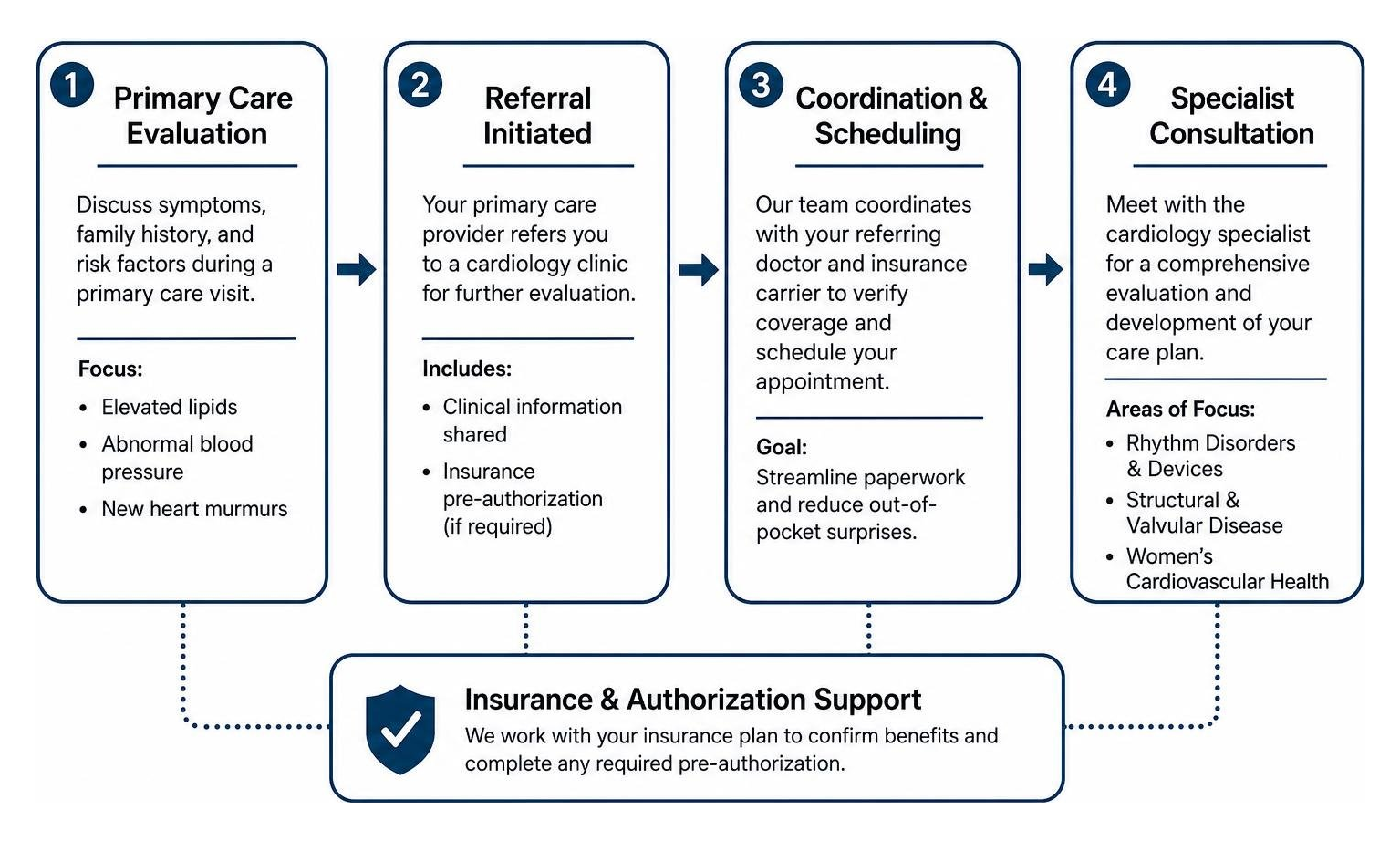
How to Secure a Referral for a South Boston Cardiology Clinic
Securing a referral is a collaborative process between you and your primary medical provider. Follow these steps to ensure a smooth transition to specialty cardiac care:
- Schedule a Primary Care Consultation: Book a dedicated visit with your primary doctor to discuss your specific cardiovascular symptoms or family history.
- Document Your Symptoms Clearly: Keep a daily log detailing when symptoms occur, how long they last, what activities trigger them, and whether they resolve with rest.
- Establish Medical Necessity: Your PCP will record your vital signs, run preliminary lab panels, and outline clinical reasons for a specialist evaluation.
- Utilize Digital Patient Portals: Many medical networks allow you to send direct messages to your PCP requesting a cardiology referral if you have recently undergone basic bloodwork or an initial EKG.
- Follow Up with the Cardiology Clinic: Once the referral is submitted, call the cardiology practice to confirm receipt of your medical records and finalize your appointment date.
Taking an active role in choosing the right cardiologist ensures you receive targeted care tailored to your medical history and lifestyle.
What to Expect During Your Visit to a South Boston Cardiology Clinic

Knowing what happens during your initial consultation helps ease any anxiety. When you arrive at our clinic, our clinical team begins by collecting your essential health metrics:
- Blood pressure measurements in both arms
- Resting heart rate and oxygen saturation
- Height and weight to calculate body mass index (BMI)
- A review of all current prescription medications, over-the-counter supplements, and dosages
Next, you will meet with the cardiologist for an in-depth clinical interview. We review your personal medical history, past surgical procedures, family history of premature heart disease, and lifestyle habits like diet, exercise, and tobacco use.
The physician will then conduct a focused cardiovascular physical examination, listening closely to your heart sounds for murmurs, clicks, or gallops, checking your carotid arteries for bruits, examining your lungs for fluid buildup, and evaluating your legs and ankles for peripheral swelling (edema).
Following the physical exam, your cardiologist will discuss preliminary findings and recommend diagnostic tests—such as an on-site EKG or an upcoming echocardiogram. Together, you will develop a personalized care plan outlining medication strategies, diagnostic next steps, and follow-up milestones.
Comparing Regional Heart Care Options
When selecting where to receive heart care, patients in Southside Virginia often weigh the benefits of visiting a local community practice against making the drive to large tertiary medical centers in distant cities.
While major academic medical centers offer specialized surgical suites for rare interventions, receiving routine diagnostic testing, disease management, and preventive care locally offers substantial lifestyle and health advantages. Frequent long-distance travel adds stress, consumes entire days, and can delay vital follow-up appointments.
A localized cardiology practice provides continuity of care, shorter wait times, and direct relationships with the physicians caring for you.
| Feature / Care Factor | Local Community Cardiology Clinic | Distant Tertiary Medical Center |
|---|---|---|
| Travel Time & Convenience | Minutes from home; minimal traffic and hassle | 1 to 2+ hours of travel; complex parking and navigation |
| Appointment Availability | Rapid scheduling for routine visits and follow-ups | Often weeks or months of wait time for non-emergencies |
| Continuity of Care | See the same dedicated physician and clinical team | High provider turnover; often seen by rotating fellows/residents |
| Care Coordination | Direct, familiar communication with local PCPs | Disjointed records transfer between regional health systems |
| Diagnostic Access | Comprehensive non-invasive testing in one local setting | Advanced diagnostic suites, but requires separate travel days |
| Patient Experience | Personalized, community-rooted relationships | High-volume, institutional setting with less direct access |
Evaluating Provider Experience and Clinical Excellence
Evaluating a cardiovascular provider involves looking closely at credentials, clinical background, and procedural focus. Cardiologists undergo extensive medical training, including four years of medical school, three years of internal medicine residency, and a minimum of three additional years in specialized cardiovascular fellowship programs.
When researching heart specialists, verify that your physician is board-certified by recognized medical boards, such as the American Board of Internal Medicine (ABIM) in Cardiovascular Disease. Board certification demonstrates that the doctor has passed rigorous exams and remains current with evolving clinical standards.
Beyond paper credentials, consider clinical experience and patient satisfaction metrics. Experienced cardiologists bring decades of pattern recognition to complex cases, distinguishing between benign palpitations and dangerous rhythm disturbances with ease.
Our team at Halifax Heart Center pairs deep clinical expertise with a focus on top cardiology specialists and preventive care, ensuring every patient receives attentive, high-caliber cardiovascular care.
Proactive Strategies for Long-Term Cardiovascular Wellness
While advanced diagnostic machines and prescription medications are powerful medical tools, the daily lifestyle choices you make outside our clinic walls form the bedrock of your cardiovascular longevity. Preventing heart disease before it starts—or halting its progression once diagnosed—is entirely within your reach.
- Adopt a Heart-Healthy Nutritional Pattern: Focus on whole, unprocessed foods. Emphasize leafy greens, colorful vegetables, high-fiber legumes, whole grains, lean poultry, and fatty fish rich in omega-3 fatty acids (like salmon and mackerel). Minimize sodium intake to keep blood pressure low, and sharply reduce saturated fats, trans fats, and added sugars.
- Engage in Consistent Aerobic Activity: The heart is a muscle, and like any muscle, it thrives on regular workouts. Aim for at least 150 minutes of moderate-intensity aerobic exercise (such as brisk walking, cycling, or water aerobics) or 75 minutes of vigorous exercise each week. Always consult your cardiologist before beginning a new exercise regimen if you have underlying heart conditions.
- Maintain Rigorous Blood Pressure and Lipid Control: High LDL cholesterol deposits fatty plaques inside your arterial walls, while high blood pressure damages arterial lining. Regular blood panels and home blood pressure monitoring help keep these numbers in check.
- Commit to Smoking Cessation: Tobacco smoke damages blood vessel walls, reduces blood oxygen levels, and significantly raises the risk of blood clots. Quitting smoking is the single most impactful step you can take to immediately reduce your risk of a heart attack.
- Manage Chronic Stress and Prioritize Sleep: Chronic, unmanaged stress elevates cortisol and adrenaline levels, raising heart rates and blood pressure. Strive for 7 to 9 hours of quality, uninterrupted sleep each night, and seek screening for sleep apnea if you snore heavily or feel chronically exhausted.
Residents across Halifax County and neighboring areas can always rely on our regional cardiology support to establish sustainable, health-promoting daily routines.
Frequently Asked Questions About South Boston Heart Care
When should I schedule an appointment with a cardiologist?
You should schedule an evaluation with a cardiologist if you experience any persistent or unexplained cardiovascular symptoms. These include chest pressure, chest tightness, or sharp pain; shortness of breath during routine activities or while lying flat; fluttering, racing, or skipped heartbeats (palpitations); unexpected dizziness, lightheadedness, or fainting spells; and swelling in your lower legs, ankles, or feet.
Additionally, if you have strong risk factors—such as a family history of premature heart disease, long-standing diabetes, chronic hypertension, or elevated cholesterol levels—a proactive consultation can detect hidden issues before symptoms appear.
Is heart disease reversible through lifestyle modifications?
While established structural damage or calcified arterial plaques cannot always be completely erased, adopting aggressive lifestyle modifications can halt disease progression, stabilize vulnerable plaques, and dramatically lower the risk of future cardiovascular events.
Eating an anti-inflammatory, low-sodium diet, participating in regular aerobic exercise, quitting tobacco, and keeping blood pressure and LDL cholesterol within target ranges improve endothelial function and allow collateral blood vessels to develop.
When combined with modern medical therapies, healthy lifestyle habits allow many patients with coronary disease or mild heart failure to lead active, fulfilling lives.
What common diagnostic tests are performed during an initial cardiac workup?
An initial cardiac evaluation typically involves several non-invasive tests tailored to your specific symptoms:
- Resting 12-Lead EKG: Captures an immediate snapshot of the heart’s electrical conductivity and rhythm.
- Transthoracic Echocardiogram (TTE): Uses ultrasound sound waves to inspect heart chamber sizes, wall thickness, pumping strength (ejection fraction), and valve motion.
- Exercise Stress Test: Monitors heart function, blood pressure, and EKG changes while you walk on a treadmill to identify exercise-induced blood flow limitations.
- Holter or Patch Monitor: Records your heartbeat continuously over 24 to 48 hours (or longer) to identify intermittent rhythm disturbances during everyday activities.
- Comprehensive Lipid and Metabolic Blood Panels: Evaluates total cholesterol, LDL, HDL, triglycerides, fasting blood glucose, and kidney function markers.
Conclusion
Your cardiovascular health touches every single aspect of your daily life, from your energy levels and physical endurance to your long-term independence and peace of mind. Ignoring subtle warning signs—like an occasional flutter in your chest, mild shortness of breath on the stairs, or creeping blood pressure numbers—only gives cardiovascular conditions time to advance.
Taking a proactive approach through early detection, regular non-invasive screenings, and personalized lifestyle planning protects your heart and helps you stay active for decades to come.
At Halifax Heart Center, we are dedicated to delivering advanced, compassionate heart care to our neighbors in South Boston, Halifax County, and across Southside Virginia. You do not need to travel hours away to receive high-level cardiovascular assessments, thorough diagnostic testing, and individualized treatment programs.
Take charge of your cardiovascular wellness today and contact us to schedule comprehensive heart disease diagnosis and treatment right here at home.