
Start With a Clear Plan for Your South Boston Cardiac Consult
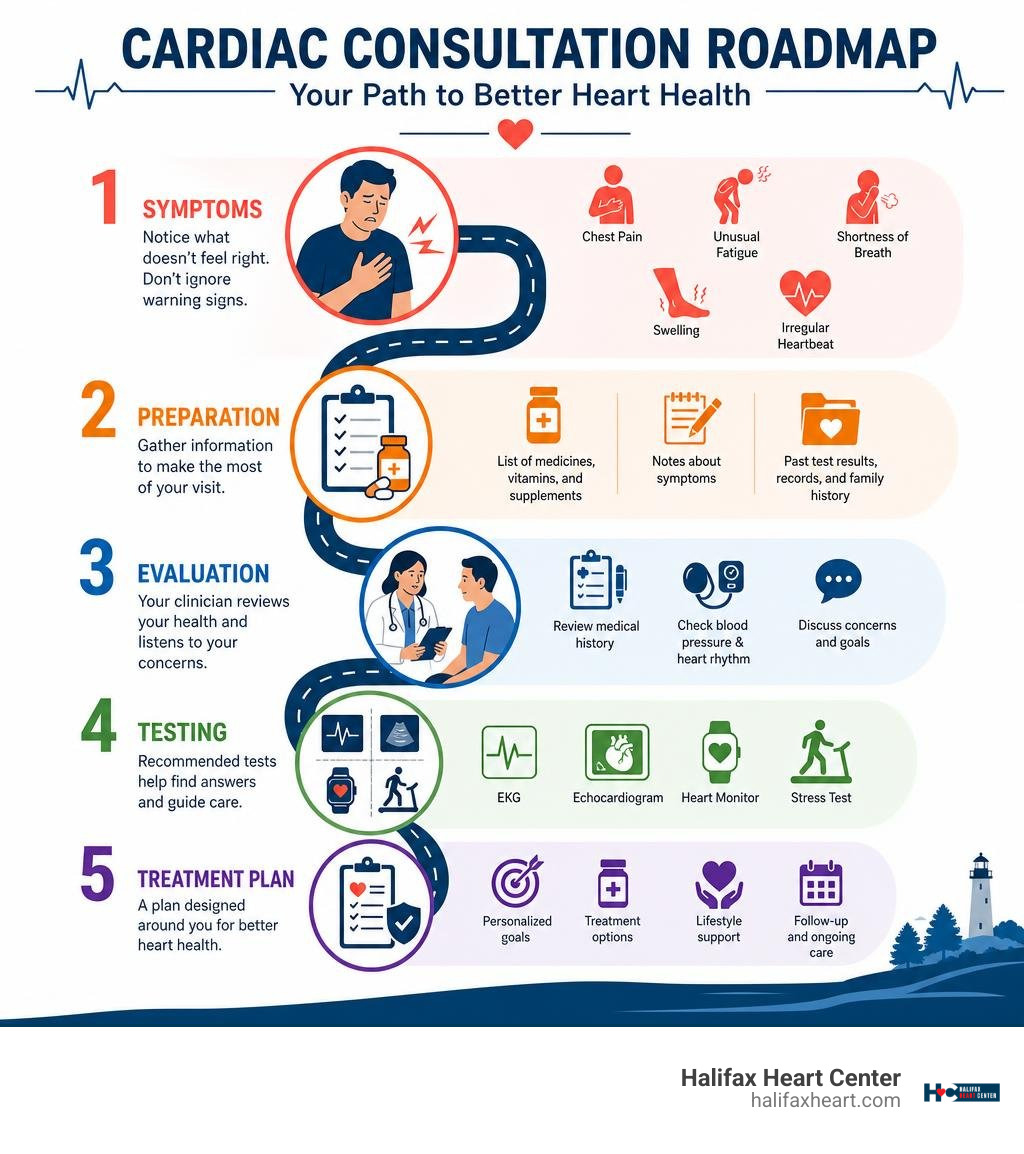
If you have chest pain, unusual fatigue, shortness of breath, swelling, or an irregular heartbeat, schedule a South Boston cardiac consult promptly. Start by calling your heart care provider or primary care office, describe your symptoms, and ask whether you need a same-day evaluation, a referral, or emergency care.
For your visit, bring:
- A list of medicines, vitamins, and supplements.
- Notes about symptoms, including when they started and what makes them better or worse.
- Past test results, hospital records, and your family history of heart disease.
A cardiology consultation helps identify possible causes of symptoms and create a plan for testing, treatment, or follow-up. Your clinician may review your health history, check blood pressure and heart rhythm, and discuss tests such as an EKG, echocardiogram, heart monitor, or stress test when appropriate.
Do not wait for a routine appointment if you have severe or persistent chest pressure, trouble breathing, fainting, or symptoms that may signal a heart attack. Call 911 or seek emergency care.
At Halifax Heart Center, we provide local, patient-centered cardiovascular care for people throughout South Boston, Halifax County, and Southside Virginia. Our experience with South Boston cardiac consult visits focuses on prevention, early diagnosis, and practical treatment plans that fit each patient’s needs.
Key South Boston cardiac consult vocabulary:
Why You Might Need a South Boston Cardiac Consult
Navigating heart health can feel overwhelming, but a timely consultation is the most effective way to take charge of your cardiovascular well-being. Heart disease remains the leading cause of death across the United States, accounting for nearly one in three deaths each year according to the Centers for Disease Control and Prevention. However, modern medical advances and early diagnostic strategies mean that heart disease is manageable and often preventable when caught early.
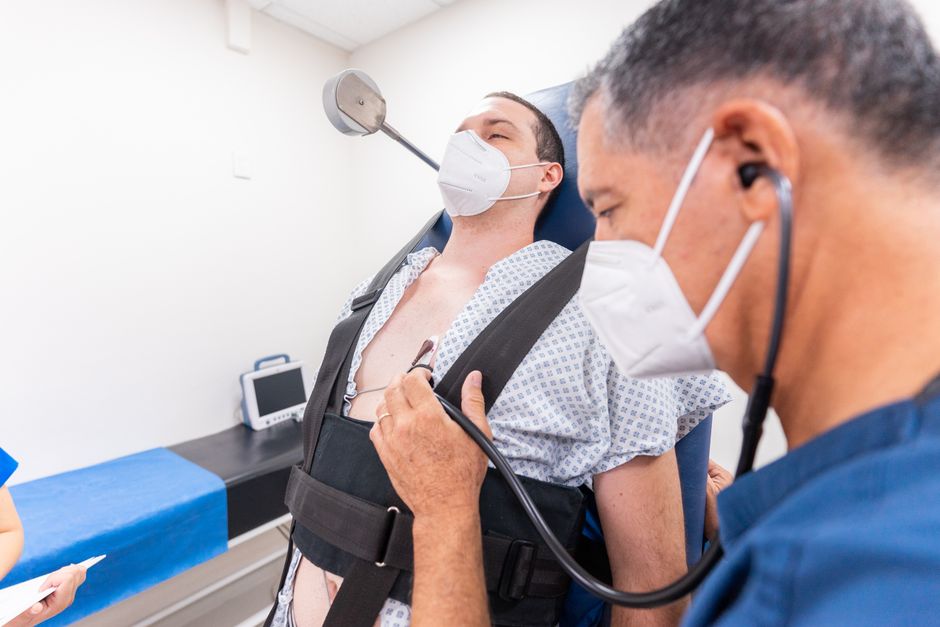
A cardiac consult is a dedicated, in-depth evaluation with a cardiovascular specialist. It goes beyond routine checkups to assess how well your heart pumps blood, examine its electrical rhythm, and evaluate the health of your blood vessels. When choosing a South Boston heart disease specialist, you are partnering with dedicated providers who understand both clinical cardiology and the health needs of the Southside Virginia community.
We regularly evaluate conditions ranging from chronic high blood pressure and lipid disorders to complex structural valve problems, heart failure, and coronary artery blockages. Whether you have noticed subtle changes during physical exertion or are managing long-standing cardiovascular issues, an initial consult establishes the foundation for your long-term heart care.
Symptoms Prompting a South Boston Cardiac Consult
Cardiovascular symptoms can present quietly. While movies often portray heart issues as sudden, dramatic events, many patients experience gradual, subtle warning signs.
Key symptoms that warrant scheduling a specialized cardiovascular evaluation include:
- Chest Discomfort or Angina: A sensation of pressure, tightness, squeezing, or aching in the chest, back, neck, jaw, or arm.
- Shortness of Breath (Dyspnea): Feeling winded while performing routine tasks, walking up stairs, or lying flat in bed.
- Heart Palpitations: Sensations of fluttering, racing, pounding, or skipped heartbeats.
- Dizziness, Lightheadedness, or Syncope (Fainting): Unexplained balance issues or brief loss of consciousness, which can point to rhythm disturbances or blood flow changes.
- Peripheral Edema: Persistent swelling in the feet, ankles, legs, or abdomen caused by fluid retention.
- Unexplained Fatigue: A sudden or progressive drop in energy levels during everyday activities.
- Heart Murmurs or Suspected Valvular Disease: Abnormal sounds detected through a stethoscope that require detailed imaging.
Referral Pathways and Primary Care Coordination
Securing your cardiology appointment is straightforward. Many patients come to us through direct referrals from their local primary care providers across Halifax County and surrounding areas. A primary care referral ensures that historical health records, previous lab work, and baseline vitals are shared in advance, providing a structured foundation for our clinical team.
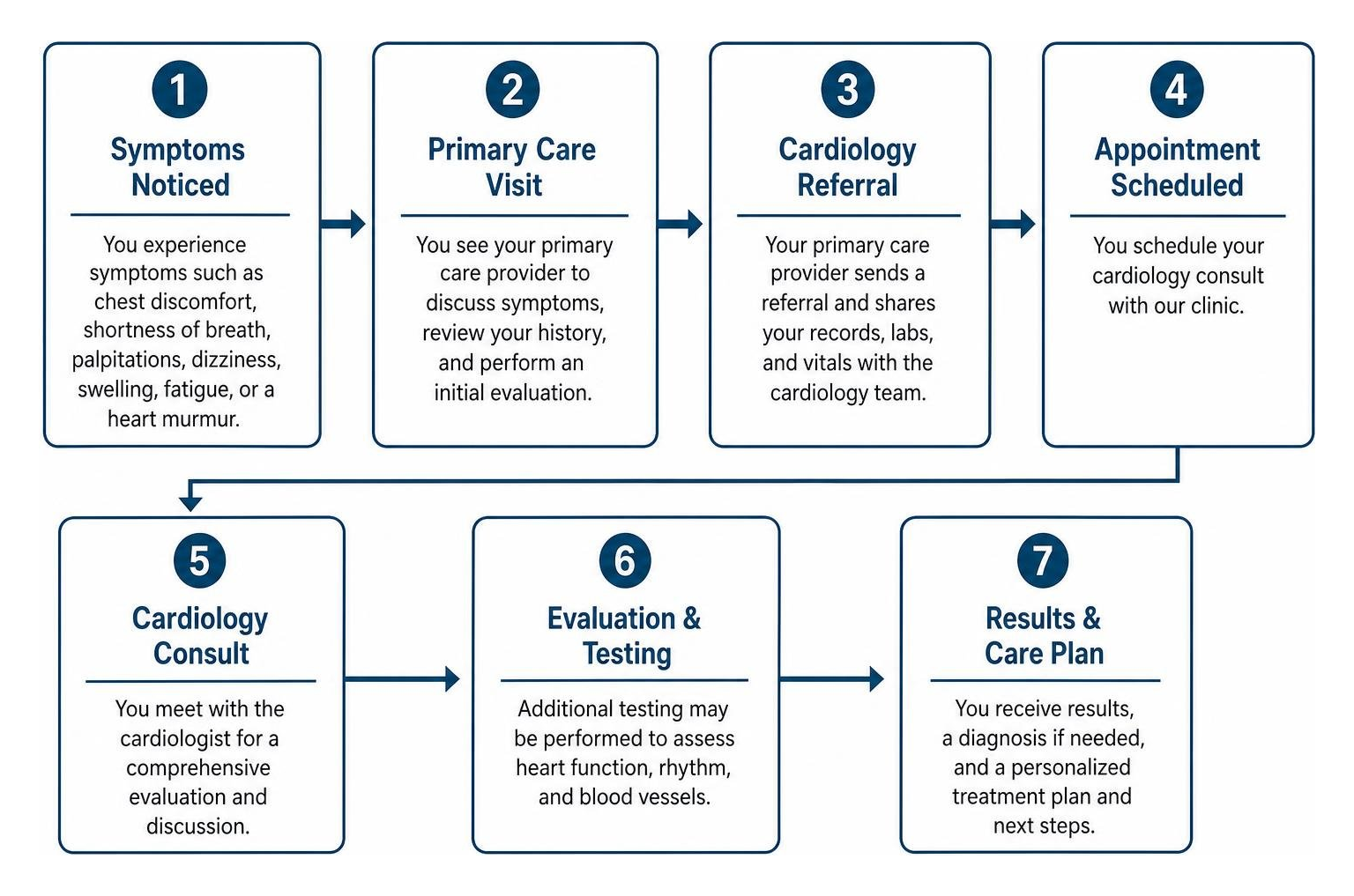
If you are experiencing symptoms, you can contact your primary care doctor to request a cardiology referral or reach out directly to our clinic to discuss appointment options and insurance requirements. Coordinated communication between primary care and specialty cardiology ensures you receive seamless care, whether you require non-invasive outpatient monitoring or advanced interventional cardiology evaluations.
Navigating Your Appointment: A Step-by-Step Guide
Knowing what to expect can ease the natural anxiety that comes with visiting a specialist. When you arrive at our clinic on Wilborn Avenue, our priority is to provide a calm, respectful, and thorough experience.

During your appointment, our clinical team will:
- Measure Vital Signs: We record your blood pressure, heart rate, oxygen saturation, weight, and temperature.
- Review Medical History: We review your personal health background, past surgeries, lifestyle habits, and family history of cardiovascular disease.
- Perform a Targeted Physical Exam: Your cardiologist will listen carefully to your heart sounds, carotid arteries, and lungs, while checking your peripheral pulses and examining your legs for swelling.
- Conduct Risk Stratification: We analyze your overall cardiovascular profile, factoring in blood pressure, cholesterol levels, diabetes status, and lifestyle factors.
- Discuss Diagnostic Findings and Next Steps: We explain any tests needed to confirm a diagnosis and begin building your personalized care plan.
When looking into finding a top-rated South Boston cardiac specialist, look for a practice that emphasizes clear communication, active listening, and coordinated local follow-up.
Essential Preparation Before Your South Boston Cardiac Consult
A few simple preparation steps will help you get the most out of your consultation:
- Compile a Complete Medication List: Include prescription medications, over-the-counter drugs, vitamins, and herbal supplements, noting exact dosages and schedules.
- Document Your Symptoms: Keep a brief log detailing what you feel, how often symptoms occur, how long they last, and what triggers or relieves them.
- Gather Previous Records: Bring recent lab results, electrocardiograms, or hospital discharge summaries if completed outside our network.
- Verify Insurance Coverage: Contact your insurance carrier beforehand to confirm your specialist benefits, copayments, or pre-authorization details.
- Prepare Questions: Write down your questions ahead of time so you do not forget anything during your conversation with the doctor.
Questions to Ask Your Cardiologist
- What is the most likely cause of my current symptoms?
- Which diagnostic tests do I need, and what will they tell us?
- Are my current blood pressure and cholesterol numbers within a healthy target range?
- How do my family history and lifestyle habits influence my overall cardiac risk?
- What daily changes can I make right now to protect my heart health?
On-Site Diagnostic Testing and Assessment
Accurate treatment begins with precise diagnostics. Depending on your symptoms and physical exam, your cardiologist may recommend one or more non-invasive diagnostic tests to evaluate heart function:
- Electrocardiogram (EKG/ECG): A quick, painless test that records the electrical signals of your heart to detect arrhythmias, previous heart attacks, or conduction delays.
- Echocardiogram (Cardiac Ultrasound): Uses sound waves to produce moving images of your heart chambers, measuring pumping strength (ejection fraction) and assessing valve performance.
- Holter and Event Monitoring: Wearable, portable monitors that record heart rhythm over 24 hours to several weeks, capturing intermittent palpitations, skipped beats, or fainting triggers during daily life.
- Stress Testing: Measures how your heart responds to physical exercise or pharmacological stress, identifying blood flow restrictions in the coronary arteries.
- Vascular Duplex Ultrasound: Evaluates blood circulation in the neck (carotid arteries) or legs to check for blockages, peripheral arterial disease, or circulatory concerns.
Having local access to these non-invasive diagnostics makes finding a South Boston cardiac center simple and convenient, eliminating the need to travel long distances for standard heart evaluations.
Community-Based Heart Care vs. Large Hospital Systems
Patients often wonder whether they should travel to large academic medical centers in distant cities or receive care locally. While major medical centers provide critical tertiary resources for rare procedures, community-based cardiovascular care offers distinct advantages for ongoing diagnosis, routine management, and prevention.
| Feature / Care Factor | Local Community Cardiology (Halifax Heart Center) | Large Urban Medical Center |
|---|---|---|
| Location & Travel Time | Conveniently located in South Boston, VA; minimal driving | Long travel times, highway traffic, and complex parking garages |
| Appointment Scheduling | Prompt scheduling with accessible local clinic follow-ups | Often requires multi-month wait times for standard consultations |
| Provider Continuity | Consistent visits with the same dedicated cardiology team | Frequent rotation among residents, fellows, and varying staff |
| Care Coordination | Direct, personal communication with local primary care doctors | Coordination can be fragmented across large institutional networks |
| Clinic Environment | Welcoming, community-focused setting with familiar staff | Fast-paced, impersonal institutional setting |
| Emergency & Routine Access | Quick access for non-emergent symptom evaluation | Challenging to reach direct providers quickly for routine questions |
Local cardiology care brings high-quality clinical diagnostics into your community. By choosing care close to home in Southside Virginia, you build an ongoing relationship with a cardiology team that understands your medical history and remains accessible whenever questions arise.
Developing Your Cardiovascular Treatment and Follow-Up Plan
Once diagnostic evaluations are complete, we develop a comprehensive, tailored treatment plan designed to protect your heart and improve your daily quality of life. Cardiology is never one-size-fits-all; your plan reflects your specific diagnosis, lifestyle, and treatment goals.
A comprehensive cardiovascular treatment plan typically incorporates:
- Evidence-Based Medical Therapy: Tailored prescriptions to manage high blood pressure, regulate cholesterol, improve heart pump efficiency, prevent blood clots, or stabilize heart rhythms. Regular monitoring ensures medications remain effective with minimal side effects.
- Heart-Healthy Nutrition: Guidance on balanced diets rich in whole grains, vegetables, lean proteins, and healthy fats, while minimizing processed foods and excess sodium.
- Structured Physical Activity: Safe exercise recommendations matched to your physical capacity to strengthen the heart muscle and enhance vascular health.
- Risk Factor Management: Targeted strategies for blood sugar control, smoking cessation, and stress reduction.
- Specialist & Surgical Referrals: When advanced interventions are required—such as coronary angioplasty, stenting, pacemaker implantation, or minimally invasive valve procedures (like TAVR)—we coordinate with specialized surgical teams while managing your local preparation and recovery.
- Routine Follow-Up and Monitoring: Scheduled visits and periodic imaging to track progress, fine-tune medications, and prevent complications.
Frequently Asked Questions About Cardiac Care
How long does an initial cardiac consultation usually take?
An initial consultation typically lasts between 45 and 60 minutes. This allows ample time for a thorough review of your medical history, a physical examination, baseline diagnostic testing (such as an EKG), and an unhurried discussion about your symptoms and next steps.
Does a normal stress test completely rule out heart disease?
While a normal (negative) stress test is reassuring, it does not completely rule out coronary artery disease. Stress tests detect significant arterial blockages that restrict blood flow during exertion (usually blockages of 70% or more). They may not detect mild, early-stage plaque buildup that has not yet restricted circulation. If you continue to experience symptoms despite a normal test, your cardiologist will perform further evaluations and monitor your condition.
Can lifestyle changes reverse existing cardiovascular disease?
Healthy lifestyle changes cannot erase calcified arterial blockages overnight, but they can slow disease progression, stabilize vulnerable plaque, and improve vascular function. Lowering blood pressure, controlling cholesterol, eating a nutrient-dense diet, exercising regularly, and avoiding tobacco significantly reduce the risk of future heart attacks and strokes. In many cases, these habits help stabilize plaque so it is far less likely to rupture.
Conclusion
Taking a proactive approach to your cardiovascular health is one of the most important decisions you can make. Heart symptoms should never be ignored or left to chance. With modern diagnostics and personalized care plans, managing cardiovascular conditions close to home is easier and more effective than ever.
At Halifax Heart Center, we are dedicated to delivering patient-centered, compassionate cardiovascular care. Conveniently located at 2232 Wilborn Ave, Suite A in South Boston, VA 24592, our team is here to support you and your family across South Boston, Halifax County, and Southside Virginia.
If you or a loved one are experiencing symptoms or need a comprehensive cardiac evaluation, explore our options for heart disease diagnosis and treatment in South Boston, VA to schedule your consultation today.