
Understanding South Boston Cardiac Catheterization
When patients come to see us at Halifax Heart Center with persistent chest pressure or unexplainable shortness of breath, getting a clear picture of what is happening inside the heart becomes our highest priority. South Boston cardiac catheterization is one of the most accurate and definitive diagnostic tools available in modern cardiovascular medicine.
During the procedure, a thin, flexible tube called a catheter is inserted into a blood vessel—typically in the wrist (radial artery) or the groin (femoral artery)—and carefully guided through the circulatory system until it reaches the heart. Once the catheter is positioned, an interventional cardiologist can measure blood pressure directly within the heart chambers, check how well the heart valves are functioning, and inject a specialized contrast dye to view the internal pathways of the coronary arteries using live X-ray imaging.
If you are experiencing unexplained chest symptoms, exploring our comprehensive Diagnostic Heart Testing Services can help determine if a catheterization or an alternative diagnostic evaluation is right for you.
How Cardiac Catheterization Diagnoses and Treats Heart Conditions
Cardiac catheterization serves a dual purpose: it can be strictly diagnostic, or it can seamlessly transition into an interventional treatment. Diagnostic cardiac catheterization produces a real-time moving X-ray picture known as an angiogram. By injecting contrast dye through the catheter directly into the coronary arteries, our specialists can immediately see where plaque has built up, precisely measure the percentage of arterial blockage, and evaluate overall blood flow.
Beyond visualizing blockages, catheterization allows us to evaluate complex internal dynamics. We can measure intra-cardiac blood pressures, calculate how much blood the heart pumps with each beat (ejection fraction), and evaluate whether damaged muscle tissues or faulty heart valves are causing symptoms of heart failure.
Comparing Catheterization, Angioplasty, and Stenting
It is common for patients to feel confused by medical terminology, often wondering how cardiac catheterization differs from procedures like angioplasty or stent placement.
- Cardiac Catheterization: The overarching procedure where a catheter is routed to the heart to perform diagnostic testing or deliver interventional therapies.
- Balloon Angioplasty: An interventional procedure performed during catheterization where a tiny balloon at the tip of the catheter is inflated inside a clogged artery to press built-up plaque against the arterial walls, restoring blood flow.
- Stent Deployment: The placement of a tiny, mesh-like metallic tube inside the newly opened artery to keep the vessel scaffolded open permanently. Many modern stents are coated with medication (drug-eluting stents) to prevent scar tissue from re-narrowing the artery over time.
| Procedure | Primary Purpose | How It Works | Typical Outcome |
|---|---|---|---|
| Cardiac Catheterization | Diagnostic evaluation & vessel mapping | A flexible catheter is guided to the heart to inject dye and take X-ray images. | Detailed diagnostic map of blood flow and internal cardiac pressures. |
| Balloon Angioplasty | Restoring blood flow in narrowed arteries | A miniature balloon is expanded at the blockage site to widen the vessel passage. | Immediate opening of a restricted or clogged coronary artery. |
| Stent Deployment | Permanent arterial scaffolding | A expandable metal mesh tube is expanded and left behind in the vessel wall. | Long-term structural support to keep the artery from collapsing or re-narrowing. |
Advanced Technologies in Modern Cath Labs
The field of invasive cardiology has advanced dramatically. Today’s cardiac catheterization labs incorporate cutting-edge digital imaging technology, precise hemodynamic monitoring, and specialized 3D modeling tools that enhance diagnostic accuracy while keeping patient safety at the forefront.
In modern cath labs, high-definition digital angiography systems deliver crystal-clear imaging of even the smallest vascular branches. Furthermore, modern catheterization facilities strictly adhere to ALARA (“As Low As Reasonably Achievable”) radiation protocols, using optimized exposure settings and advanced protective shielding to minimize radiation exposure for both patients and clinical staff.
Fractional Flow Reserve and Structural Heart Care
Historically, assessing whether an arterial blockage was severe enough to restrict oxygen flow required invasive pressure wires or drug-induced heart stimulation. Today, breakthroughs like computational 3D imaging—such as the CathWorks FFRangio® System—allow clinicians to analyze coronary blood flow using standard X-rays and computational algorithms. This non-invasive Fractional Flow Reserve (FFR) evaluation generates detailed 3D vessel models in seconds, eliminating the need for extra blood-thinning or heart-stimulating medications, which significantly reduces observation and recovery times.
Advanced technology also powers the treatment of structural heart diseases. Modern catheterization equipment enables interventional cardiologists to repair or replace failing heart valves and perform complex structural repairs through catheter-based techniques without requiring traditional open-heart surgery.
The Critical Role of Interventional Cardiologists
Performing South Boston cardiac catheterization procedures requires specialized training and expertise. An interventional cardiologist is a physician who has completed extensive training beyond general cardiology, including sub-specialty fellowship programs dedicated exclusively to catheter-based diagnosis and treatment.

These specialists possess advanced clinical skills in radial and femoral vascular access, emergency cardiac care, and complex stent selection. Whether performing routine diagnostic angiography or managing emergency arterial blockages, having an experienced team ensures that patients receive world-class care right here in Southside Virginia. To learn more about selecting the right physician for your needs, visit our guide on Top Rated Cardiac Specialists.
Patient Care: Preparing for South Boston Cardiac Catheterization
Preparing for a South Boston cardiac catheterization is straightforward, and our clinical team works closely with you every step of the way to ensure you feel informed, comfortable, and confident.
Preparing for South Boston Cardiac Catheterization
In the days leading up to your procedure, we conduct a thorough pre-procedure evaluation. This includes reviewing your comprehensive medical history, evaluating recent blood work, assessing kidney function (to ensure your body can safely process the contrast dye), and reviewing all current medications.
When preparing for your catheterization:
- Fasting Guidelines: You will generally be instructed not to eat or drink anything for 6 to 8 hours before the procedure.
- Medication Adjustments: Certain medications, particularly blood thinners or specific diabetes drugs, may need to be temporarily paused under your doctor’s supervision.
- Hydration: Staying well-hydrated the day before your procedure helps protect your kidneys when the contrast dye is administered.
On the day of the procedure, you will be taken to a prep area where an intravenous (IV) line is placed. You will remain awake throughout the catheterization, but you will receive mild sedation through your IV to help you relax. The entry site—most commonly the radial artery in your wrist, or occasionally the femoral artery in your groin—is thoroughly sanitized and numbed with a local anesthetic so you feel minimal discomfort.
Explore our full range of local Heart Care Services to discover how we support you before, during, and after diagnostic procedures.
Recovering After Your South Boston Cardiac Catheterization
Once your catheterization is complete, the catheter is removed, and firm pressure is applied to the insertion site to prevent bleeding. If access was gained through the radial artery in your wrist, a specialized compression wristband is applied, allowing you to sit up and move around comfortably soon after. If the groin site was used, you will need to lie flat on your back for several hours to allow the femoral artery to seal completely.
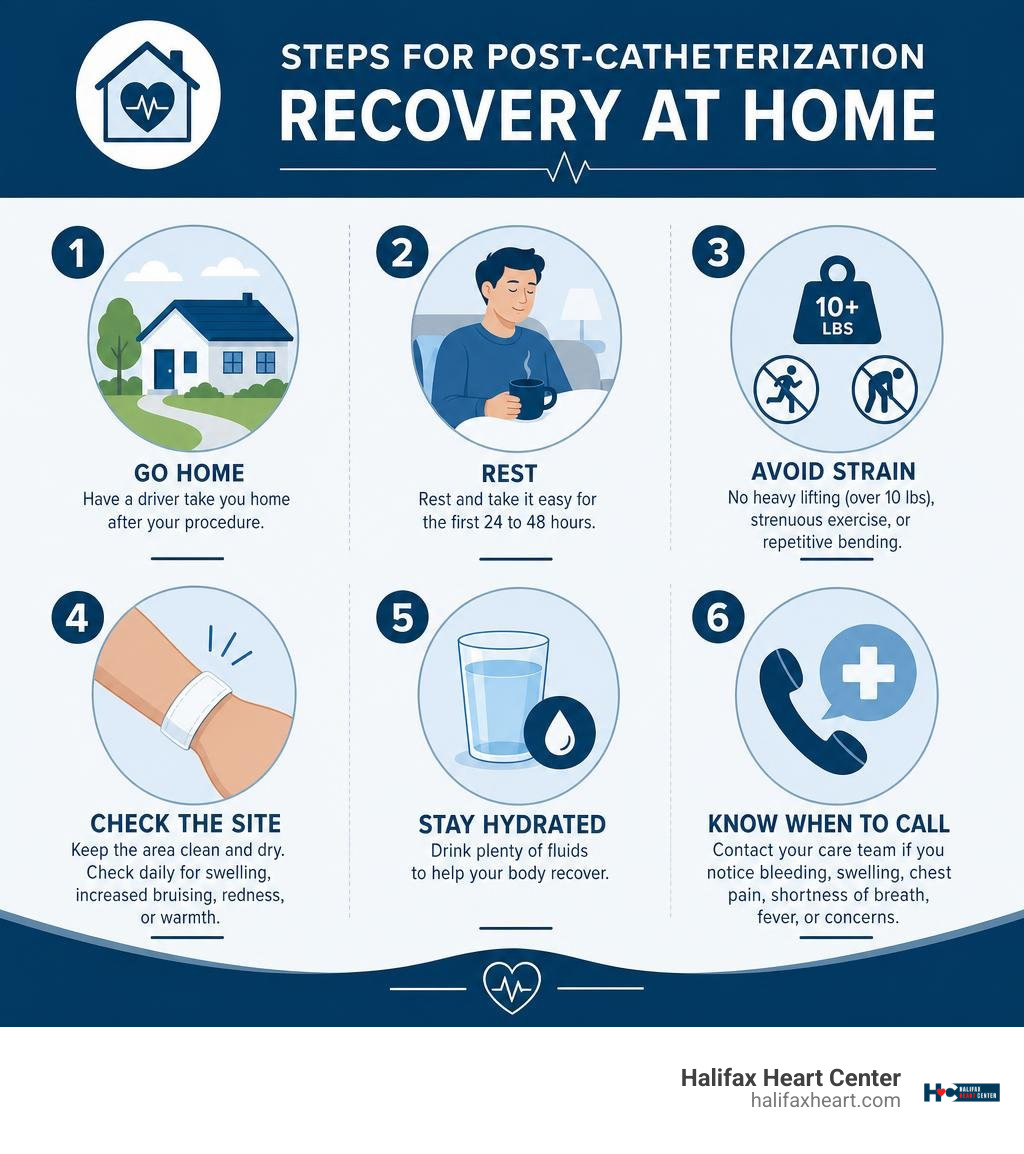
Most diagnostic catheterizations are performed on an outpatient basis, meaning you can return home the same day after a short observation window.
- Have a Designated Driver: You cannot drive yourself home after receiving sedation, so arrange for a family member or friend to assist you.
- Rest and Take It Easy: Rest comfortably at home for the first 24 to 48 hours. Avoid heavy lifting (anything over 10 pounds), strenuous exercise, or bending repeatedly.
- Monitor the Access Site: Keep the puncture site clean and dry. Inspect it daily for signs of swelling, increased bruising, redness, or warmth.
- Stay Hydrated: Drink plenty of water over the next 24 to 48 hours to help your body naturally flush out the contrast dye.
- Follow Medication Instructions: Take all prescribed post-procedure medications exactly as directed by your cardiology team.
Conditions Treated and Non-Invasive Alternatives
Cardiac catheterization provides definitive clarity across a broad range of cardiovascular conditions, guiding personalized treatment plans for our patients in Halifax County and surrounding areas.

Cardiovascular Conditions Diagnosed and Managed
Whether evaluating chronic, stable chest pain or responding to acute cardiac events, South Boston cardiac catheterization plays a pivotal role in managing:
- Coronary Artery Disease (CAD): Identifying narrowed or hardened arteries that restrict oxygenated blood flow to the heart muscle.
- Heart Attacks (Acute Myocardial Infarction): Emergency primary angioplasty restores vital blood flow immediately during an acute heart attack, minimizing muscle damage.
- Valvular Heart Disease: Evaluating conditions such as aortic stenosis or mitral valve regurgitation to determine whether surgical or transcatheter repair is required.
- Heart Failure: Measuring pressure inside the cardiac chambers and pulmonary arteries to optimize medication therapy for heart failure patients.
- Peripheral Vascular Disease: Evaluating circulation and blockages in blood vessels outside the heart.
For more details on how we evaluate and treat these conditions locally, explore our dedicated resource on Heart Disease Diagnosis and Treatment.
Lifestyle Changes and Medical Therapy Alternatives
Cardiac catheterization is an essential tool, but it is not always the first step. For many patients with mild or moderate cardiovascular concerns, non-invasive treatment strategies provide excellent outcomes.
Cardiovascular disease care spans preventive screenings, noninvasive testing, and chronic symptom management. Before recommending an invasive procedure, our cardiologists often evaluate symptoms through non-invasive diagnostic testing such as electrocardiograms (EKGs), echocardiograms, stress testing, and Holter rhythm monitoring.
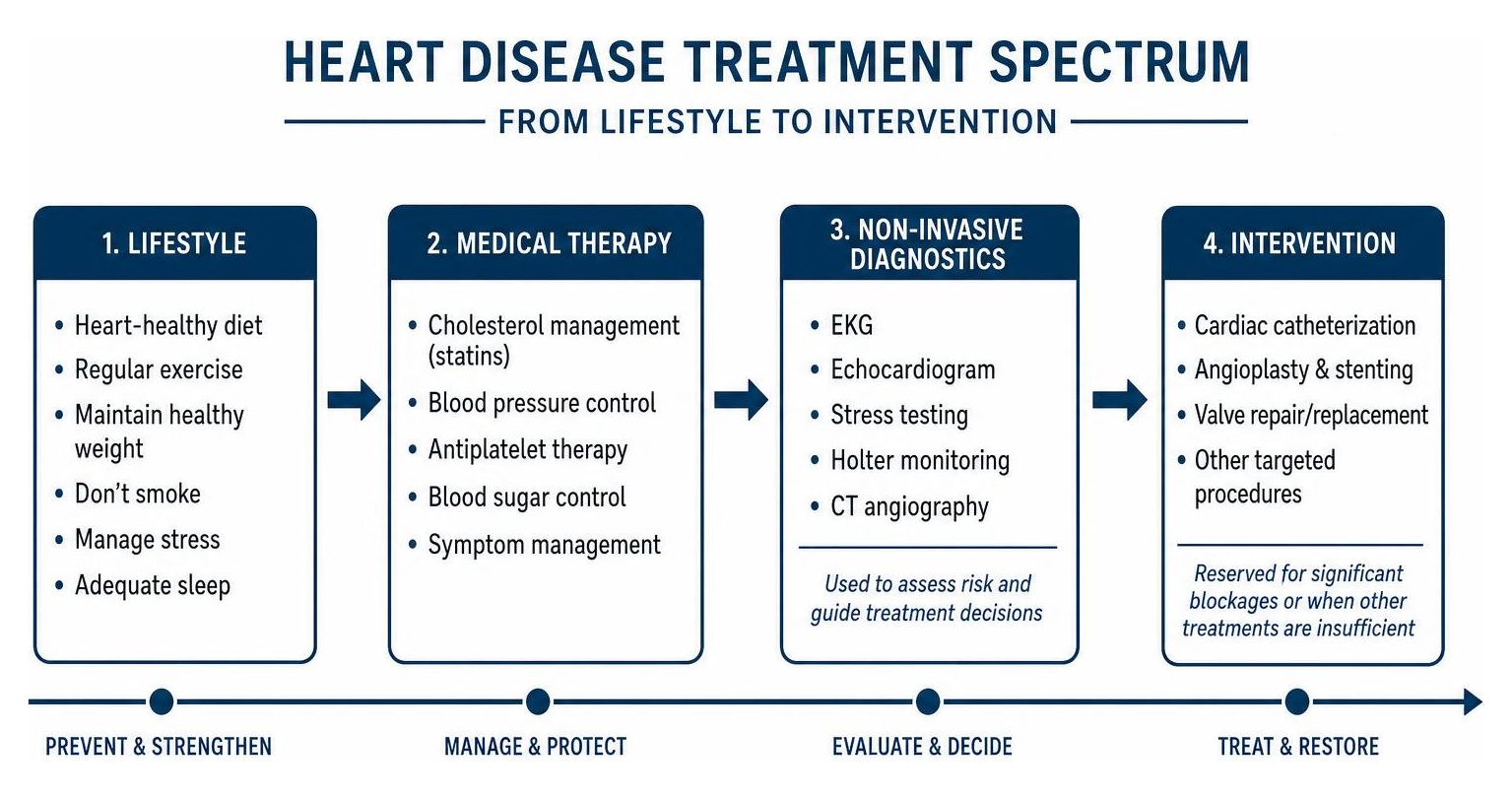
When non-invasive testing indicates manageable risk, medical therapy and targeted lifestyle modifications are highly effective:
- Targeted Medications: Statins help lower cholesterol levels and stabilize plaque in the arteries. Antihypertensive medications control blood pressure, while antiplatelet agents (such as aspirin or P2Y12 inhibitors) reduce the risk of blood clots.
- Heart-Healthy Nutrition: Adopting a diet rich in whole foods, lean proteins, vegetables, and fiber while remaining low in saturated fats and sodium supports overall arterial health.
- Regular Exercise: Engaging in moderate aerobic exercise—such as walking 30 minutes a day—improves vascular tone, aids in weight management, and strengthens the heart muscle.
- Smoking Cessation: Stopping tobacco use immediately halts a major cause of arterial inflammation and blood vessel damage.
If you are looking for guidance on choosing the right cardiovascular specialist to walk you through these options, review our helpful guide on Choosing a Local Cardiologist or consult our local Cardiologist Directory Guide.
Frequently Asked Questions About Cardiac Procedures
Is cardiac catheterization considered major surgery?
No, cardiac catheterization is a minimally invasive medical procedure, not major open-heart surgery. It does not require a large surgical incision or a chest opening, nor does it require general anesthesia. The procedure is performed in a specialized cardiac catheterization lab using local anesthesia to numb the insertion site, alongside mild IV sedation to keep you calm and comfortable. Most diagnostic catheterizations take less than an hour, and patients typically go home the very same day.
How long does recovery take after a cardiac catheterization?
Initial recovery takes place right in the facility during a brief observation window lasting anywhere from 2 to 6 hours, depending on whether wrist (radial) or groin (femoral) access was used. Once discharged home, most patients resume light daily activities within 24 to 48 hours. However, you should avoid heavy lifting, strenuous exercise, and driving for several days after the procedure to allow the vascular puncture site to heal completely.
How do interventional cardiologists ensure patient safety during catheterization?
Patient safety is built into every step of the catheterization procedure. Prior to starting, the entire clinical care team performs a standard “time-out” protocol to verify patient identity, procedure specifics, and medical history. Throughout the catheterization, continuous real-time ECG rhythm monitoring, pulse oximetry, and blood pressure tracking are maintained. Additionally, interventional cardiologists utilize advanced fluoroscopic imaging and precise contrast dosing to ensure optimal visualization while keeping procedure times as efficient as possible.
Conclusion
At Halifax Heart Center, we believe that world-class cardiovascular care should be readily accessible right here at home in South Boston, VA. Navigating heart health concerns can feel overwhelming, but understanding diagnostic tools like South Boston cardiac catheterization empowers you to make informed decisions about your health.
Whether you require preventive screenings, advanced diagnostic evaluations, or long-term heart failure management, our experienced team is committed to delivering compassionate, personalized cardiovascular care tailored to your unique needs. By catching heart disease early and combining modern medical treatments with proactive lifestyle management, we help our patients in Halifax County and Southside Virginia live longer, healthier lives.
Don’t wait to prioritize your cardiovascular health. Explore Heart Disease Diagnosis and Treatment Options with Halifax Heart Center today, or schedule a comprehensive cardiac evaluation with our caring team of specialists.