
Your Complete Guide to South Boston Cardiovascular Testing and Consults
Comprehensive Options for South Boston Cardiovascular Testing
According to national health reporting from the American Heart Association, heart disease remains a leading health challenge across the nation, contributing to nearly one in three deaths each year in the United States. Navigating cardiovascular health doesn’t have to be overwhelming or require long journeys out of town. Timely diagnostic evaluation and early intervention are essential steps in protecting your long-term wellness.
When you experience unexpected symptoms—such as unexplained fatigue, shortness of breath during routine walks, or fluttery feelings in your chest—getting answers quickly brings peace of mind. Outpatient care and specialty consultations allow us to evaluate how well your heart pumps, check the condition of your blood vessels, and detect potential issues long before they turn into serious events.
Through our comprehensive Heart Services South Boston VA, we provide personalized evaluations tailored to your specific health history. Our aim is to deliver top-tier, community-based cardiovascular care right here in Southside Virginia, ensuring you receive the answers you need in a supportive, familiar setting.
Non-Invasive South Boston Cardiovascular Testing Modalities
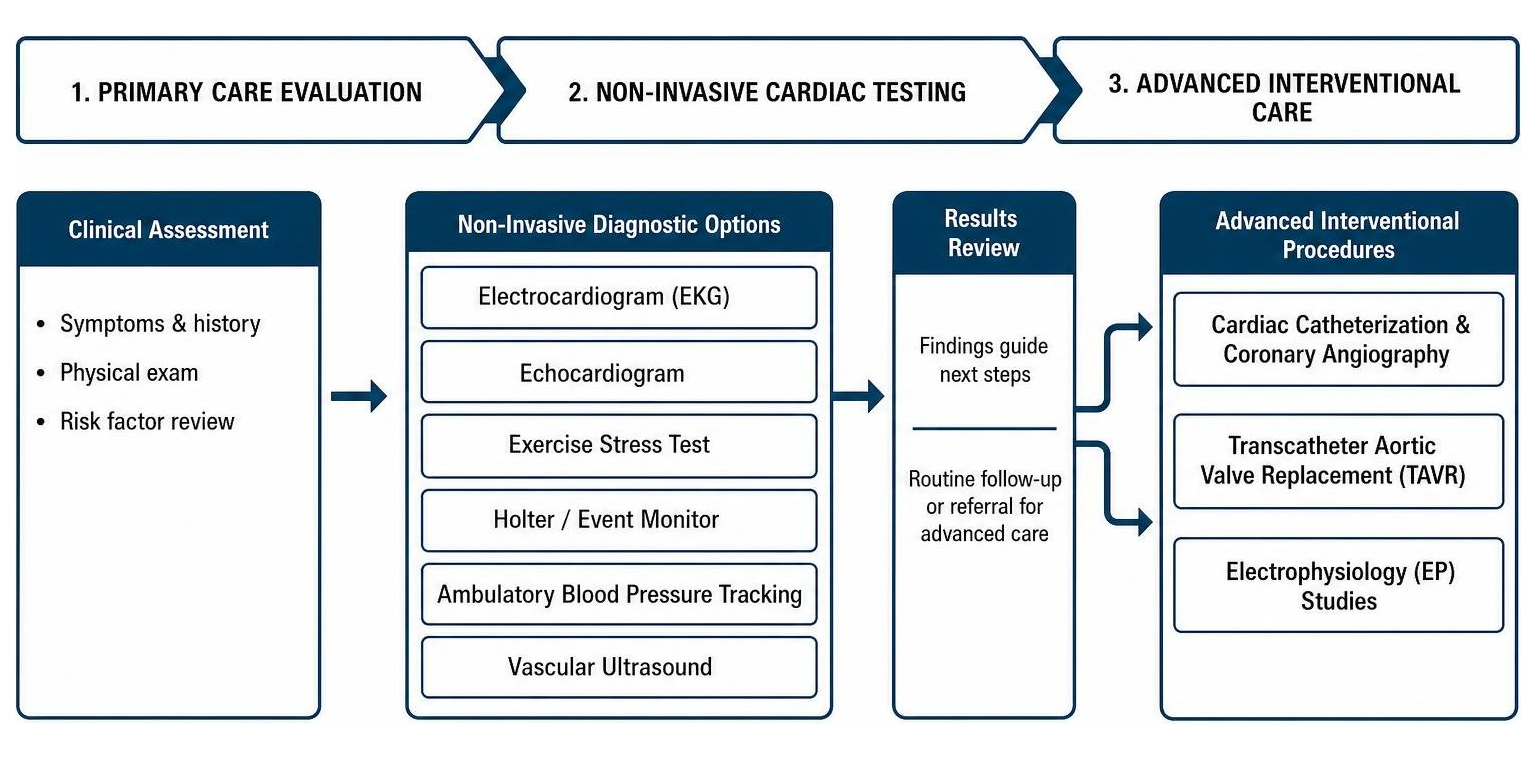
Non-invasive diagnostic testing forms the foundation of modern preventive cardiology. These non-invasive tools give us a detailed look into your heart’s structure, electrical activity, and blood flow without requiring surgical incisions or invasive hospital stays.
Depending on your symptoms and overall risk profile, we may recommend one or more of the following non-invasive options:
- Electrocardiogram (EKG/ECG): A quick, painless bedside test that records the electrical signals of your heart to check for irregular rhythms or signs of prior muscle damage.
- Echocardiogram: An ultrasound evaluation of the heart that uses sound waves to create moving images of your heart chambers and valves, allowing us to assess overall pumping strength and valve function.
- Exercise Stress Testing: A diagnostic protocol where you walk on a treadmill while your heart rate, blood pressure, and EKG are continuously monitored to see how your heart handles physical exertion.
- Holter & Event Monitoring: Wearable rhythm recorders worn for 24 hours to several weeks to capture intermittent palpitations or slow heartbeats during your daily routine.
- Ambulatory Blood Pressure Tracking: Continuous 24-hour blood pressure monitoring that records periodic readings throughout the day and night to evaluate hypertension patterns.
- Vascular Ultrasound: Non-invasive imaging of peripheral arteries and veins (such as the carotid arteries in the neck or leg vessels) to check for blockages, circulation issues, or blood clots.
To help you understand how these diagnostic modalities compare, review our summary guide below:
| Diagnostic Test | Primary Medical Purpose | Typical Test Duration | What It Evaluates |
|---|---|---|---|
| Electrocardiogram (EKG) | Rapid rhythm & electrical assessment | 5–10 minutes | Electrical conduction, heart rate, acute rhythm abnormalities |
| Echocardiogram | Structural & functional cardiac ultrasound | 30–45 minutes | Valve function, chamber size, wall motion, pumping ejection fraction |
| Exercise Stress Test | Exertional blood flow evaluation | 30–60 minutes | Inducible ischemia, exercise tolerance, exertion-triggered arrhythmias |
| Holter / Event Monitor | Continuous ambulatory rhythm tracking | 24 hours to 30 days | Intermittent palpitations, fainting spells, hidden atrial fibrillation |
| Vascular Ultrasound | Peripheral circulation assessment | 30–45 minutes | Plaque accumulation in carotids, peripheral artery disease (PAD), DVT |
If you are experiencing new or changing cardiac symptoms, exploring our dedicated Diagnostic Heart Testing South Boston VA page can help you learn more about what to expect during your diagnostic visit.
Advanced Cardiac Procedures and Hospital-Based Testing
While non-invasive testing solves the majority of diagnostic questions, certain conditions require advanced, hospital-based interventional procedures. When non-invasive results point toward severe blockages, advanced valve decay, or structural defects, hospital integration ensures a smooth transition to higher-level interventional care.
These advanced interventional procedures include:
- Cardiac Catheterization & Coronary Angiography: An interventional procedure where a thin, flexible tube (catheter) is guided through a blood vessel to inject specialized dye and visualize severe arterial blockages under X-ray imaging.
- Transcatheter Aortic Valve Replacement (TAVR): A minimally invasive procedure designed to replace a narrowed aortic valve without requiring open-heart surgery.
- Electrophysiology (EP) Studies: Advanced mapping of the heart’s internal electrical pathways to locate and treat complex, recurring arrhythmias.
When local patients require tertiary care access or emergency hospital transfers, our clinical team works hand-in-hand with regional medical centers. We handle initial diagnostic workups, coordinate direct hospital transfers when advanced interventions are necessary, and provide dedicated post-procedure recovery care back home in South Boston.
Integrating Diagnostic Services with Primary Care
Cardiovascular health does not exist in isolation—it is deeply tied to your total physical health. Integrating specialty cardiac diagnostics directly with primary care and urgent care support creates a seamless, efficient environment for managing complex medical conditions.
When you present with vague symptoms like chest tightness, early diagnostic steps often include basic chest X-rays to rule out lung infections, alongside key laboratory panels. Blood work, including lipid panels and blood sugar tests, helps pinpoint underlying systemic risk factors such as high cholesterol or metabolic conditions.

Taking an integrated approach means your primary care provider and your cardiac team share critical health information instantly. To explore our comprehensive model for co-managing chronic conditions, visit our resource on Heart Disease Diagnosis Treatment South Boston VA.
Preparing for Your South Boston Cardiovascular Testing Visit
Proper preparation helps ensure that your cardiac diagnostic testing yields accurate, actionable results. Depending on your specific health insurance policy, obtaining a primary care provider (PCP) referral prior to scheduling your specialty visit may be necessary for insurance coverage.
To prepare for your upcoming visit, consider keeping the following guidelines in mind:
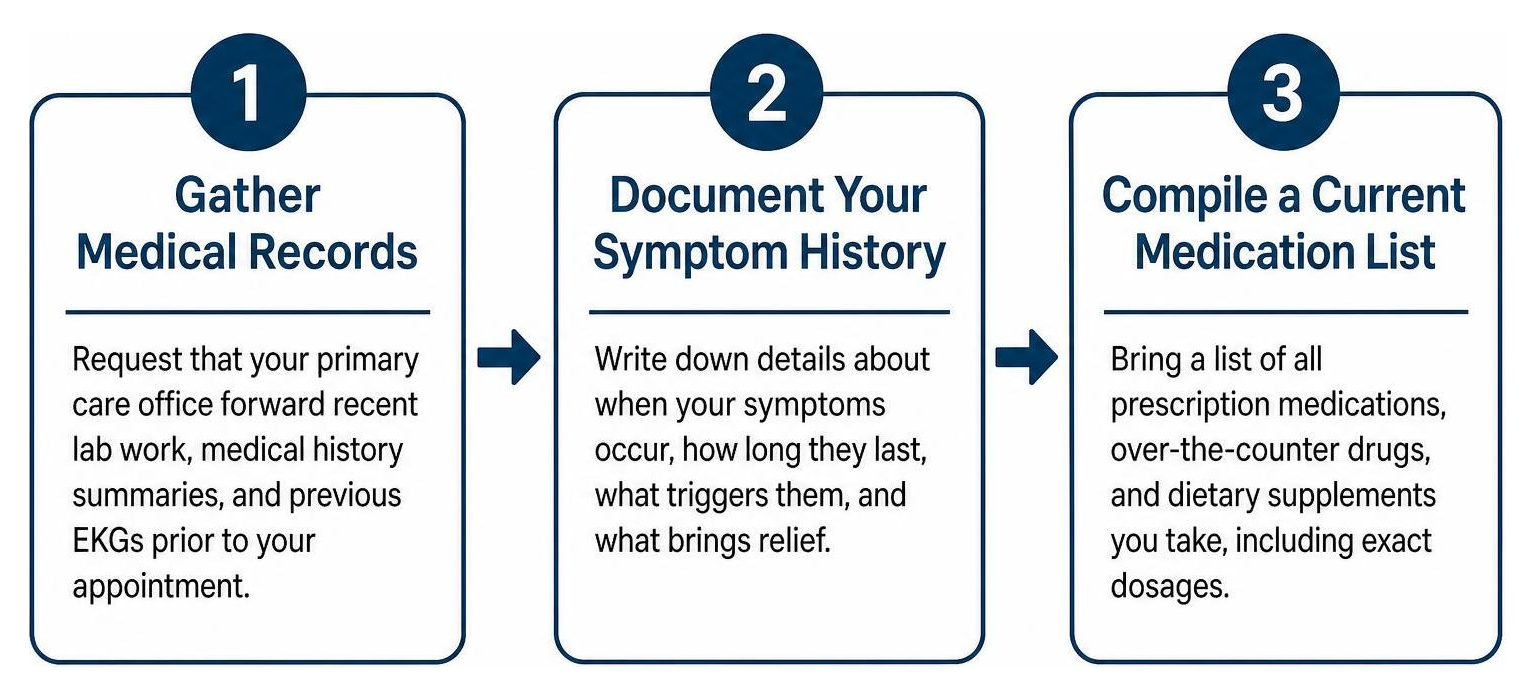
- Gather Medical Records: Request that your primary care office forward recent lab work, medical history summaries, and previous EKGs prior to your appointment.
- Document Your Symptom History: Write down details about when your symptoms occur, how long they last, what triggers them, and what brings relief.
- Compile a Current Medication List: Bring a list of all prescription medications, over-the-counter drugs, and dietary supplements you take, including exact dosages.
- Follow Specific Test Instructions: For exercise stress tests, wear comfortable walking shoes and loose clothing. If fasting is required for lab work, follow the dietary guidelines provided by our staff.
For additional insight into selecting the right local care team for your needs, review Your Guide to Finding a Top Rated South Boston Cardiac Specialist.
Laboratory Testing Workflows and Result Tracking
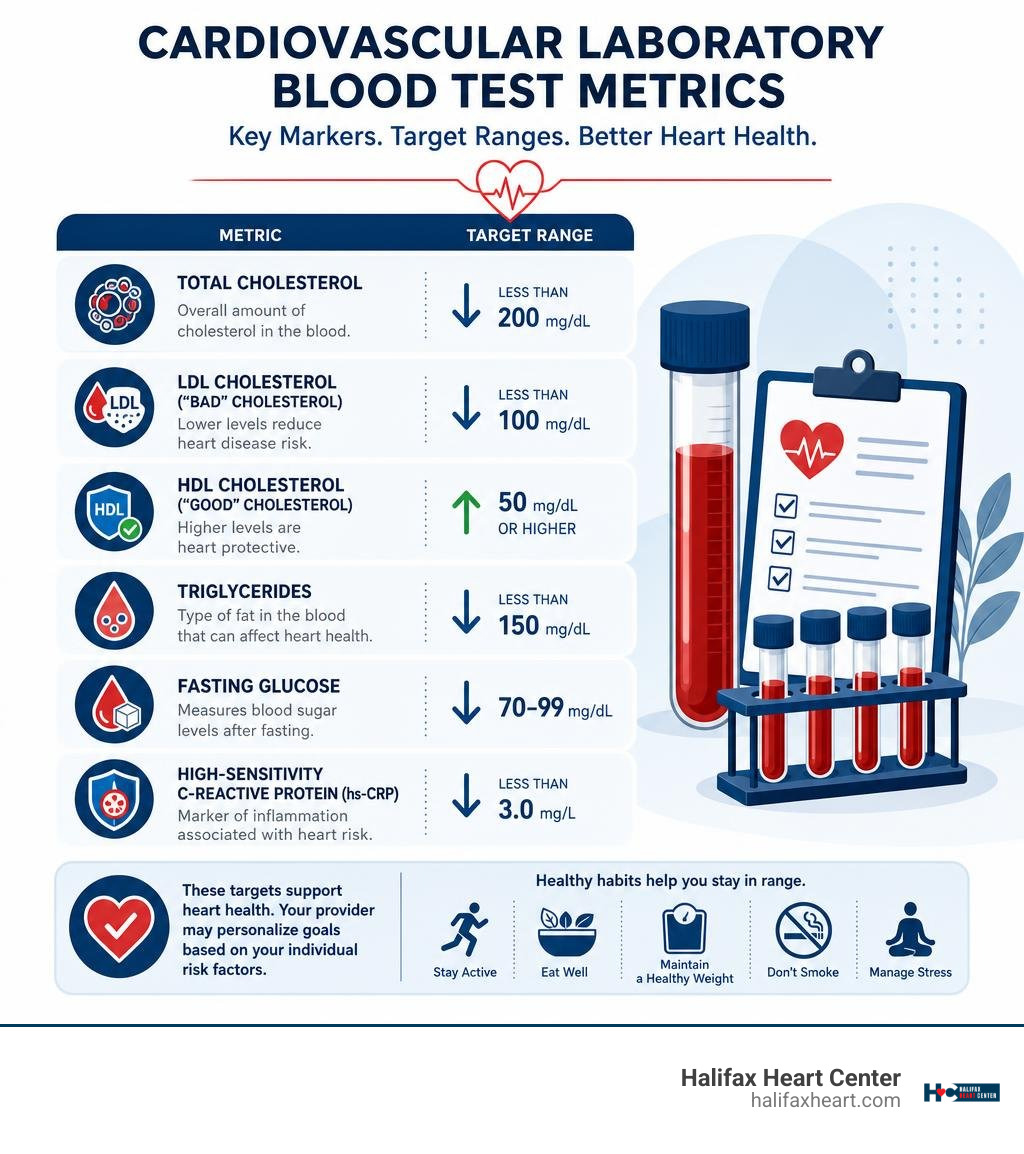
Laboratory diagnostics play an irreplaceable role in assessing overall cardiovascular risk. Routine blood testing panels track key markers such as total cholesterol, LDL, HDL, triglycerides, fasting glucose, and inflammation levels like high-sensitivity C-reactive protein (hs-CRP).
Managing your routine lab testing is simple and direct:
- Walk-In Lab Access: Local laboratory stations allow you to complete necessary blood draws at times that fit your daily routine.
- Digital Result Tracking: Modern patient portals give you secure, instant access to your lab results as soon as they are processed, allowing you to monitor long-term cholesterol and blood sugar trends over time.
- Insurance & Billing Workflows: Our administrative team works directly with major insurance plans, Medicare, and regional coverage providers to confirm pre-authorizations and clarify billing details beforehand.
Adhering to standard diagnostic cardiac testing guidelines ensures that your lab results accurately reflect your cardiovascular baseline, allowing us to build a precise, personalized treatment plan.
Frequently Asked Questions About Cardiovascular Diagnostics
Navigating cardiac testing can naturally raise questions about procedures, scheduling, and diagnostic accuracy. Here are clear answers to some of the most common questions our patients ask.
Do I need a doctor referral for cardiac testing?
In many cases, securing a referral from your primary care provider is the best starting point. While some insurance plans allow direct scheduling for specialty consults, many major insurance carriers require a PCP referral and clinical pre-authorization before covering specialized tests like echocardiograms or stress tests.
A primary care referral ensures that your initial symptoms are properly documented, relevant baseline blood work is ordered, and clinical priorities are communicated directly to our cardiology team. If you are looking for local specialist access, visit our guide on finding a Cardiologist Near Me South Boston VA.
What is the difference between an EKG and an echocardiogram?
While both tests evaluate heart health non-invasively, they measure entirely different aspects of cardiac function:
- Electrocardiogram (EKG): An EKG records the electrical conduction system of the heart. It uses small sticky pads placed on your chest to produce a line graph of electrical waves. It is ideal for detecting irregular heartbeats (arrhythmias), heart rate issues, and acute electrical disruptions caused by a heart attack.
- Echocardiogram: An echocardiogram is a structural ultrasound assessment. It uses sound waves transmitted through a hand-held probe to generate real-time moving images of your heart muscle and valves. It reveals physical attributes, such as how thick your heart walls are, how well your valves open and close, and how efficiently your heart pumps blood with each beat.
Does a negative stress test completely rule out heart disease?
A negative stress test is a very reassuring result, but it does not completely rule out all forms of heart disease. Stress tests are designed to detect significant, severe coronary artery blockages—typically those obstructing 70% or more of a major artery’s blood flow—that restrict oxygen delivery during physical exertion.
However, a stress test may not detect early-stage plaque accumulation or mild coronary artery disease that does not yet restrict blood flow during treadmill exercise. If you continue to experience persistent chest discomfort, shortness of breath, or unexplained fatigue despite a normal stress test, further clinical follow-up diagnostics may be recommended to thoroughly evaluate your cardiovascular system.
Conclusion: Taking Control of Your Heart Health
Taking a proactive approach to your health is one of the most effective steps you can take to maintain an active lifestyle. Proactive health monitoring, clear diagnostic testing, and personalized treatment plans empower you to make informed decisions about your well-being.

At Halifax Heart Center, we are dedicated to bringing high-quality, compassionate cardiac care to the residents of South Boston, Halifax County, and Southside Virginia. Whether you need routine risk screenings, non-invasive diagnostic imaging, or ongoing disease co-management, our team is here to support you every step of the way.
To learn more about local options and cardiac center resources, check out The Ultimate Guide to Finding a South Boston Cardiac Center or explore our full spectrum of services for Heart Disease Diagnosis Treatment South Boston VA. Contact our local office today to schedule your consultation and take charge of your cardiac health close to home.