
The Best Workouts to Prevent Heart Disease
Why exercise prevents heart disease
Scientific research shows that regular exercise prevents heart disease by transforming how your heart and blood vessels function at a cellular level.
Instead of relying only on heavy prescription medications, moving your body acts as a natural, highly effective shield for your cardiovascular system.
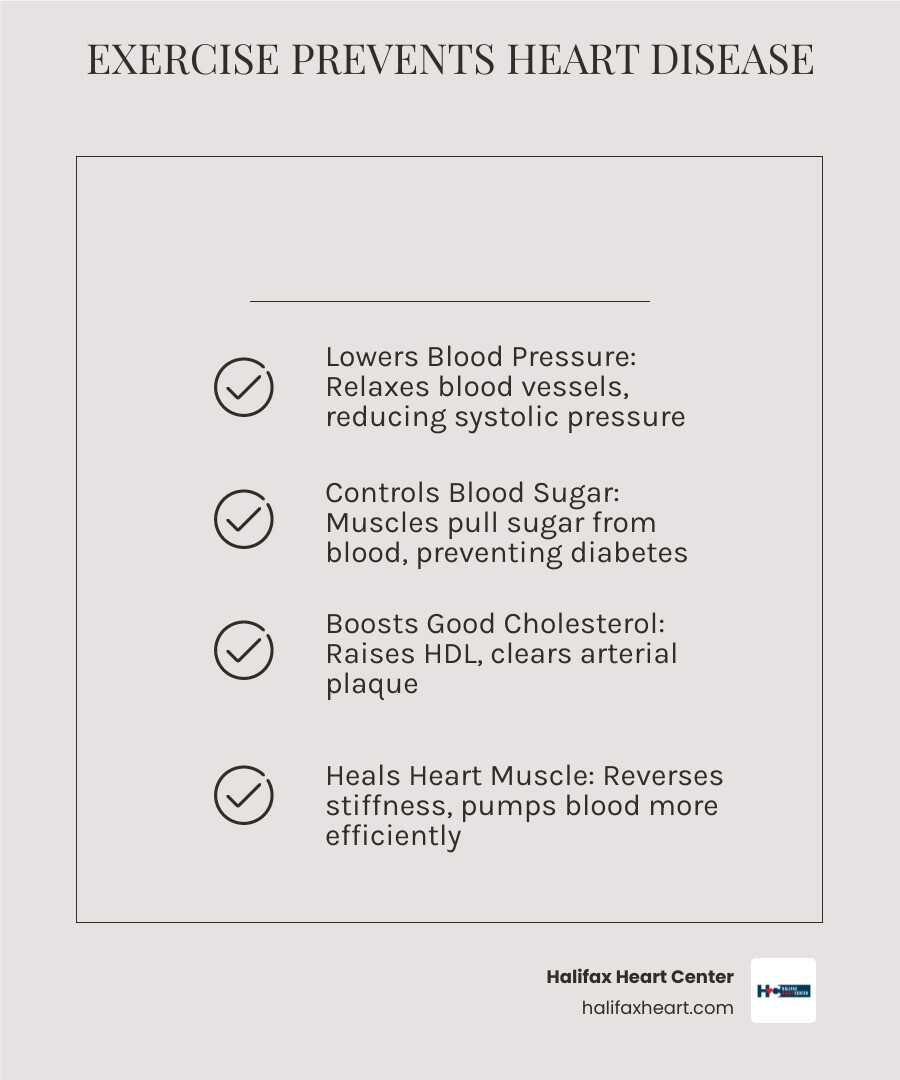
Here is a quick look at exactly how physical activity protects you:
- Lowers Blood Pressure: It relaxes your blood vessels, which drops your systolic pressure and reduces daily strain on your heart.
- Controls Blood Sugar: Exercise helps your muscles pull sugar directly from your blood, keeping type 2 diabetes at bay.
- Boosts Good Cholesterol: It raises your “good” HDL levels and helps clear out the sticky plaque that clogs arteries.
- Heals the Heart Muscle: Regular movement can actually reverse early muscle stiffening and make your heart pump more blood with less effort.
- Reduces Inflammation: It lowers key markers of arterial swelling, like C-reactive protein (CRP).
If you live in rural Southside Virginia and have been feeling out of breath, experiencing chest tightness, or worrying about a family history of heart attacks, you might feel overwhelmed.
At Halifax Heart Center, our team has decades of collective experience helping our South Boston neighbors understand how exercise prevents heart disease through safe, medically supervised routines. We are here to help you design a personalized, local plan to get your strength and peace of mind back.
Exercise prevents heart disease terminology:
- coronary artery disease treatment
- artery plaque removal
- congestive heart failure coronary artery bypass surgery
How Exercise Prevents Heart Disease: The Biological Mechanisms
To truly appreciate how exercise prevents heart disease, we have to look past the bathroom scale. Many people believe that if they do not lose weight, their workouts are not doing anything. This is a myth. The most profound changes happen deep inside your cardiovascular system, far below the surface of your skin.
When you exercise, your heart rate increases, and blood pumps more rapidly through your blood vessels. This movement creates a physical force known as “shear stress” against your arterial walls. Far from causing damage, this friction acts as a wake-up call for your blood vessels. It triggers the release of protective molecules, prevents dangerous remodeling, and physically reshapes your heart into a younger, more resilient organ.
According to a State-of-the-Art Review on Cardiac Benefits of Exercise, consistent physical activity can even trigger cardiomyogenesis—the actual birth of new heart muscle cells. This is a massive scientific discovery because we used to believe that once heart cells died or aged, they were gone forever. Voluntary exercise can increase new heart cell formation by up to 4.6-fold, helping to reverse age-related decline.
Furthermore, your active muscles release signaling proteins called myokines, which travel through your body to suppress systemic inflammation. Even your gut microbiome gets in on the action, sending out healthy metabolic signals that protect your blood vessels from hardening.
Cellular Changes: Nitric Oxide and Cardiomyogenesis
At the cellular level, the star of the show is an enzyme called endothelial nitric oxide synthase (eNOS). When shear stress stimulates your blood vessels, eNOS goes to work producing nitric oxide. Nitric oxide is your body’s natural vasodilator; it tells the smooth muscles around your arteries to relax and widen.
This widening of your blood vessels and capillaries accomplishes several vital tasks:
- It immediately lowers the resistance your heart must pump against, acting like a natural beta-blocker.
- It improves oxygen extraction, allowing your skeletal muscles to pull oxygen directly from your blood more efficiently.
- It prevents platelets from sticking together, which dramatically cuts down the risk of blood clots.
As you stick with your routine, your body also remodels its physical plumbing. It grows new capillaries (microscopic blood vessels) to deliver fresh oxygen to your tissues, ensuring that no single part of your heart is left struggling for breath.
Managing Traditional Risk Factors: Blood Pressure and Lipids
Beyond these microscopic cellular changes, regular exercise is a master regulator of traditional cardiovascular risk factors. If you are managing high blood pressure, high cholesterol, or prediabetes, exercise acts as a multi-targeted therapy.
Consider these powerful statistics from global epidemiological research:
- A minor 2 mmHg decline in systolic blood pressure reduces stroke mortality by 6% and coronary heart disease mortality by 4%.
- A 5 mmHg reduction in systolic blood pressure reduces the risk of major cardiovascular events by a whopping 10%, cutting stroke and coronary heart disease mortality by 14% and 9% respectively.
- Physical inactivity is a global epidemic, causing roughly 3.2 million deaths annually. It is directly responsible for about 6% of all coronary heart disease cases worldwide.
When it comes to cholesterol, exercise is one of the few natural ways to raise your High-Density Lipoprotein (HDL)—the “good” cholesterol that acts like a vacuum cleaner, sweeping excess plaque out of your arteries. At the same time, it lowers harmful Low-Density Lipoprotein (LDL) and reduces fasting triglycerides by 5% to 25%.
As detailed in a landmark study on Research on Exercise and Atherosclerotic Cardiovascular Disease, using Mendelian randomization (a method looking at genetic data), researchers proved a direct causal link showing that physical inactivity increases the risk of atherosclerotic cardiovascular disease (ASCVD) by roughly 62%. Moving from a completely sedentary lifestyle to a moderately active one provides the sharpest drop in this risk, demonstrating that you do not need to train like an Olympic athlete to save your own life.
The Best Workouts to Protect Your Cardiovascular System
Now that you know the “why,” let’s talk about the “how.” What are the best workouts to prevent heart disease?
An ideal cardiovascular routine is not a one-size-fits-all program. For the absolute best results, the American Heart Association and the World Health Organization recommend combining two distinct types of physical activity: aerobic exercise and resistance training.
These two exercise styles work in harmony. While aerobic exercise focuses on training your heart muscle and expanding your blood vessels, resistance training focuses on building active muscle mass, which acts as a metabolic sink to burn up excess blood sugar and cholesterol.
| Exercise Type | Primary Cardiovascular Benefits | Recommended Weekly Dose | Examples |
|---|---|---|---|
| Aerobic Exercise | Strengthens heart muscle, lowers resting heart rate, increases VO2max, improves blood vessel flexibility. | 150–300 minutes of moderate intensity OR 75–150 minutes of vigorous intensity. | Brisk walking, cycling, swimming, water aerobics, rowing. |
| Resistance Training | Improves body composition, increases insulin sensitivity, reduces peripheral resistance, supports joint health. | At least 2 days per week, targeting all major muscle groups. | Moderate weightlifting, resistance bands, bodyweight exercises (pushups, squats). |
Aerobic Exercise: The Foundation of Cardiovascular Fitness
Aerobic exercise—often called “cardio”—is the cornerstone of any heart-healthy lifestyle. During aerobic activity, you move your large muscle groups repeatedly, which coaxes your heart to pump faster and deeper.
According to the UpToDate Clinical Guidelines on Exercise and ASCVD Prevention, we should all aim for a minimum of 150 minutes of moderate-intensity aerobic physical activity per week. If you prefer higher-intensity workouts, 75 minutes of vigorous activity can provide similar benefits.
The ultimate goal of aerobic exercise is to improve your cardiorespiratory fitness, which is measured by your VO2max (the maximum amount of oxygen your body can use during exercise). Your cardiorespiratory fitness is a stronger predictor of your future health and lifespan than many traditional risk factors, including smoking and high blood pressure. A simple 1-MET (Metabolic Equivalent of Task) improvement in your fitness level is linked to a 13% reduction in all-cause mortality.
If you are just starting out in South Boston, VA, do not let these numbers intimidate you. You can easily break your 150 weekly minutes down into manageable 10- or 15-minute walks around your neighborhood or at the local park.
Resistance Training: Why Strength Training Matters
Many people skip strength training because they think it is only for bodybuilders. In reality, moderate weightlifting is a powerful tool to prevent heart disease.
When you build muscle, you create more space for your body to store glucose. This dramatically improves your insulin sensitivity and helps prevent metabolic syndrome—a condition that affects 30% to 40% of adults over age 65 and doubles the risk of developing cardiovascular disease.
We recommend incorporating strength-based activities at least twice a week. You do not need heavy gym equipment; you can use light dumbbells, resistance bands, or your own body weight. Focus on the major muscle groups: legs, hips, back, abdomen, chest, shoulders, and arms. As your muscles get stronger, they extract oxygen from your blood more easily, which means your heart does not have to work as hard during everyday tasks like carrying groceries up the stairs.
High-Intensity Interval Training (HIIT) for Heart Recovery
If you are looking to maximize your cardiovascular progress in less time, High-Intensity Interval Training (HIIT) is an excellent option. HIIT involves short bursts of intense exercise alternated with periods of low-intensity recovery. For example, you might walk briskly or jog for 60 seconds, then stroll slowly for two minutes, repeating this cycle for 20 minutes.
As detailed in the JACC Review on Exercise for Primary and Secondary Prevention, interval training is highly effective at reversing early physiological damage to the heart, such as left ventricular hypertrophy (the thickening and stiffening of the heart’s main pumping chamber). By pushing your heart rate up and then letting it drop, you are teaching your heart muscle to become more flexible, less rigid, and highly efficient.
Tailoring Your Workout to Your Cardiovascular Health Status
While exercise prevents heart disease, safety must always come first. Your exercise routine should be treated like a personalized medical prescription—carefully adjusted for your age, current fitness level, and any existing medical conditions.

Before you lace up your sneakers and head out the door for a high-intensity workout, it is essential to undergo a clinical risk assessment. If you have been sedentary, have a history of heart issues, or are experiencing symptoms like chest discomfort or unusual shortness of breath, please consult with our team first. We can perform comprehensive diagnostic heart testing services right here in South Boston, VA, to ensure your heart is ready and safe for physical activity.
How Exercise Prevents Heart Disease in Patients with Hypertension
If you have been diagnosed with high blood pressure (hypertension), exercise is one of the most powerful non-drug treatments available.
Directly after a workout, you will experience a phenomenon called post-exercise hypotension. Because your blood vessels dilate during exercise, your blood pressure will remain lower than normal for up to 24 hours after you stop moving.
According to the Frontiers Narrative Review on Exercise in Cardiovascular Health, consistent exercise reduces total peripheral resistance and resets your sympathetic nervous system (the “fight or flight” response that keeps your blood pressure elevated). Over time, a dedicated exercise program can lower your resting blood pressure by 5 to 7 mmHg—a change that is highly competitive with common blood pressure medications.
How Exercise Prevents Heart Disease in Patients with Diabetes
For our neighbors living with type 2 diabetes, heart health is a top priority. In the United States, cardiovascular death rates for adults with diabetes are 1.7 times higher than for those without.
When you exercise, your muscles contract and pull glucose directly out of your bloodstream to use as fuel. This process happens through insulin-independent pathways, meaning your body can lower its blood sugar even if you suffer from severe insulin resistance.
As outlined in the PMC Academic Review on Exercise for Prevention and Relief of CVD, regular physical activity targets dangerous visceral fat (the deep belly fat that wraps around your organs) and lowers systemic inflammation. Even if the numbers on your weight scale do not budge, reducing this visceral fat dramatically lowers your risk of heart attacks and strokes.
Knowing Your Limits: Avoiding Over-Exercising and Heart Strain
Can you have too much of a good thing? Yes. While moderate exercise is incredibly protective, sudden, extreme physical exertion—especially if your body is not conditioned for it—can temporarily strain your heart and trigger arrhythmias or plaque rupture.
To keep your workouts safe and enjoyable, keep these guidelines in mind:
- Calculate Your Target Heart Rate: Work with a doctor to find your target heart rate zone (typically 50% to 85% of your maximum heart rate) and use a wearable tracker to stay within that safe window.
- Watch for Red Flags: Stop exercising immediately and seek medical attention if you experience chest pain, pressure, dizziness, cold sweats, or extreme shortness of breath.
- Listen to Your Body: It is normal to feel some muscle soreness, but persistent fatigue, joint pain, or exhaustion that lasts for days means you are overdoing it. Give your body time to rest and recover.
- Know the Contraindications: If you have unstable angina, severe heart valve disease, or uncontrolled heart failure, vigorous exercise is strictly contraindicated until your condition is stabilized by a cardiologist.
Frequently Asked Questions About Exercise and Heart Health
Can exercise reverse existing heart damage?
Yes, to a remarkable degree! While severe scarring from a major heart attack cannot be completely undone, exercise can reverse early-stage heart stiffness and muscle thickening (left ventricular hypertrophy). By engaging in consistent aerobic and interval training, you can make your heart muscle more flexible and improve its pumping efficiency. This process, known as positive cardiac remodeling, reduces the levels of harmful cardiac biomarkers in your blood and lowers your risk of future heart failure.
How many steps a day are needed to reduce premature mortality?
You do not need to hit the famous “10,000 steps” mark to protect your heart. Clinical studies tracking middle-aged adults have revealed that taking 7,000 steps or more per day is the sweet spot associated with a significantly lower risk of premature death. Interestingly, the intensity or speed of your walking does not matter nearly as much as the sheer volume of steps. Simply keeping a steady, daily habit of moving is what keeps you healthy.
Is it safe to exercise during pregnancy?
Absolutely, and it is highly encouraged! For healthy pregnant women, regular moderate physical activity supports cardiovascular health, helps control blood sugar, and reduces the risk of gestational diabetes.
If you were active before pregnancy, you can usually continue your routine with minor modifications. If you were sedentary, it is best to start slowly with gentle walking or water aerobics. However, because every pregnancy is unique, you should always consult your OB/GYN and a cardiovascular specialist before beginning or continuing an exercise routine.
Conclusion
When it comes to protecting your cardiovascular system, exercise prevents heart disease more effectively, safely, and affordably than almost any other intervention.
To help our patients build a truly heart-healthy life, we often recommend the SEED framework:
- Sleep: Aim for 7 to 9 hours of restorative sleep each night.
- Emotion: Manage stress and anxiety, which can elevate your blood pressure.
- Exercise: Move your body daily, aiming for at least 150 minutes of moderate activity per week.
- Diet: Fuel your body with whole, nutrient-dense foods that support your blood vessels.
You do not have to navigate this journey alone. Whether you are looking to prevent future heart issues, manage an existing condition, or safely return to physical activity after a cardiac event, we are here to support you every step of the way.
To learn more about our services or to schedule a personalized cardiovascular evaluation, please visit our heart disease diagnosis and treatment page. Let’s work together to keep your heart strong, local, and healthy for years to come!
Our Location in South Boston, VA
Halifax Heart Center
2232 Wilborn Ave, Suite A
South Boston, VA 24592
Proudly serving South Boston, Halifax County, and the greater Southside Virginia community.
Explore more of our educational resources:
- Learn about our comprehensive clinical team on our Heart Providers South Boston VA page.
- Discover our full range of diagnostic and therapeutic options under Heart Services South Boston VA.
- Read more heart-healthy tips and medical updates on our Blog.