
Congestive Heart Failure Coronary Artery Bypass Surgery: The Ultimate Road Map to Recovery
When Your Heart Needs a Bypass: What CHF Patients Must Know Before Surgery
Congestive heart failure coronary artery bypass surgery is one of the most consequential decisions a cardiac patient and their care team will ever face — and knowing what to expect can make all the difference.
Quick answer: Can you have bypass surgery if you have congestive heart failure?
- Yes, in many cases — CABG can be performed safely on heart failure patients with the right preparation
- It can improve ejection fraction from as low as 20% up to 35%, meaningfully improving quality of life
- Patient selection matters — factors like myocardial viability, coronary artery suitability, and heart compensation are assessed first
- Outcomes depend on surgical approach (on-pump vs. off-pump), ejection fraction, and whether optimal medical therapy follows surgery
- Cardiac rehabilitation after surgery is essential to prevent further heart failure progression
Coronary artery disease (CAD) is the leading cause of heart failure worldwide, accounting for roughly 60% of all heart failure cases with reduced ejection fraction. When blocked arteries starve the heart muscle of blood long enough, the heart weakens — sometimes to the point where surgery feels impossibly risky.
But here is what the latest evidence shows: for the right patient, bypass surgery does not just relieve symptoms. It can extend life, reduce hospitalizations, and slow the progression of heart failure — especially when combined with the right medications and rehabilitation.
That said, this is not a one-size-fits-all decision. The path from diagnosis to recovery involves careful testing, a team-based evaluation, a surgical procedure lasting 3 to 6 hours, and a recovery window of 6 to 12 weeks — plus months of rehabilitation that directly shape your long-term heart health.
At Halifax Heart Center, we provide compassionate, expert cardiovascular care to patients throughout South Boston, Halifax County, and Southside Virginia — including personalized evaluation and treatment planning for congestive heart failure coronary artery bypass surgery candidates. This guide walks you through everything you need to know, from surgical options to recovery.
Understanding Congestive Heart Failure Coronary Artery Bypass Surgery
When we discuss congestive heart failure coronary artery bypass surgery, we are looking at the intersection of two major cardiac challenges: plumbing (blocked arteries) and pump strength (heart failure).
Ischemic heart disease, which stems from severe coronary artery disease, is the primary driver of left ventricular dysfunction. When your coronary arteries are narrowed by plaque, the blood supply to your heart muscle (myocardium) is severely compromised. Over time, this chronic oxygen starvation causes segments of the heart muscle to “hibernate” or stop contracting properly to save energy. If the blockage is sudden or complete, it leads to a myocardial infarction (heart attack), leaving behind non-contractile scar tissue. Both scenarios reduce your left ventricular ejection fraction (LVEF)—the percentage of blood your heart pumps out with each beat—ultimately leading to congestive heart failure (CHF).
The primary goal of coronary artery bypass grafting (CABG) in this context is revascularization: restoring blood flow to these starved, hibernating areas of the heart so they can resume normal contraction.
For decades, clinicians debated whether the risks of major open-heart surgery outweighed the benefits for patients with severely damaged hearts. However, landmark clinical trials have reshaped how we approach this decision:
- The STICH Trial: The landmark STICH trial on CABG in LV dysfunction evaluated patients with an LVEF of 35% or less. The trial demonstrated that while CABG did not show a significant difference in all-cause mortality compared to medical therapy alone in the short term, it significantly reduced cardiovascular-related deaths and the composite outcome of death or cardiovascular hospitalization over a median follow-up of 56 months.
- Modern Revascularization Decisions: A recent Scientific Reports study on CABG vs PCI in advanced heart failure highlighted that for patients with multivessel coronary artery disease and advanced heart failure, choosing between CABG and percutaneous coronary intervention (PCI, or stenting) requires a highly individualized approach. The study showed that CABG achieved complete revascularization more frequently (68.8% vs. 57.1% for PCI) and was associated with lower rates of repeat revascularization and myocardial infarction over a 6-year follow-up, though it carried a higher perioperative stroke risk and longer initial hospital stays.
Restoring a robust blood supply can help a failing heart remodel itself in a positive way, but success requires careful preoperative planning.
Preoperative Risk Assessment for Congestive Heart Failure Coronary Artery Bypass Surgery
Because bypass surgery is highly complex when the heart is already weak, we conduct exhaustive preoperative risk assessments. This ensures that the surgery is both safe and likely to succeed. Key predictors of post-CABG heart failure and mortality include:
- Left Ventricular Mass Index (LVMI): An LVMI greater than 116 g/m² indicates significant pathological enlargement of the heart, which increases postoperative risk.
- Relative Wall Thickness (RWT): An RWT-to-end-diastolic-dimensions ratio greater than 0.42 is another critical predictor of poor outcomes and progressive heart failure.
- Systolic Hypertension: Preoperative systolic blood pressure consistently over 140 mmHg is associated with up to a 40% increase in post-operative mortality, as it forces the weakened heart to pump against high resistance.
To evaluate these structural changes and determine if a patient will benefit from surgery, we perform advanced testing. The most crucial question we must answer is: Is the damaged heart muscle actually viable?
Revascularization only works if the heart muscle is hibernating (alive but inactive) rather than scarred (dead). We assess this viability using cardiac MRI with delayed gadolinium enhancement or PET scans. MRI is particularly excellent because it can precisely evaluate scar thickness; if the scar tissue is limited to less than 50% of the heart wall thickness, the muscle has a high potential to recover after surgery.
Additionally, as detailed in a recent Frontiers study on LV remodeling and CABG outcomes, measuring the Left Ventricular End-Systolic Volume Index (LVESVI) is essential. Patients with severe left ventricular remodeling (LVESVI ≥ 92 ml/m²) face a higher risk of perioperative complications and require specialized surgical strategies.
At Halifax Heart Center, we offer comprehensive Diagnostic Heart Testing South Boston VA to thoroughly evaluate ventricular volume, myocardial viability, and hemodynamics, ensuring our local patients receive the safest possible surgical recommendations.
The Role of Biomarkers in Congestive Heart Failure Coronary Artery Bypass Surgery
Biomarkers are invaluable tools that act as chemical windows into your heart’s stress levels. When managing heart failure before and after CABG, we routinely monitor several key proteins:
- B-type Natriuretic Peptide (BNP) and NT-proBNP: These are released by your heart ventricles in response to increased pressure and wall stretch. BNP has a short half-life of about 20 minutes, making it excellent for tracking rapid, acute changes in your heart’s status. NT-proBNP is a more stable byproduct with a longer half-life of 120 minutes, meaning its levels are typically 2 to 3 times higher and provide a steadier picture of chronic heart strain.
- Corin and Furin: These are crucial enzymes. Corin and Furin act as molecular scissors that cut the inactive precursor “pro-BNP” into active BNP, which then works to relax blood vessels and protect the heart. If a patient has low levels of Corin or Furin, their body cannot activate these protective peptides efficiently, increasing their risk of heart failure progression.
- Adrenomedullin (ADM): This peptide acts as a potent vasodilator and anti-fibrotic agent. It rises compensatorily during cardiac stress to protect the heart from stiffening.
By tracking these biomarkers, our team can identify early signs of fluid overload or heart strain long before physical symptoms appear. This allows us to adjust medications proactively. For local patients in Southside Virginia, our specialized Heart Disease Diagnosis Treatment South Boston VA services integrate advanced biomarker tracking directly into long-term heart failure management.
Molecular Mechanisms: Fibrosis, Hypertrophy, and Biomarkers
To understand how heart failure progresses after surgery—and how we stop it—we have to look at the microscopic battle occurring within the heart tissue.
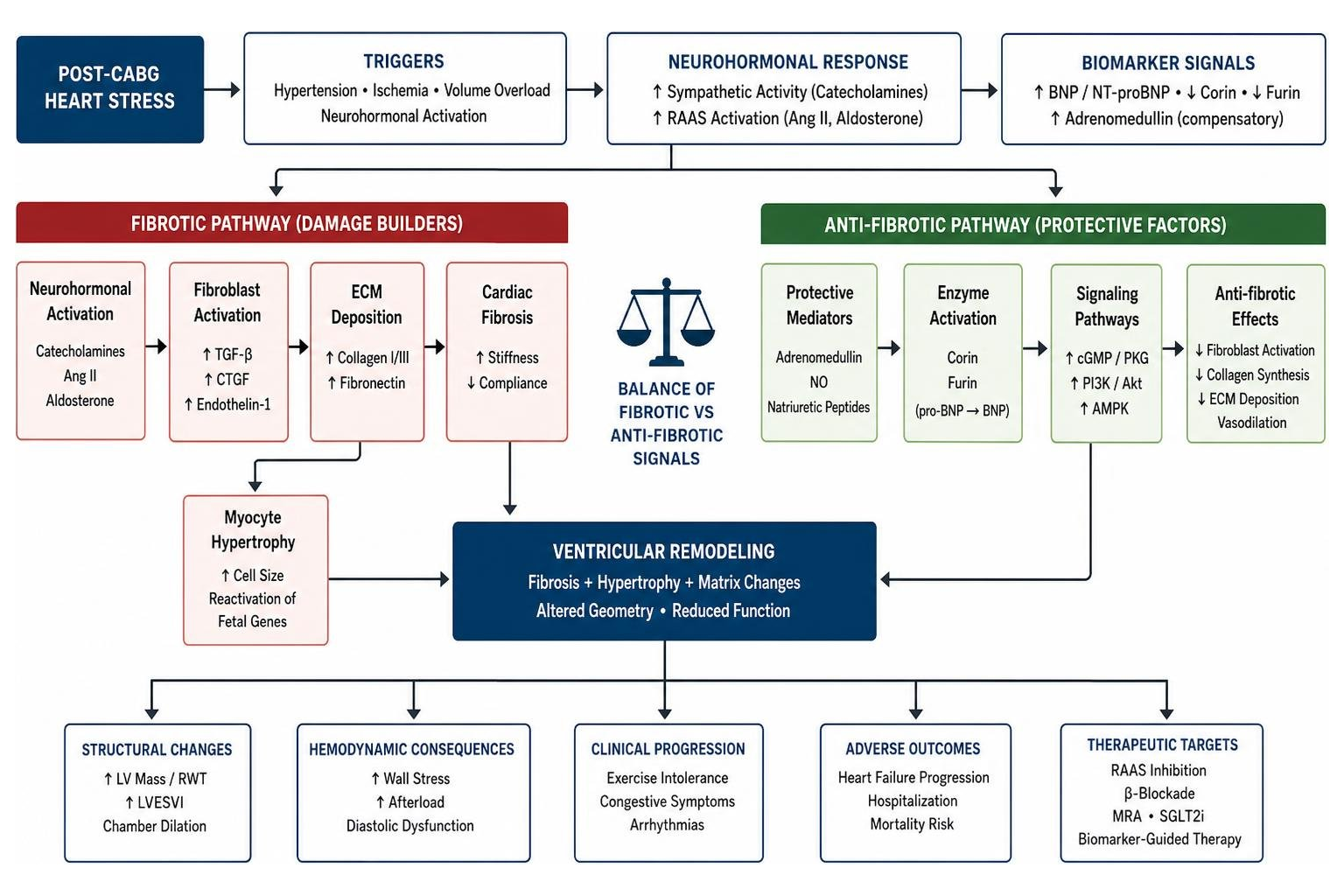
When the heart is stressed by high blood pressure or poor blood flow, it activates survival mechanisms that can unfortunately become destructive over time. This process is driven by two opposing forces: fibrotic factors and anti-fibrotic factors.
The Fibrotic Pathway (The Damage Builders)
When the heart is under stress, the sympathetic nervous system and the kidneys release high levels of catecholamines (like adrenaline) and activate the renin-angiotensin-aldosterone system (RAAS). While these hormones help maintain blood pressure in the short term, their chronic presence triggers a cascade of negative effects:
- They stimulate cardiac fibroblasts to produce excess collagen, leading to cardiac fibrosis (scarring and stiffening of the heart muscle).
- They force individual heart muscle cells to grow abnormally large, a process known as pathological cardiac hypertrophy.
- This combination of stiffness and enlargement increases the workload on the heart, raising blood pressure (hypertension) and creating a vicious cycle that leads to progressive heart failure.
The Anti-Fibrotic Pathway (The Repair Crew)
Fortunately, the body has an built-in defense system to combat this stiffening. When heart walls stretch due to pressure, they release natriuretic peptides (BNP) and adrenomedullin (ADM). These protective molecules bind to specific receptors to:
- Promote the excretion of sodium and water through the kidneys (reducing blood volume).
- Dilate blood vessels to lower blood pressure.
- Directly block the fibrotic pathways, preventing the heart muscle from becoming excessively stiff.
If the fibrotic factors outpace the protective anti-fibrotic factors, the heart undergoes negative “remodeling,” losing its elasticity and pumping capacity. Our goal after surgery is to tip the scales back in favor of the anti-fibrotic repair crew using targeted medications and structured exercise.
Surgical Strategies and Long-Term Survival Outcomes
When performing a bypass on a patient with a weak heart, the surgical strategy itself plays a massive role in recovery. The two primary approaches are on-pump CABG and off-pump CABG.
- On-Pump CABG: This is the traditional method. The surgeon uses a cardiopulmonary bypass (heart-lung) machine to temporarily take over circulation, allowing them to stop the heart and perform the bypass grafts on a perfectly still, bloodless field.
- Off-Pump CABG (OPCAB): Developed to avoid the inflammatory response sometimes triggered by the heart-lung machine, this technique is performed while the heart is still beating, using specialized stabilizing devices to hold the target artery still.
While off-pump surgery sounds highly appealing because it avoids the bypass machine, the latest research indicates that for heart failure patients with reduced ejection fraction (HFrEF), on-pump CABG often delivers superior outcomes.
According to the Frontiers study on LV remodeling and CABG outcomes, off-pump CABG in HFrEF patients was associated with significantly higher perioperative mortality compared to on-pump CABG (12.5% vs. 3.8%). This difference was even more pronounced in patients with severe left ventricular remodeling (LVESVI ≥ 92 ml/m²), where the off-pump perioperative mortality reached 22.2%.
Furthermore, off-pump patients required substantially more mechanical circulatory support, such as Intra-Aortic Balloon Pumps (IABP) and Extra-Corporeal Membrane Oxygenation (ECMO), because maneuvering a weak, beating heart to sew delicate grafts can cause severe hemodynamic instability.
| Feature / Outcome | On-Pump CABG | Off-Pump CABG (OPCAB) |
|---|---|---|
| Heart Status During Surgery | Stopped (using heart-lung machine) | Beating (using local stabilizers) |
| Perioperative Mortality (HFrEF) | Lower (~3.8%) | Higher (~12.5% overall; up to 22.2% in severe remodeling) |
| Need for Postoperative ECMO | Low (~1.3%) | High (~22.5%) |
| Postoperative Atrial Fibrillation | Lower (~14.1%) | Higher (~35.0%) |
| Complete Revascularization | More easily achieved | Can be technically challenging in posterior vessels |
For patients with severely reduced ejection fractions (LVEF ≤ 30%), a multidisciplinary “Heart Team” evaluation is crucial to determine if temporary mechanical support should be planned. As discussed in the Heart and Vessels study on surgical management of low LVEF, selective, indication-driven use of advanced support devices like the Impella 5.5—rather than universal, routine placement—can achieve excellent postoperative survival rates (with overall operative mortality as low as 1.4% in carefully selected cohorts).
Preoperative planning, including right-heart catheterization and viability testing, helps ensure the heart is fully supported during its transition to restored blood flow.
Cardiac Rehabilitation: Reversing Remodeling and Preventing Heart Failure
Surviving the operating room is only the first step. The true transformation of your heart’s structure and function happens during the recovery and rehabilitation phase.
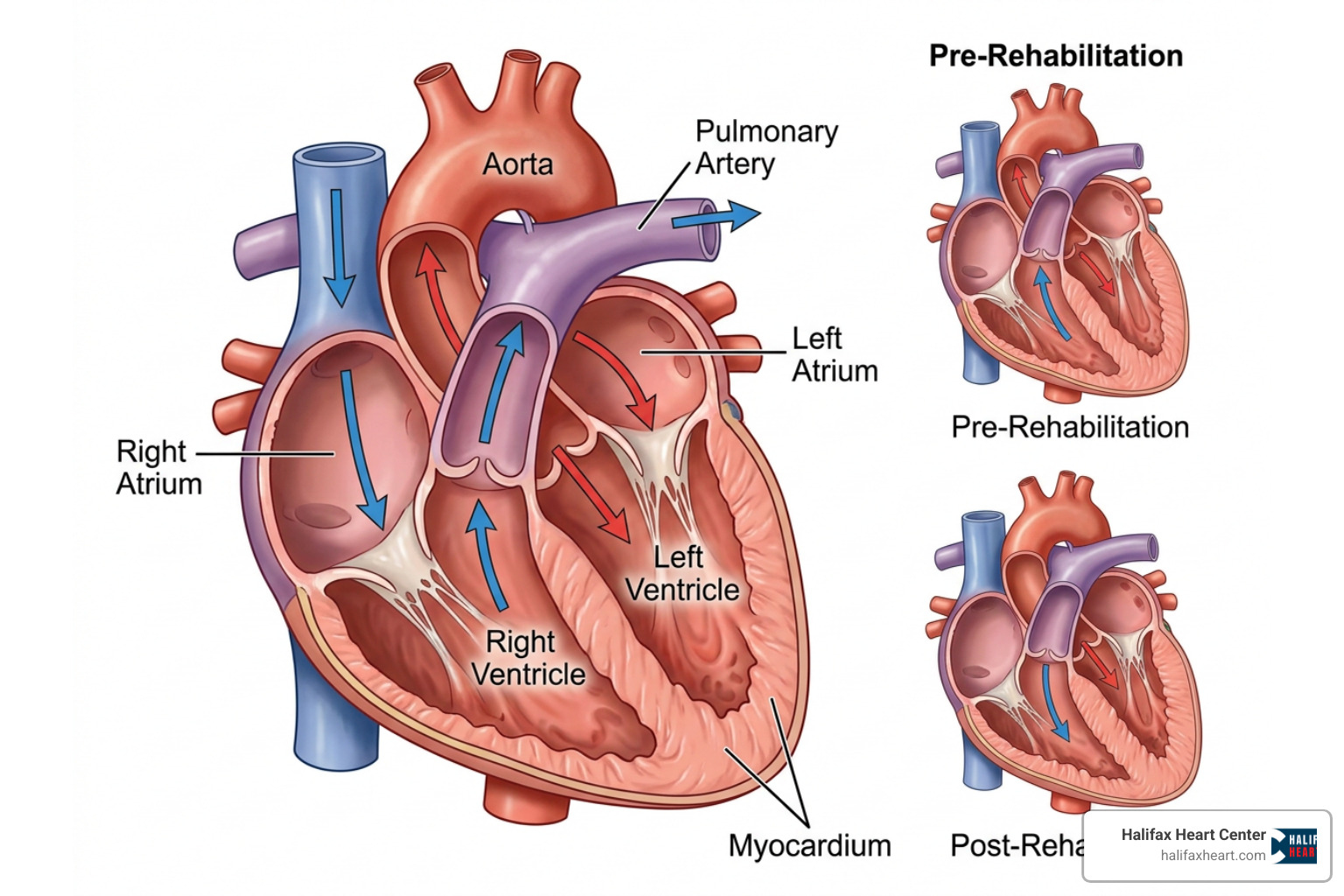
After congestive heart failure coronary artery bypass surgery, the heart is highly adaptable. If left inactive, it can continue to dilate and stiffen. However, structured cardiac rehabilitation can actively drive reverse remodeling—a process where the left ventricle actually shrinks back toward a normal size, the heart walls regain elasticity (improving diastolic function), and the muscle pumps blood more effectively (improving systolic function).
This physical recovery must be supported by Optimal Medical Therapy (OMT). The impact of taking the right medications after surgery cannot be overstated. A clinical study published in BMC Cardiovascular Disorders evaluated HFrEF patients post-CABG and found that patients who were prescribed and maintained on OMT at discharge experienced a 75% adjusted risk reduction for the composite endpoint of heart failure rehospitalization and all-cause mortality over a median follow-up of 3.6 years.
At Halifax Heart Center, we emphasize that surgery is not a cure for underlying heart disease; rather, it is a powerful reset button. To protect that reset, we provide highly coordinated Heart Services South Boston VA that seamlessly bridge the gap between your surgical discharge, medication optimization, and long-term cardiac rehabilitation.
Exercise Rehabilitation Protocols and Fibrotic Pathways
How exactly does exercise heal a weak heart? It works on a deep molecular level by directly altering the balance of fibrotic and anti-fibrotic pathways.
When patients participate in structured exercise, several positive changes occur:
- Enhancing the PRO-BNP/CORIN System: Exercise training helps upregulate the enzymes Corin and Furin. This allows the body to efficiently convert inactive pro-BNP into active, protective BNP, which actively works to suppress cardiac fibrosis and reduce heart stiffness.
- Downregulating Stress Hormones: Regular physical activity lowers circulating catecholamines (adrenaline) and dampens the overactive RAAS system, halting pathological hypertrophy.
Different types of exercise training offer unique benefits for post-CABG heart failure patients:
- Moderate-Intensity Continuous Training (MICT): This is the traditional foundation of cardiac rehab (e.g., 30–60 minutes of continuous walking or cycling at a moderate pace). It is highly safe, improves aerobic capacity, and steadily reduces peripheral vascular resistance.
- High-Intensity Interval Training (HIIT): Recent clinical evidence has challenged older concerns about higher intensities. Studies have shown that supervised HIIT (alternating short bursts of higher-intensity exercise with active recovery) is actually more effective than MICT at improving overall cardiovascular function, reducing concentric hypertrophy, and optimizing the PRO-BNP/CORIN system in stable post-CABG patients.
- Resistance and Combined Training: Incorporating light, high-repetition strength training helps rebuild skeletal muscle mass lost during heart failure and surgery. This reduces the overall workload on the heart during daily tasks like carrying groceries.
A standard evidence-based protocol begins with supervised sessions 2 to 3 times per week starting 7 to 14 days after surgical discharge, gradually transitioning to structured home programs to sustain these anti-fibrotic benefits for years to come.
Frequently Asked Questions about Post-CABG Heart Failure
What is the recovery timeline after coronary artery bypass surgery?
The immediate recovery timeline after CABG is highly structured:
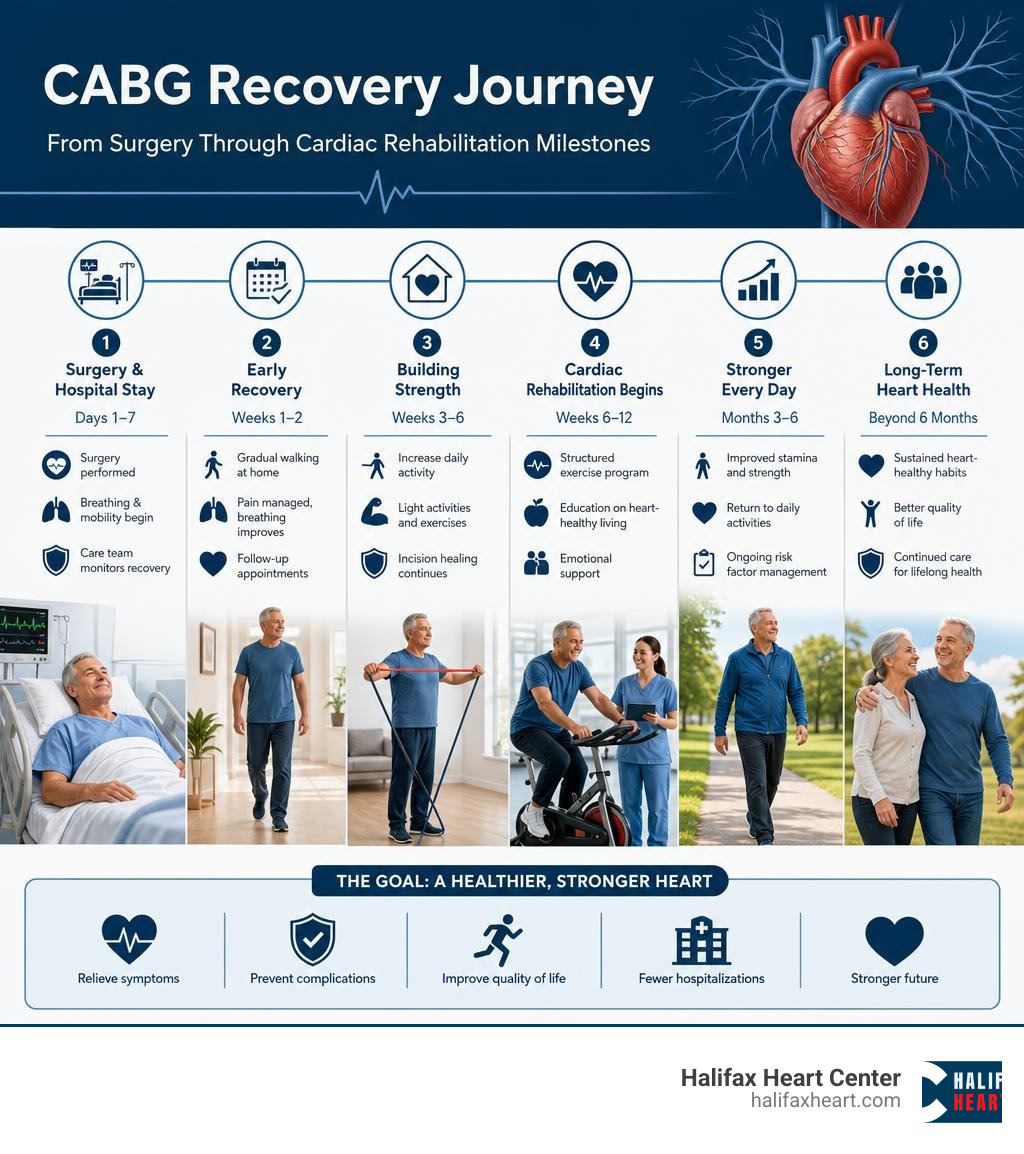
- The First 1 to 2 Days: You will recover in the intensive care unit (ICU), where specialized nurses continuously monitor your heart rhythm, blood pressure, and fluid balance.
- The First Week: Most patients are able to transition to a standard cardiac ward and return home within 5 to 7 days post-surgery.
- Weeks 2 to 6: This is the early home recovery phase. You must focus on wound care, gentle walking, and “hugging a pillow” to your chest when coughing or deep breathing to protect your healing breastbone (sternum).
- Weeks 6 to 12: The breastbone completely heals during this window. Most patients can gradually return to driving, light work, and more active exercise, and they will typically begin their formal, supervised cardiac rehabilitation program.
How does optimal medical therapy prevent heart failure after CABG?
Optimal Medical Therapy (OMT) post-CABG is designed to block the hormones that cause cardiac scarring and high blood pressure while protecting your new bypass grafts. The core regimen includes:
- Beta-blockers: These slow your heart rate and lower blood pressure, reducing the heart’s oxygen demand and protecting it from toxic levels of adrenaline.
- RAAS Inhibitors (ACE inhibitors, ARBs, or ARNIs): These directly block the hormones that cause pathological cardiac hypertrophy and kidney fluid retention, helping to prevent heart failure hospitalizations.
- Statins: These keep cholesterol low to prevent new blockages from forming in your newly grafted bypass vessels.
- Antiplatelets (Aspirin): This prevents blood clots from forming inside the bypass grafts.
Maintaining this regimen reduces the risk of heart failure hospitalizations by up to 75%. Working closely with a local cardiologist ensures your medications are carefully adjusted to your body’s needs throughout your recovery.
Is CABG or PCI better for patients with advanced heart failure and multivessel disease?
For patients with advanced heart failure and complex, multivessel blockages, clinical evidence strongly favors CABG over PCI (stenting).
While PCI is less invasive and has a shorter initial recovery time, long-term observational data—such as the Duke study on CABG vs medical therapy—demonstrate that CABG provides a highly durable survival benefit. CABG allows for complete revascularization by bypassing entire long segments of diseased vessels, whereas stents can only treat localized blockages.
This decision is best made by a multidisciplinary “Heart Team” consisting of your cardiologist, a cardiothoracic surgeon, and your primary care provider, balancing your personal surgical risks against long-term benefits.
Conclusion
Navigating congestive heart failure coronary artery bypass surgery can feel overwhelming, but it is also a powerful path toward reclaiming your quality of life. From the advanced diagnostic testing that determines myocardial viability to the precise surgical execution and the life-changing benefits of cardiac rehabilitation, every step on this road map is designed to help your heart heal and grow stronger.
At Halifax Heart Center, we believe that world-class cardiac care should not require traveling hours away from home. We are proud to provide personalized, local specialist access to the residents of South Boston, Halifax County, and Southside Virginia. Our dedicated team is here to guide you through every phase of your cardiac journey—from initial diagnosis and preoperative optimization to long-term post-bypass recovery and rehabilitation.
If you or a loved one is facing a heart failure diagnosis or exploring bypass surgery options, let us help you build your personalized road map to recovery. Learn more About Us Halifax Heart Center and take the first step toward a healthier, stronger heart by requesting a consultation today.
Take Control of Your Heart Health Today
If you are ready to discuss your cardiovascular health, diagnostic testing options, or post-surgical recovery plan with a local specialist, visit our Heart Disease Diagnosis Treatment South Boston VA page to schedule an appointment with our compassionate care team.