
Coronary Artery Disease Treatment: From Lifestyle Tweaks to Modern Medicine
What You Need to Know About Coronary Artery Disease Treatment
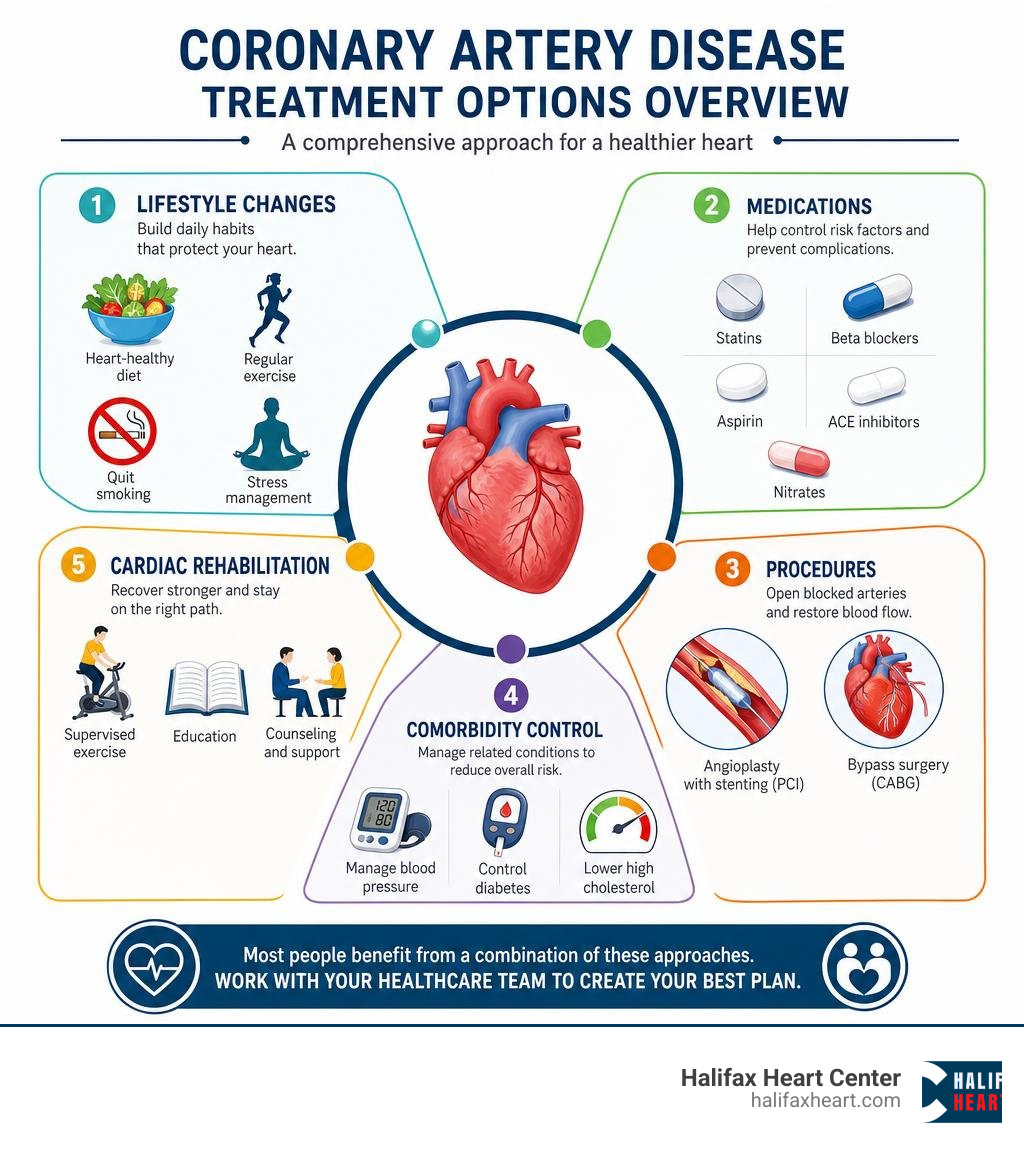
Coronary artery disease treatment depends on how severe your condition is and what other health issues you have. Here is a quick overview of your main options:
| Treatment Category | Examples |
|---|---|
| Lifestyle changes | Heart-healthy diet, exercise, quitting smoking, stress management |
| Medications | Statins, beta blockers, aspirin, ACE inhibitors, nitrates |
| Procedures | Angioplasty with stenting (PCI), bypass surgery (CABG) |
| Comorbidity control | Managing blood pressure, diabetes, and high cholesterol |
| Cardiac rehabilitation | Supervised exercise, education, and counseling after a procedure |
Most people use a combination of all of the above — not just one approach.
Coronary artery disease (CAD) is the leading cause of death in the United States, killing over 375,500 Americans in 2021 alone. More than 18 million U.S. adults are living with it right now.
What makes CAD especially dangerous is how quietly it develops. Plaque — made of cholesterol, calcium, and other substances — builds up slowly inside your coronary arteries over decades. Many people feel nothing until a heart attack strikes. In fact, for about half of CAD patients, a heart attack is the first symptom — and half of those are fatal.
The good news? Treatment works. Cardiovascular disease mortality has dropped 28% since 2003, thanks to better treatments, medications, and lifestyle interventions. And while CAD cannot be fully reversed, it can absolutely be managed and stabilized to reduce your risk and improve your quality of life.
At Halifax Heart Center, we specialize in personalized coronary artery disease treatment for patients across South Boston, Halifax County, and surrounding Southside Virginia communities — combining prevention, early detection, and advanced cardiac care close to home. Whether you’re newly diagnosed or managing a long-standing condition, our team is here to guide you every step of the way.
Understanding CAD: Development, Symptoms, and Diagnosis
To understand how we treat coronary artery disease, we first need to look at how it starts. Think of your coronary arteries as the main highways supplying oxygen-rich blood to your heart muscle. Over time, these pathways can get congested.
This congestion is called atherosclerosis. It begins when the delicate inner lining of an artery is damaged—often by high blood pressure, smoking, or high cholesterol. In response to this damage, your body tries to patch things up, but instead, fatty deposits of cholesterol, calcium, and other cellular waste begin to stick to the vessel walls.
As these plaques grow, they narrow the arteries, restricting blood flow. This process can be compared to traffic lanes merging into a bottleneck. If a plaque becomes unstable, it can rupture, triggering a rapid blood clot that completely blocks the artery. This sudden blockade is what causes a myocardial infarction, or heart attack.
Recognizing the Warning Signs
For many, CAD remains a silent threat. However, as the narrowing worsens, you may begin to notice classic symptoms:
- Stable Angina: This is temporary chest pain, pressure, or tightness that typically occurs during physical exertion or emotional stress. It happens because your heart is working harder and demanding more oxygen than the narrowed arteries can deliver. The pain usually goes away within a few minutes of rest or after taking nitroglycerin.
- Shortness of Breath: If your heart muscle isn’t getting enough oxygen, you might feel like you can’t catch your breath, even during mild activities.
- Atypical Symptoms: Women, older adults, and individuals with diabetes are more likely to experience atypical symptoms, such as fatigue, dizziness, nausea, or pain radiating to the neck, jaw, or back.
How We Uncover the Blockages
If you are experiencing symptoms or have significant risk factors, we use a variety of tools to evaluate your heart health. Getting an accurate diagnosis is the first step toward building your personalized treatment plan.
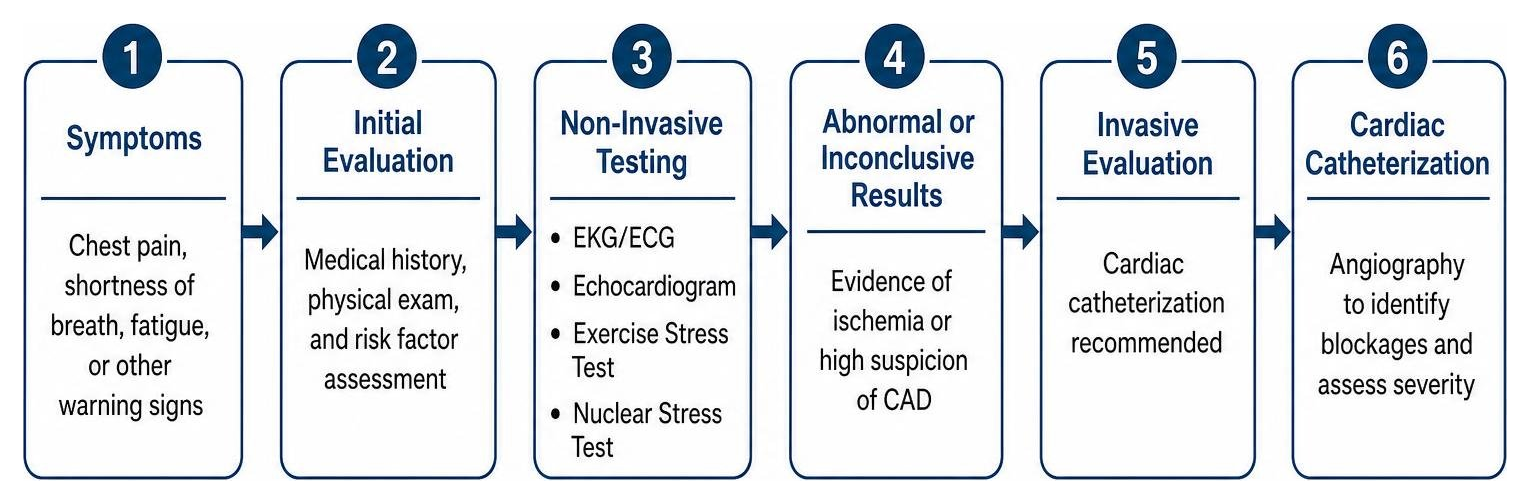
At Halifax Heart Center, we offer comprehensive Diagnostic Heart Testing South Boston VA to pinpoint the location and severity of any blockages. Here are the primary tests we use:
- Electrocardiogram (EKG/ECG): A quick, non-invasive test that records the electrical signals of your heart to check for signs of a previous heart attack or active ischemia (lack of blood flow).
- Echocardiogram: An ultrasound of your heart that allows us to see how well your heart chambers and valves are pumping blood.
- Exercise Stress Test: This test monitors your EKG, blood pressure, and heart rate while you walk on a treadmill, helping us see how your heart performs under physical stress.
- Nuclear Stress Test: Similar to a standard stress test, but with a safe radioactive tracer injected to create detailed images of blood flow to your heart muscle at rest and during exercise.
- Cardiac Catheterization and Angiography: Often considered the gold standard for evaluating CAD, this procedure involves threading a thin catheter through a blood vessel to your heart. We inject a special dye and take X-ray images (angiograms) to see exactly where and how severely your arteries are blocked.
For more information on standard diagnostic pathways, you can explore the Coronary artery disease – Diagnosis and treatment – Mayo Clinic guide.
Coronary Artery Disease Treatment: Lifestyle Modifications
When it comes to managing CAD, writing a prescription is only part of the equation. The foundation of any successful coronary artery disease treatment plan starts with lifestyle modifications. We often tell our patients that treating your heart health is like taking on a rewarding part-time job—it requires daily attention, but the benefits are life-saving.
According to the 2023 AHA/ACC/ACCP/ASPC/NLA/PCNA Guideline for the Management of Patients With Chronic Coronary Disease, nonpharmacologic therapies are strongly recommended for all patients to halt the progression of plaque buildup. Here are the key lifestyle changes you should adopt:
1. Adopt a Heart-Healthy Eating Plan
What you put on your plate directly impacts your blood vessels. We recommend following structured, evidence-based eating plans such as:
- The DASH Diet (Dietary Approaches to Stop Hypertension): Emphasizes vegetables, fruits, whole grains, lean proteins, and low-fat dairy, while drastically reducing sodium intake.
- The TLC (Therapeutic Lifestyle Changes) Diet: Focuses on lowering LDL (“bad”) cholesterol by limiting saturated fats, avoiding trans fats, and incorporating soluble fiber and plant sterols.
Even if you take medications to control your cholesterol, a poor diet can cancel out many of their benefits. Studies show that patients who rely solely on drugs without changing their eating habits do not see a significant reduction in heart attack or stroke rates.
2. Get Moving with Regular Physical Activity
Your heart is a muscle, and like any muscle, it needs exercise to stay strong. We recommend aiming for 30 to 60 minutes of moderate-intensity aerobic activity (like brisk walking, cycling, or swimming) 5 to 7 days per week. Regular exercise helps lower blood pressure, raise HDL (“good”) cholesterol, improve insulin sensitivity, and help you maintain a healthy weight. Always speak with your doctor before starting a new exercise regimen.
3. Commit to Smoking Cessation
Smoking is one of the most destructive things you can do to your cardiovascular system. The chemicals in tobacco smoke damage the lining of your blood vessels, accelerate plaque buildup, and cause your arteries to constrict, raising your blood pressure. Quitting smoking is the single most impactful step you can take to lower your risk of a future heart attack. If you need help quitting, resources like 1-877-44U-QUIT offer excellent support.
4. Prioritize Quality Sleep
Sleep is when your body repairs itself, including your heart and blood vessels. Chronic sleep deprivation is linked to an increased risk of high blood pressure, obesity, and diabetes. Adults should aim for 7 to 9 hours of quality sleep per night. If you snore loudly or wake up feeling exhausted, talk to us about screening for sleep apnea, which is a major, treatable risk factor for heart disease.
5. Manage Stress Effectively
Chronic stress releases hormones like cortisol and adrenaline, which raise your heart rate and blood pressure. Finding healthy ways to cope—such as mindfulness, deep breathing exercises, yoga, or joining a local support group—can have a direct, positive impact on your cardiovascular system.

Medical Management and Comorbidity Control
While lifestyle changes are essential, most patients with CAD also require medications to manage symptoms, slow down plaque progression, and control underlying conditions like diabetes, hypertension, and high cholesterol.
We work closely with our patients to manage these “comorbidities” because they are deeply interconnected. For instance, because your heart beats roughly 100,000 times a day, even mild blood pressure elevations above 130/80 mmHg put continuous, damaging strain on your arterial walls. You can read more about how these conditions interact in our detailed guide on High Blood Pressure and High Cholesterol.

Pharmacological Coronary Artery Disease Treatment Options
Your medication regimen will be highly personalized based on your specific risk factors, symptoms, and medical history. Here is a breakdown of the primary medication classes we use:
Lipid-Lowering Therapies
- Statins: These are the cornerstone of cholesterol management. Statins work by slowing down the production of LDL cholesterol in the liver and helping the body clear existing cholesterol from the blood. High-intensity statin therapy (such as atorvastatin or rosuvastatin) is recommended for most CAD patients under 75, as it has been shown to reduce the risk of major cardiovascular events, stroke, and the need for procedures by 20%.
- Ezetimibe: If statins alone do not lower your LDL cholesterol to target levels, we may add ezetimibe, which reduces cholesterol absorption in the small intestine.
- PCSK9 Inhibitors: These are newer, highly effective monoclonal antibodies (injected every 2 to 4 weeks) that dramatically lower LDL cholesterol by helping the liver clear more cholesterol from your blood. They are typically reserved for patients at very high risk or those who cannot tolerate statins.
Blood Pressure and Angina Medications
- Beta Blockers: These medications (like metoprolol or atenolol) slow down your heart rate and lower your blood pressure, reducing the workload on your heart. They are the preferred initial therapy for managing stable angina. However, under the latest 2023 guidelines, long-term beta-blocker therapy is no longer routinely recommended to improve outcomes in patients with chronic coronary disease unless they have had a recent heart attack (within the past year) or have a reduced left ventricular ejection fraction (LVEF ≤50%).
- Calcium Channel Blockers (CCBs): These drugs relax your blood vessels, increasing blood flow to the heart and easing chest pain. They are an excellent alternative or addition to beta blockers.
- Nitrates: Available as quick-acting sublingual tablets, sprays, or long-acting patches, nitrates relax and widen your blood vessels to quickly relieve or prevent angina.
- Ranolazine: A specialized medication used to treat chronic angina when other medications aren’t fully effective, working without lowering your heart rate or blood pressure.
- ACE Inhibitors and ARBs: These medications help relax blood vessels and are particularly beneficial for CAD patients who also have high blood pressure, diabetes, or chronic kidney disease.
Diabetes and Weight Management
- SGLT2 Inhibitors & GLP-1 Receptor Agonists: Modern diabetes medications like empagliflozin (SGLT2i) and semaglutide (GLP-1) do more than just control blood sugar. Clinical trials have shown they significantly reduce cardiovascular deaths and complications in CAD patients, even those without diabetes.
The Role of Antiplatelet Therapy in CAD
When plaque builds up in your arteries, the greatest immediate danger is that the plaque might rupture. If it does, your body’s clotting cells—called platelets—will rush to the scene, forming a clot that can instantly cut off blood flow and cause a heart attack. Antiplatelet therapy is designed to keep these cells from sticking together.
- Aspirin: A low dose of daily aspirin (typically 81 mg) is the most common antiplatelet therapy. It has been shown to significantly reduce serious vascular events (preventing 36 major events per 1,000 patients over a two-year period). However, because aspirin thins your blood, it also increases your risk of internal bleeding. We carefully weigh these risks and benefits before starting you on daily aspirin.
- Clopidogrel: This is a common alternative for patients who cannot tolerate aspirin or have an allergy to it.
- Dual Antiplatelet Therapy (DAPT): This involves taking aspirin along with a second antiplatelet medication (like clopidogrel, ticagrelor, or prasugrel). DAPT is highly effective at preventing blood clots after you receive a stent or have a heart attack. Depending on your risk of bleeding versus your risk of clotting, we may recommend a shorter or longer duration of DAPT.
Surgical Interventions and Revascularization
For some patients, lifestyle changes and medications are not enough to control chest pain, or the blockages are simply too severe or dangerous to manage with medicine alone. In these cases, we look to revascularization—procedures designed to restore normal blood flow to the heart muscle.
Surgical Coronary Artery Disease Treatment: PCI and CABG
There are two primary procedures used to restore blood flow in CAD patients. The choice between them depends on the number of blocked arteries, the location of the blockages, and your overall health.
1. Percutaneous Coronary Intervention (PCI)
Commonly known as coronary angioplasty, PCI is a minimally invasive procedure. A cardiologist inserts a thin catheter with a tiny balloon at its tip into an artery in your groin or wrist and guides it to the blockage.
Once in place, the balloon is inflated to push the plaque against the artery wall, widening the passage. In almost all cases, we then place a drug-eluting stent—a tiny, metal mesh tube coated with medication—to keep the artery propped open and prevent it from narrowing again.
PCI is highly effective at relieving angina symptoms. Recovery is relatively quick; most patients are back to their normal daily activities within a week.
2. Coronary Artery Bypass Graft (CABG)
Often referred to as open-heart bypass surgery, CABG is a major surgical procedure. A cardiothoracic surgeon takes a healthy blood vessel from another part of your body (such as your chest, arm, or leg) and uses it to create a detour around the blocked portion of your coronary artery.
In some cases, surgeons can perform an off-pump coronary artery bypass (OPCAB), which allows the surgery to be done while the heart is still beating, without the use of a heart-lung machine.
CABG is generally recommended for patients with complex, multivessel disease, or blockages in the left main coronary artery. While it is a major surgery requiring a hospital stay of about a week and a full recovery timeline of 6 to 12 weeks, CABG has been shown to reduce mortality and future heart attacks more effectively than PCI in patients with severe, widespread blockages.
Following either procedure, we strongly recommend participating in cardiac rehabilitation. This is a structured program that combines supervised exercise, lifestyle education, and emotional support to help you recover safely and reduce your future cardiovascular risk.
To learn more about how these procedures are performed, you can read the comprehensive overview provided by the Coronary heart disease – Treatment – NHS website.
Managing Stable Ischemic Heart Disease vs. Acute Coronary Syndrome
It is important to note that coronary artery disease treatment looks very different depending on how the disease presents itself:
- Stable Ischemic Heart Disease: This is a chronic condition where blood flow is restricted, but stable. Symptoms like angina only occur during predictable times of exertion. In these cases, we focus heavily on guideline-directed medical therapy and lifestyle changes. Clinical trials have shown that routine, immediate stenting for stable patients does not reduce the risk of death or heart attacks compared to optimal medical therapy alone. We reserve procedures for stable patients whose symptoms cannot be controlled with medications.
- Acute Coronary Syndrome (ACS): This is a medical emergency, such as an unstable angina episode or an active heart attack, caused by a sudden, complete blockage of an artery. If you are experiencing ACS, you need emergency revascularization (usually PCI) to open the artery immediately and minimize permanent damage to your heart muscle.
Frequently Asked Questions about CAD
Living with a chronic heart condition can bring up many questions. Here are some of the most common questions our patients ask us:
Can coronary artery disease be reversed?
Strictly speaking, once plaque has formed in your arteries, it cannot be completely erased or fully reversed. However, you can achieve plaque stabilization.
With aggressive lifestyle changes and high-intensity statin therapy, we can change the composition of the plaque. We can shrink the fatty core of the plaque and make its outer shell thicker and more stable. This prevents the plaque from rupturing and triggering a heart attack.
In some cases, high-dose statin therapy has even been shown to cause minor plaque regression (actually narrowing the physical size of the blockage). So while you cannot “cure” CAD, you can stop it in its tracks.
What are the potential complications of CAD and its treatments?
Leaving CAD untreated carries severe risks, including:
- Heart Failure: Over time, if your heart muscle is chronically deprived of oxygen, it can become too weak or stiff to pump blood effectively.
- Arrhythmias: Irregular heartbeats can develop when the heart’s electrical system is damaged by a lack of blood flow.
- Sudden Cardiac Arrest: A sudden, life-threatening loss of heart function.
The treatments themselves also carry minor risks. For instance, blood-thinning medications increase your risk of bleeding. Procedures like PCI carry small risks of blood vessel damage, bleeding, or stent thrombosis (a blood clot forming inside the stent). CABG, being a major surgery, carries risks of infection, bleeding, and longer recovery times. We work diligently to minimize these risks by customizing your treatment plan.
What is the recommended follow-up and monitoring for CAD patients?
CAD is a chronic, lifelong condition. Even if you have received a stent or bypass surgery, the underlying disease can continue to progress if it isn’t monitored.
We recommend regular follow-up visits with your cardiologist to track your symptoms, check your blood pressure and cholesterol levels, monitor your kidney function (especially if you are on ACE inhibitors), and ensure your medications are working effectively without unwanted side effects. Routine, repetitive stress testing is generally not recommended if your symptoms are stable and unchanged.
If you live in Southside Virginia and are looking for a specialist to manage your ongoing care, you can find a dedicated Cardiologist Near Me South Boston VA to partner with you for the long haul.
Conclusion
Managing coronary artery disease can feel overwhelming, but you do not have to navigate this journey alone. From simple, everyday lifestyle adjustments to advanced medications and state-of-the-art procedures, modern medicine offers highly effective ways to protect your heart, relieve your symptoms, and add active, healthy years to your life.
At Halifax Heart Center, we are proud to provide top-tier, personalized Heart Disease Diagnosis & Treatment South Boston VA right here in our community. Our local specialists are dedicated to developing a tailored management plan that fits your unique lifestyle and health goals.
If you have questions about your heart health, are experiencing symptoms, or need to establish ongoing care with an experienced cardiologist, we invite you to take the next step. Contact us today to schedule your consultation at our South Boston office.
To schedule your evaluation, please visit our Halifax Heart Center Appointment page. Let’s work together to keep your heart beating strong for years to come.