
Artery Plaque Removal: Separating Fact from Fiction
Why Artery Plaque Removal Matters for Your Heart Health
Artery plaque removal is a serious medical topic — and the answer to “can it be done?” depends on how you define removal.
Here’s a quick summary:
- Plaque cannot be completely dissolved or eliminated through diet or medication alone
- Lifestyle changes and statins can shrink and stabilize plaque, reducing your risk of heart attack and stroke
- Medical procedures like atherectomy can physically remove plaque from blocked arteries when necessary
- The biggest danger isn’t always a fully blocked artery — soft, inflamed plaques that rupture suddenly cause most major heart attacks
Plaque is a buildup of fat, cholesterol, calcium, and other substances that accumulates on the inner walls of your arteries. Over time, it narrows blood flow and can trigger life-threatening events. About 6.5 million Americans ages 40 and older have peripheral artery disease (PAD) caused by this exact process — and many don’t know it yet.
If you have chest pain, fatigue, or a family history of heart disease, understanding your options is the first step toward protecting yourself.
At Halifax Heart Center, we provide compassionate, expert cardiovascular care — including evaluation and treatment for artery plaque removal — right here in South Boston and throughout Southside Virginia. In the sections below, we’ll walk you through exactly how plaque forms, what can realistically be done about it, and when medical intervention may be the right choice for you.
What is Arterial Plaque and How Does It Form?
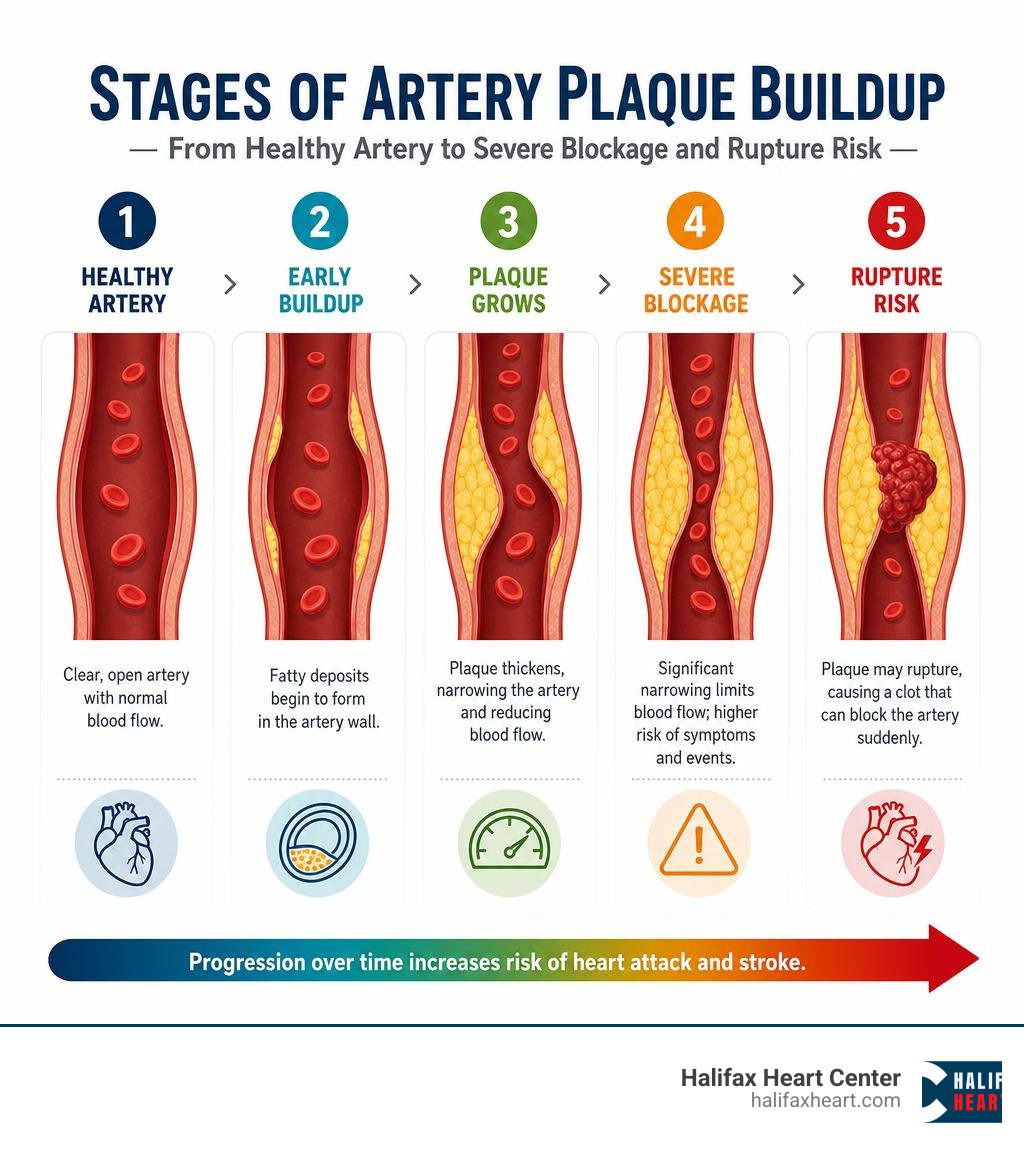
To understand how to manage or clear arterial plaque, we first have to understand what it actually is. Plaque doesn’t just stick to the inside of your blood vessels like grease in a rusty pipe. Instead, the process of plaque formation—known medically as atherosclerosis—is an active, inflammatory biological sequence that takes place within the artery walls.
It all begins with endothelial damage. The endothelium is the thin, delicate inner lining of your blood vessels. This lining can be damaged by several common culprits, including high blood pressure, toxins from smoking, and chronic inflammation. Once this protective barrier is compromised, it becomes “leaky.”
Next, LDL cholesterol (often called the “bad” cholesterol) circulating in your blood slips through the damaged lining and lodges inside the artery wall. The liver produces about 75% of the body’s cholesterol, but a diet high in saturated and trans fats can push circulating LDL levels far too high.
Once LDL is trapped inside the arterial wall, it oxidizes (spoils), triggering an immune response. Your body sends white blood cells to clean up the mess. These white blood cells attempt to digest the toxic LDL particles, consuming so much fat that they swell up and transform into what scientists call foam cells.
As these foam cells accumulate, they form “fatty streaks” along the artery. The body tries to contain this growing inflammatory zone by building a fibrous cap made of smooth muscle cells and collagen over the lipid-rich core. Over time, calcium deposits settle into the mixture, making the plaque hard, rigid, and calcified.
To learn more about how these underlying conditions damage your vascular system, read our comprehensive guide on High Blood Pressure and High Cholesterol.
The Risks of Plaque Rupture vs. Gradual Blockage
When people think of heart disease, they often picture an artery slowly closing up like a clogged drain until blood can no longer squeeze through. While this gradual blockage (stenosis) does happen—often causing stable angina (chest pain during exertion) or leg pain while walking—it is actually not the primary cause of sudden, catastrophic events.
The real danger lies in the composition of the plaque itself:
- Fibrous (Hard) Plaque: These are older, heavily calcified plaques. Because they have a thick, stable fibrous cap, they are highly resistant to tearing. While they can severely restrict blood flow and cause chronic symptoms, they are less likely to rupture suddenly.
- Soft (Inflammatory) Plaque: These plaques are rich in lipids and highly inflamed, covered only by a very thin, fragile fibrous cap.
Most major, unexpected heart attacks and strokes occur when a soft plaque ruptures. When the thin cap tears, the highly inflammatory lipid core is suddenly exposed to the bloodstream. The body mistakes this rupture for an open wound and immediately triggers a massive clotting cascade. Within minutes, a blood clot forms at the site, completely blocking the artery and cutting off oxygen supply to the heart muscle (causing a heart attack) or the brain (causing an ischemic stroke).
Because soft plaques often do not block enough of the artery to cause daily symptoms prior to rupturing, early detection is critical. At Halifax Heart Center, we offer advanced diagnostic tools to assess your cardiovascular risk before a crisis occurs. Explore our Diagnostic heart testing services to learn how we evaluate your vascular health.
The Medical Reality of Artery Plaque Removal
Can you actually remove plaque from your arteries? The short answer is: biologically, you cannot completely dissolve or wipe away existing plaque naturally; however, you can shrink it, stabilize it, and—when necessary—physically remove it using advanced medical procedures.
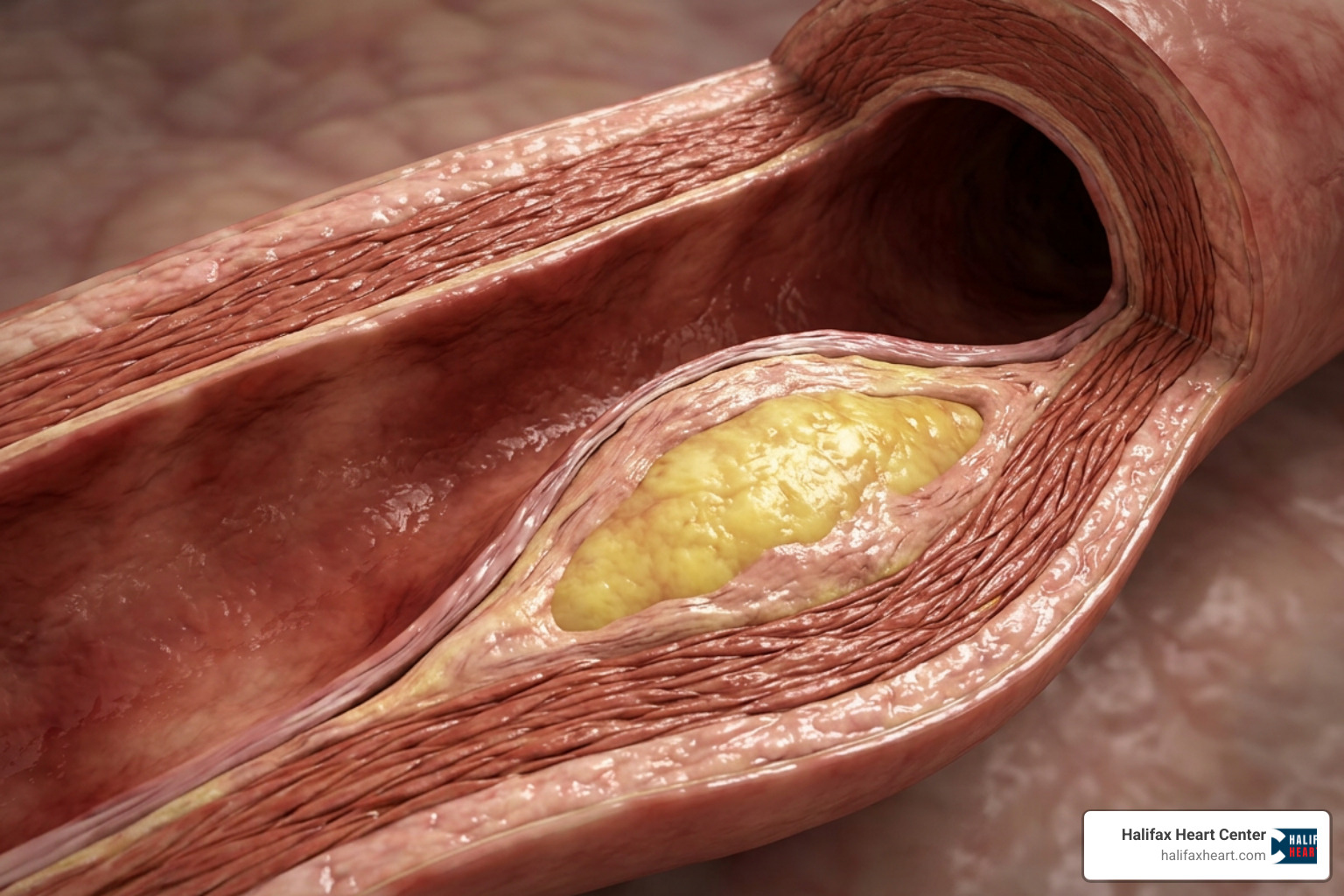
For decades, scientists believed that once plaque formed, it was permanent. Today, we know that aggressive medical therapy can achieve plaque regression (shrinking the lipid core) and plaque stabilization (thickening the fibrous cap so it cannot rupture).
The cornerstone of plaque stabilization is aggressive lipid-lowering therapy, primarily using statins. For individuals with established coronary artery disease or peripheral artery disease, standard cholesterol guidelines are highly rigorous. While a standard healthy adult might aim for an LDL cholesterol level below 100 mg/dL, the target for patients with active cardiovascular disease is less than 70 mg/dL, with many specialists now aiming for less than 55 mg/dL to maximize plaque shrinkage.
To help you understand your options, here is a direct comparison of the two primary strategies for managing arterial blockages:
| Feature | Plaque Stabilization (Medical & Lifestyle) | Mechanical Plaque Removal (Procedures) |
|---|---|---|
| Primary Goal | Toughen the fibrous cap, shrink the lipid core, and prevent rupture/clots. | Physically clear or bypass the blockage to restore immediate blood flow. |
| How It Works | High-intensity statins, cholesterol-lowering drugs, diet, and exercise. | Atherectomy, angioplasty, stenting, or bypass surgery. |
| Plaque Outcome | Plaque becomes calcified, stable, and slightly smaller. | Plaque is cut, shaved, vaporized, or bypassed. |
| Invasiveness | Non-invasive (pills and daily habits). | Minimally invasive (catheter-based) to highly invasive (open surgery). |
| Best For | Preventing future heart attacks; managing mild to moderate blockages. | Treating severe blockages, acute chest pain, or debilitating leg pain (PAD). |
Minimally Invasive Procedures for Plaque Removal
When blockages become severe enough to restrict blood flow and cause debilitating symptoms, lifestyle changes and medications may no longer be enough. In these cases, interventional cardiologists use several techniques to restore circulation:
- Angioplasty: A tiny, deflated balloon is guided via a catheter to the site of the blockage. Once in place, the balloon is inflated to compress the plaque against the artery walls, widening the channel.
- Stenting: Often performed alongside angioplasty, a tiny mesh tube called a stent is expanded within the artery to act as a scaffold, keeping the vessel propped open.
- Bypass Surgery (CABG): In cases of severe, multi-vessel blockages, a surgeon takes a healthy blood vessel from another part of the body (like the leg or chest) and uses it to reroute blood flow around the blocked coronary arteries.
- Coronary Revascularization: This broad term encompasses advanced catheter-based interventions designed to restore blood flow to heart tissues that are starved of oxygen.
At Halifax Heart Center, we evaluate each patient’s unique vascular anatomy to determine the safest and most effective approach. Discover more about our comprehensive treatment options by visiting our comprehensive heart services page.
Atherectomy: Surgical Artery Plaque Removal
While angioplasty and stenting work by pushing plaque outward against the artery wall, atherectomy is a specialized, minimally invasive procedure designed to physically cut, grind, or vaporize the plaque, removing it from the body entirely.
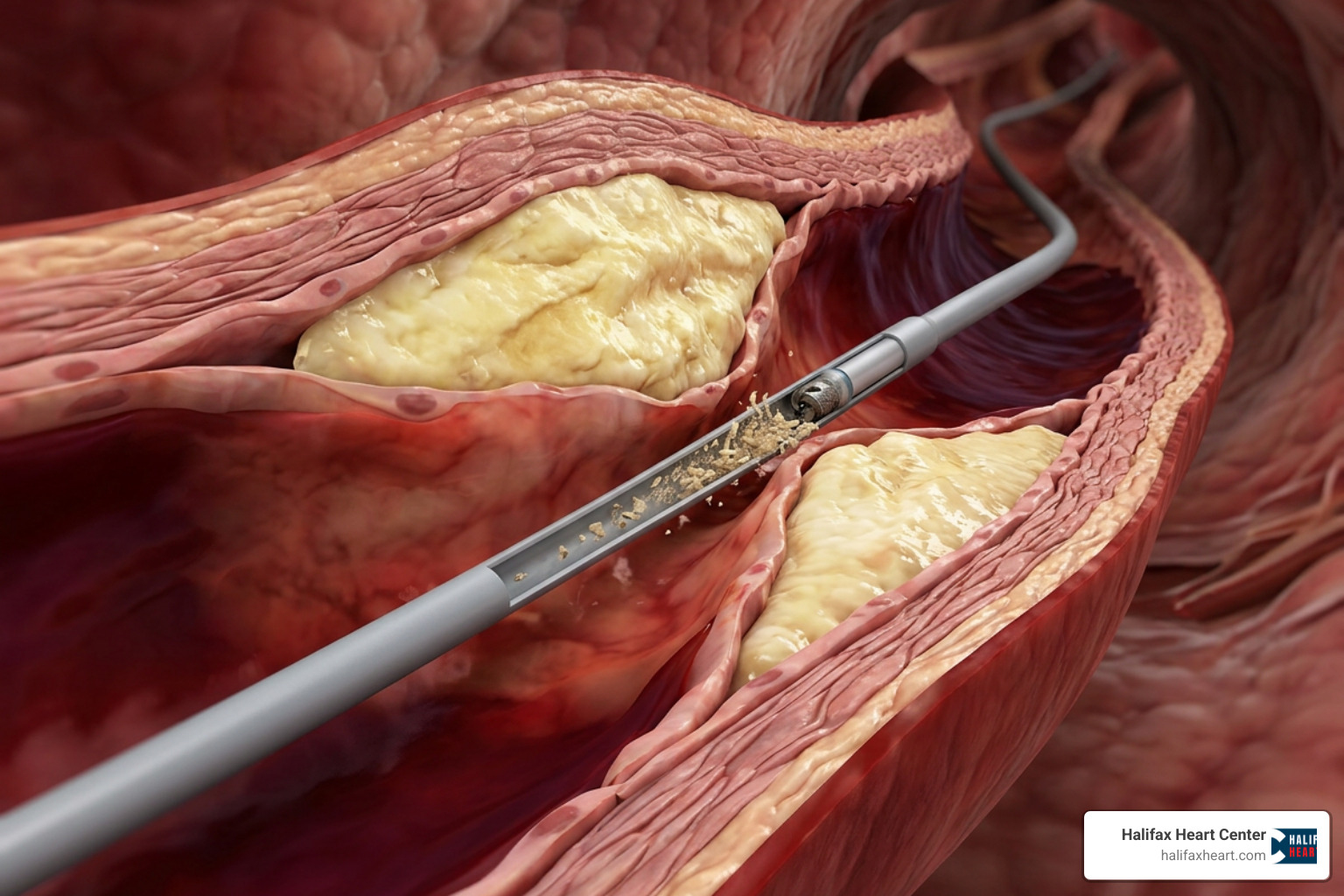
An atherectomy is typically performed in a state-of-the-art catheterization lab. During the procedure, the patient is given a local anesthetic and mild sedation to remain comfortable. The physician makes a tiny puncture, usually in the groin or upper thigh, and inserts a thin, flexible tube called a catheter into the affected artery. Guided by real-time X-ray imaging, the catheter is carefully advanced to the site of the blockage.
Atherectomy is particularly valuable in two main scenarios:
- Peripheral Artery Disease (PAD): It is frequently used to clear blockages in the legs, helping patients walk without pain. For patients in our region seeking specialized care, understanding local options for Atherectomy for PAD can provide valuable clinical context.
- Severely Calcified Coronary Lesions: When plaque has become so hard and calcified that a standard angioplasty balloon cannot expand, atherectomy is used to “prep” the vessel.
Medical literature thoroughly documents the clinical utility of these devices. For example, peer-reviewed resources such as the National Center for Biotechnology Information provide extensive clinical guidelines on Rotational Atherectomy and Transluminal Extraction Coronary Atherectomy, highlighting how these tools assist in modifying rigid, stubborn lesions.
Types of Atherectomy Devices and Techniques
Depending on the consistency and location of the plaque, interventionalists can choose from four primary types of atherectomy techniques:
- Excisional Atherectomy: This device features a tiny, sharp blade that cuts plaque in one direction, collecting the shaved pieces in a chamber within the catheter tip so they can be safely removed from the body.
- Rotational Atherectomy: Utilizing a rapidly spinning, olive-shaped burr coated with microscopic diamond chips, this tool acts like a high-speed sander. It utilizes the principle of differential cutting—selectively grinding away hard, inelastic calcified plaque while safely gliding past elastic, healthy arterial tissue. The microparticles generated (typically 2 to 5 micrometers) are so small that they are safely cleared by the body’s natural filtration systems.
- Orbital Atherectomy: Similar to rotational devices, this tool uses an eccentric, diamond-coated crown that spins in an orbital path. By adjusting the speed, the physician can widen the sanding sweep, making it highly effective for larger vessels.
- Laser Ablation: This technique uses an excimer laser catheter that emits pulses of ultraviolet light to vaporize lipid and soft plaque deposits without generating damaging heat in the surrounding tissue.
To see how these technologies are evaluated, you can read the ex vivo scientific research on excimer laser plaque debulking, which demonstrates how combining laser energy with balloon angioplasty can maximize the space gained inside a blocked vessel while minimizing tissue damage.
Natural and Medical Ways to Stabilize Plaque
If you want to prevent plaque from growing or rupturing, you don’t necessarily need surgery. A combination of targeted lifestyle habits and modern medical therapies can dramatically alter the biology of your arteries.
- Following a Mediterranean Diet: Emphasizing extra virgin olive oil, fresh fruits, vegetables, legumes, nuts, and whole grains while limiting processed meats and refined sugars can reduce your overall risk of major cardiovascular events by up to 30%.
- Kicking the Habit: Smoking damages the endothelial lining of your arteries and actively lowers your “good” HDL cholesterol. Quitting smoking is one of the fastest ways to improve vascular health and raise your HDL.
- Regular Aerobic Exercise: Engaging in at least 150 minutes of moderate-intensity aerobic exercise (like brisk walking, cycling, or swimming) per week helps strengthen the heart muscle, lower blood pressure, and improve insulin sensitivity.
- Optimizing Cholesterol Ratios: While lowering LDL is the primary target, maintaining an HDL level of 60 mg/dL or higher is associated with a lower risk of heart disease, as HDL acts as a natural scavenger, carrying cholesterol away from the artery walls back to the liver.
Can Lifestyle Changes Achieve Artery Plaque Removal?
While a healthy diet and active lifestyle cannot completely “clean out” your arteries like a brush, they can achieve something nearly as powerful: plaque regression and stabilization.
When you aggressively lower your cardiovascular risk factors, the composition of your plaque changes. The soft, liquid-rich lipid core shrinks, and the body deposits calcium into the remaining structure while thickening the protective fibrous cap. This process essentially converts a volatile, dangerous “soft” plaque into a stable, harmless “hard” plaque.
The intensity of your medical treatment matters. High-intensity statin therapy has been shown to not only halt the progression of atherosclerosis but actually shrink plaque volume over time. By keeping your arterial walls strong and stable, you drastically reduce the risk of a rupture, protecting yourself from sudden cardiovascular events.
Future Advancements in Plaque Clearing Technology
The field of cardiology is constantly evolving, with researchers developing highly precise, next-generation techniques to target and clear arterial blockages with minimal invasiveness.
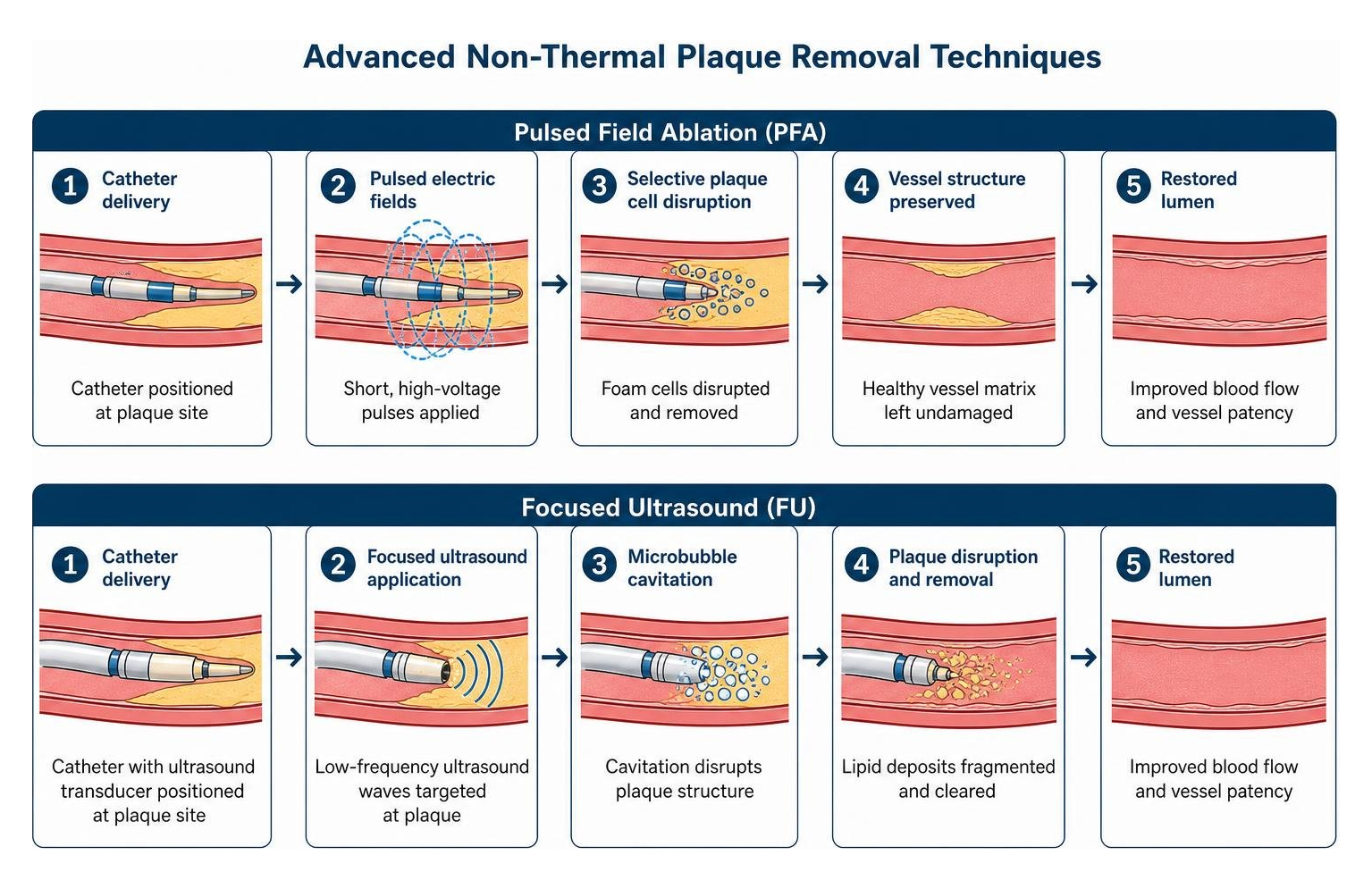
Some of the most exciting research areas include:
- Nanoparticle Nanotherapy: Researchers are testing targeted nanoparticle infusions that selectively seek out the inflammatory immune cells within arterial plaque. Once attached, these nanoparticles activate the local immune system to safely “eat away” the plaque’s necrotic core from the inside out, reducing inflammation without systemic side effects.
- Pulsed Field Ablation (PFA): Long used for treating heart rhythm disorders, scientists are investigating endoluminal catheter-based PFA as a non-thermal way to treat atherosclerosis. This technology uses short, high-voltage electrical fields to selectively target and clear out foam cells while leaving the structural, healthy extracellular matrix of the artery entirely undamaged. You can read the detailed scientific research on pulsed field ablation to learn more about this biological breakthrough.
- Ultrasound-Assisted Ablation: Emerging studies are exploring how combining low-frequency ultrasound with laser energy can safely disrupt blockages. The ultrasound waves enhance cavitation (the formation and collapse of microbubbles), allowing lasers to vaporize lipid deposits at much lower, safer energy levels. Read the scientific research on ultrasound-assisted laser ablation for technical insights.
- Focused Ultrasound Ablation: Other engineering teams are looking into catheter-assisted pulsed focused ultrasound to mechanically break down plaque. By lowering the acoustic pressure threshold using a tiny guide wire, this technique shows promise in disintegrating plaque material safely. Learn more in the scientific research on focused ultrasound ablation.
Frequently Asked Questions about Plaque Removal
Can you completely unclog arteries naturally?
No. There is no scientific evidence that any diet, exercise program, supplement, or natural remedy can completely dissolve or remove established plaque from your arteries. However, adopting a Mediterranean diet, exercising regularly, and managing stress can shrink plaque slightly and, more importantly, stabilize it so that it is highly unlikely to rupture and cause a heart attack.
What is the recovery time after an atherectomy?
Because an atherectomy is a minimally invasive catheter-based procedure requiring only a tiny puncture in the skin, recovery is relatively fast. Most patients are discharged either the same day or after a single overnight stay. You will typically need to lie flat for several hours immediately after the procedure to prevent bleeding at the access site. Most people can resume light, daily activities within a few days, though you should avoid heavy lifting or strenuous exercise until cleared by your doctor.
Who is an ideal candidate for mechanical plaque removal?
Mechanical plaque removal via atherectomy is typically reserved for patients who have:
- Severe, symptomatic peripheral artery disease (PAD) that makes walking painful and has not responded to medication.
- Heavily calcified coronary artery blockages that are too rigid to be dilated with a standard angioplasty balloon.
- Blockages in critical areas, such as ostial lesions (where an artery branches off) or bifurcations, where precise plaque modification is required before placing a stent.
Conclusion
Managing arterial plaque is not about finding a magic “drain cleaner” for your blood vessels. Instead, it requires a personalized, medically sound strategy that combines lifestyle modifications, targeted medications to stabilize existing plaque, and advanced, minimally invasive procedures when blockages become severe.
At Halifax Heart Center, we are dedicated to helping our neighbors in South Boston, Halifax County, and across Southside Virginia navigate their cardiovascular health. Whether you need advanced diagnostic testing, personalized cholesterol management, or expert evaluation for interventional treatments, our local team is here to support you every step of the way.
Don’t wait for symptoms to become a crisis. Schedule a consultation for heart disease diagnosis and treatment with us today at our office on Wilborn Avenue.