
Your Roadmap to the Best South Boston Heart Valve Clinic
What to Know Before Choosing a South Boston Heart Valve Clinic
If you are looking for a South Boston heart valve clinic, here is a quick overview of what to expect and where to start:
- What it is: A heart valve clinic evaluates and treats conditions where one or more of your heart’s four valves is not working properly — either too narrow (stenosis) or too leaky (regurgitation).
- Who it’s for: People experiencing chest pain, shortness of breath, fatigue, dizziness, or leg swelling — especially those with high blood pressure, diabetes, or a family history of heart disease.
- What’s offered: Diagnostic testing (echocardiograms, stress tests), minimally invasive procedures (TAVR, MitraClip, WATCHMAN, PFO closure), and ongoing follow-up care.
- Why it matters: Left untreated, heart valve disease puts serious strain on your heart and shortens life expectancy. Early evaluation can open up more treatment options — including catheter-based procedures that don’t require open-heart surgery.
Heart valve disease is more common than many people realize. And for patients in rural Southside Virginia, getting the right specialist care close to home can make a real difference in outcomes.
At Halifax Heart Center, we provide compassionate, high-quality cardiovascular care to patients across South Boston, Halifax County, and the surrounding Southside Virginia region — making us a trusted local option for anyone seeking a South Boston heart valve clinic with experienced providers and a patient-centered approach. We are committed to guiding you from your first evaluation all the way through recovery.
Understanding Structural Heart and Valve Conditions
To understand why a specialized clinic is so important, it helps to understand how the heart is built. While many people are familiar with coronary artery disease (which affects the blood vessels supplying the heart muscle), structural heart disease specifically impacts the valves, walls, and chambers of the heart.
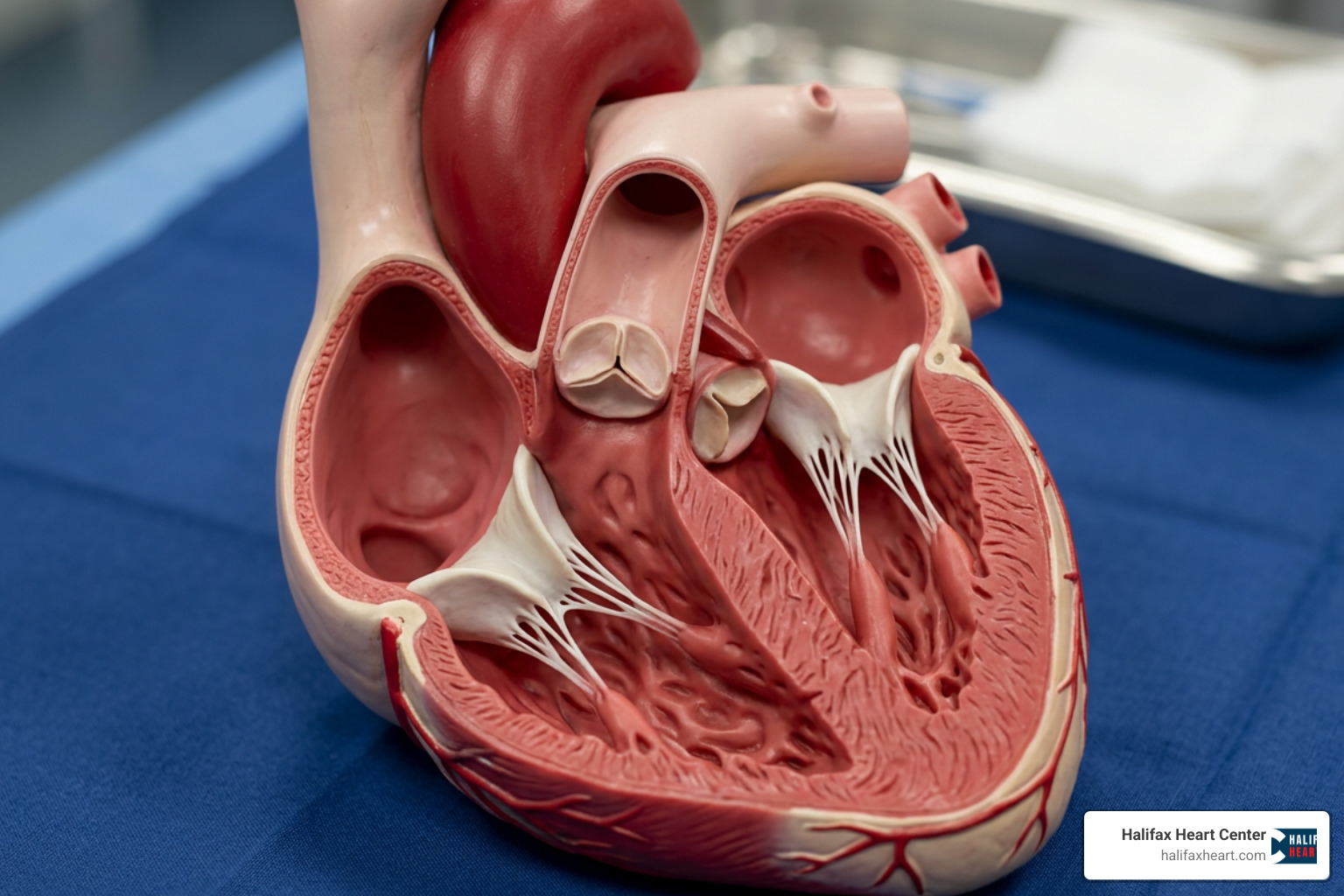
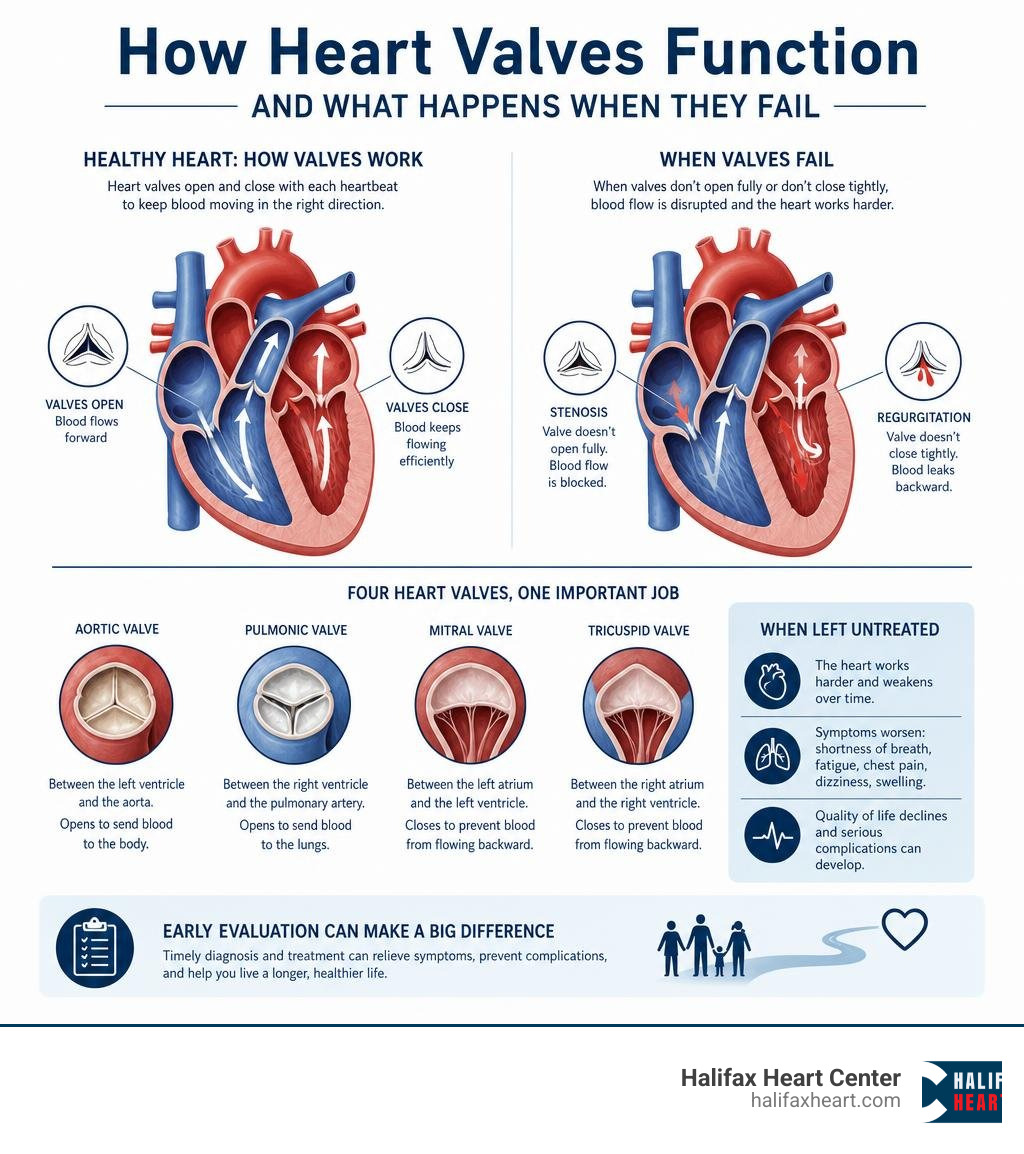
Your heart relies on four valves—the aortic, mitral, tricuspid, and pulmonary valves—to keep blood flowing in the correct direction. When these valves are damaged by aging, infection, or congenital conditions, they fail to open or close properly. The two most common issues we see are:
- Stenosis: The valve becomes stiff and narrow, forcing the heart to work much harder to pump blood through a tiny opening.
- Regurgitation: The valve leaflets do not close tightly, allowing blood to leak backward.
Among the specific conditions treated at a modern South Boston heart valve clinic are:
- Aortic Stenosis: A progressive narrowing of the aortic valve that restricts blood flow to the rest of the body.
- Mitral Regurgitation: A leaky mitral valve that allows blood to back up into the lungs, often causing severe shortness of breath.
- Tricuspid Regurgitation: A condition where the valve between the right chambers leaks, frequently leading to fluid retention in the abdomen and legs.
Even large federal institutions, such as the Structural Heart Program At VA Boston Healthcare System | VA Boston Health Care | Veterans Affairs, emphasize a team-based approach to these complex conditions, which is exactly the standard we hold ourselves to here in South Boston. While major academic centers like Structural Heart & Valve Care | MUSC Health perform these on a statewide scale, we bring this same high-standard clinical knowledge directly to our local Southside Virginia community. For those interested in specialized programs, organizations like the CHD Clinic – Boston Adult Congenital Heart Program (BACH) provide resources for congenital conditions, but our focus here in Southside Virginia is on adult acquired valve diseases.
To learn more about how we identify these issues, read our More info on heart disease diagnosis.
Symptoms That Require a South Boston Heart Valve Clinic Evaluation
Because valve disease can develop slowly, many patients mistake their symptoms for “just getting older.” However, if you or a loved one experiences any of the following, it is time to seek an expert evaluation:
- Shortness of breath: Especially during routine physical activities or when lying flat in bed.
- Chest pain or tightness: A feeling of pressure or discomfort during exertion.
- Unexplained fatigue: Feeling completely drained of energy despite getting enough rest.
- Dizziness or lightheadedness: Fainting spells (syncope) or feeling unsteady on your feet.
- Leg swelling: Fluid retention (edema) in your ankles, feet, or legs due to poor circulation.
Advanced Diagnostic Testing for Valve Disease
Before we can recommend a treatment plan, we must precisely evaluate how well your valves are functioning. At Halifax Heart Center, we utilize state-of-the-art diagnostic technology right here in South Boston, VA, saving you the stress of long-distance travel.
| Diagnostic Test | What It Is | What It Detects |
|---|---|---|
| Transthoracic Echocardiogram (TTE) | A non-invasive ultrasound of the heart performed on the chest wall. | Valve narrowing (stenosis), leaking (regurgitation), and overall heart muscle strength. |
| Transesophageal Echocardiogram (TEE) | An ultrasound guided down the esophagus to get a closer, clearer view of the heart. | Detailed structural images of the mitral valve, blood clots, and structural defects. |
| Cardiac Stress Testing | Monitoring heart activity while walking on a treadmill or via medication. | How your heart valves and blood flow respond to physical exertion. |
| Holter & Event Monitors | Portable devices worn for days or weeks to record the heart’s electrical rhythm. | Heart arrhythmias (like atrial fibrillation) that often coexist with valve disease. |
Getting these tests done locally ensures that your results are analyzed quickly by providers who know you personally. Learn about diagnostic testing options available at our clinic.
Minimally Invasive and Transcatheter Treatment Options
In the past, treating a damaged heart valve almost always meant undergoing open-heart surgery, which requires a long incision through the breastbone and weeks of painful recovery. Today, advanced interventional cardiology allows us to repair or replace valves using tiny catheters inserted through the blood vessels, typically starting in the groin.

Some of the groundbreaking, minimally invasive procedures available to eligible patients include:
- TAVR (Transcatheter Aortic Valve Replacement): Instead of cutting out the old, diseased aortic valve, a new artificial valve is guided through a catheter and expanded directly inside the damaged valve, immediately restoring normal blood flow.
- MitraClip (Transcatheter Edge-to-Edge Repair – TEER): For patients with severe mitral regurgitation, this tiny clip is placed on the leaky valve leaflets to help them close more tightly, reducing backward blood flow.
- WATCHMAN Device (Left Atrial Appendage Occlusion): For patients with atrial fibrillation not caused by a valve problem, this quarter-sized implant seals off the left atrial appendage, significantly lowering stroke risk and allowing many patients to safely stop taking blood thinners.
- PFO and ASD Closure: Repairing small congenital holes in the heart (such as a patent foramen ovale or atrial septal defect) using a catheter-guided closure device to prevent strokes or manage unexplained fatigue.
To explore how these advanced therapies can help restore your quality of life, Read about advanced structural heart care options.
Choosing the Right South Boston Heart Valve Clinic for Your Procedure
When it comes to your heart, you deserve a team that combines clinical excellence with highly personalized care. A great heart valve program relies on a multidisciplinary “Heart Team” model. This means interventional cardiologists, non-invasive cardiologists, cardiac surgeons, and advanced practice providers collaborate closely on every single case.
At Halifax Heart Center, we believe that world-class care should not require driving hours away to a crowded urban medical center. By keeping your care local, you benefit from:
- Direct, face-to-face communication with your specialists.
- Seamless coordination with your local primary care doctor.
- The comfort of recovering in your own home with family nearby.
To find out how our local team can support you, Explore our comprehensive heart services.
Navigating Your Structural Heart Patient Journey
We understand that facing a heart procedure can feel overwhelming. That is why we have designed a clear, supportive roadmap to guide you through every step of your care.
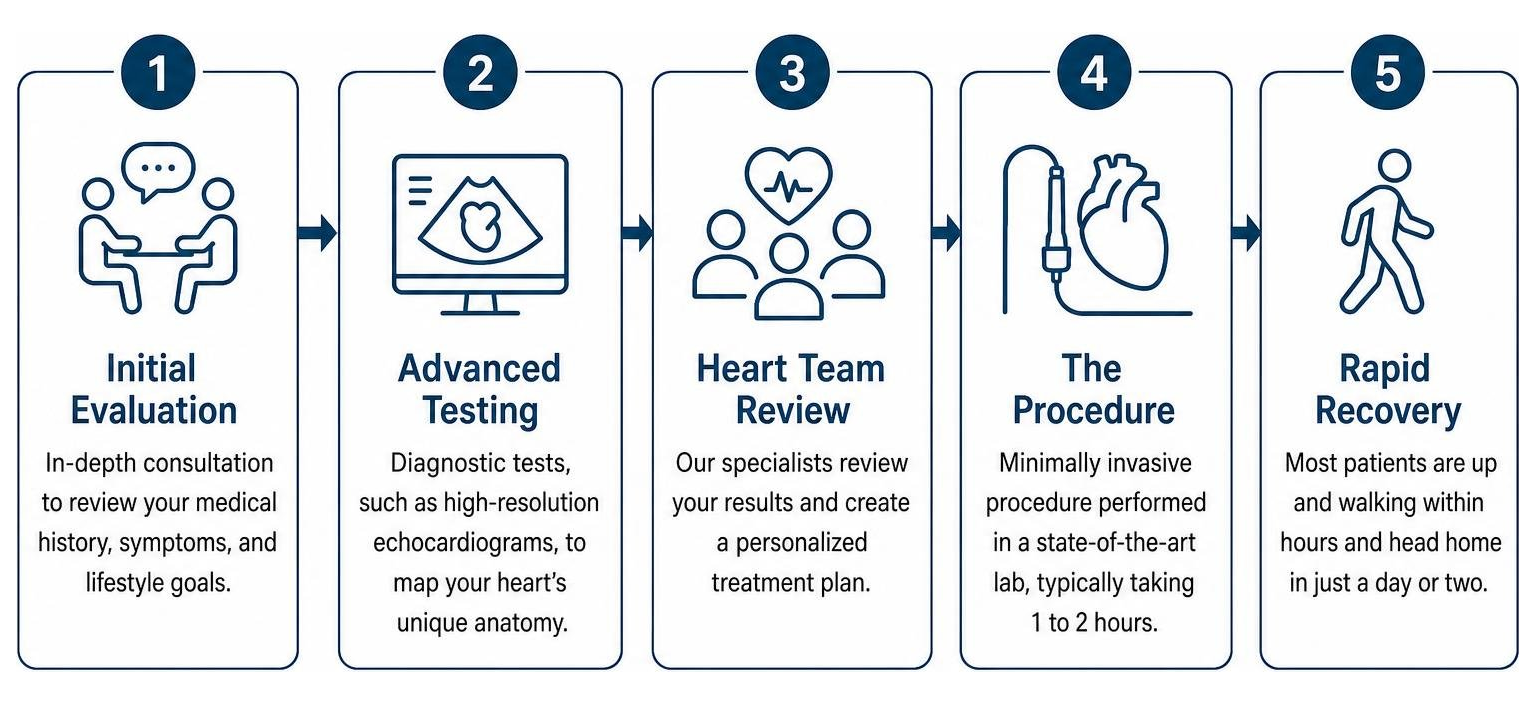
- Initial Evaluation: We begin with an in-depth consultation, reviewing your medical history, symptoms, and lifestyle goals.
- Advanced Testing: We perform necessary diagnostic tests, such as high-resolution echocardiograms, to map out your heart’s unique anatomy.
- Heart Team Review: Our specialists meet to discuss your results and tailor a personalized treatment plan—whether that involves medication, a minimally invasive procedure, or surgical referral.
- The Procedure: If a transcatheter procedure (like TAVR or WATCHMAN) is recommended, it is performed in a state-of-the-art laboratory, typically taking just 1 to 2 hours.
- Rapid Recovery: Most patients who undergo minimally invasive procedures are up and walking within hours and head home in just a day or two.
- Cardiac Rehabilitation & Follow-Up: We partner with local cardiopulmonary rehabilitation programs to help you safely regain your strength, while scheduling regular check-ups to monitor your long-term heart health.
To learn more about how we put you at the center of everything we do, Learn about our patient-centered care model.
Frequently Asked Questions About South Boston Heart Valve Clinic Services
What is the difference between coronary artery disease and structural heart disease?
Coronary artery disease (CAD) is a plumbing problem within the blood vessels (coronary arteries) that supply oxygen to the heart muscle, often caused by plaque buildup. Structural heart disease, on the other hand, refers to defects or wear-and-tear in the heart’s actual physical structures, such as the heart valves, walls, or chambers.
How long is the recovery time after a transcatheter valve procedure like TAVR?
Because transcatheter procedures are minimally invasive and do not require opening the chest, recovery is remarkably fast. Most patients spend only one or two nights in the hospital and are able to return to light, daily activities within a week—a stark contrast to the 2 to 3 months of recovery typically required for traditional open-heart surgery.
Do I need a referral to see a heart valve specialist in South Boston?
While many of our patients are referred to us by their trusted primary care providers, we also welcome self-referrals from individuals experiencing heart symptoms or seeking a expert second opinion. To find the right specialist for your needs, Meet our local heart providers.
Conclusion
Your heart health is too important to put on the back burner. If you or a loved one is dealing with the symptoms of heart valve disease, you do not have to travel far to receive exceptional, compassionate care. As your local South Boston heart valve clinic partner, Halifax Heart Center is here to provide the advanced diagnostic testing, personalized treatment plans, and dedicated support you need right here in Southside Virginia.
Let us help you take the first step toward a healthier, more active life. Schedule your heart evaluation today.