
Top Qualities to Look For in a South Boston Heart Valve Specialist
Why Choosing the Right South Boston Heart Valve Specialist Matters
Finding a South Boston heart valve specialist is one of the most important health decisions you can make — especially if you’re dealing with symptoms like chest pain, shortness of breath, or fatigue.
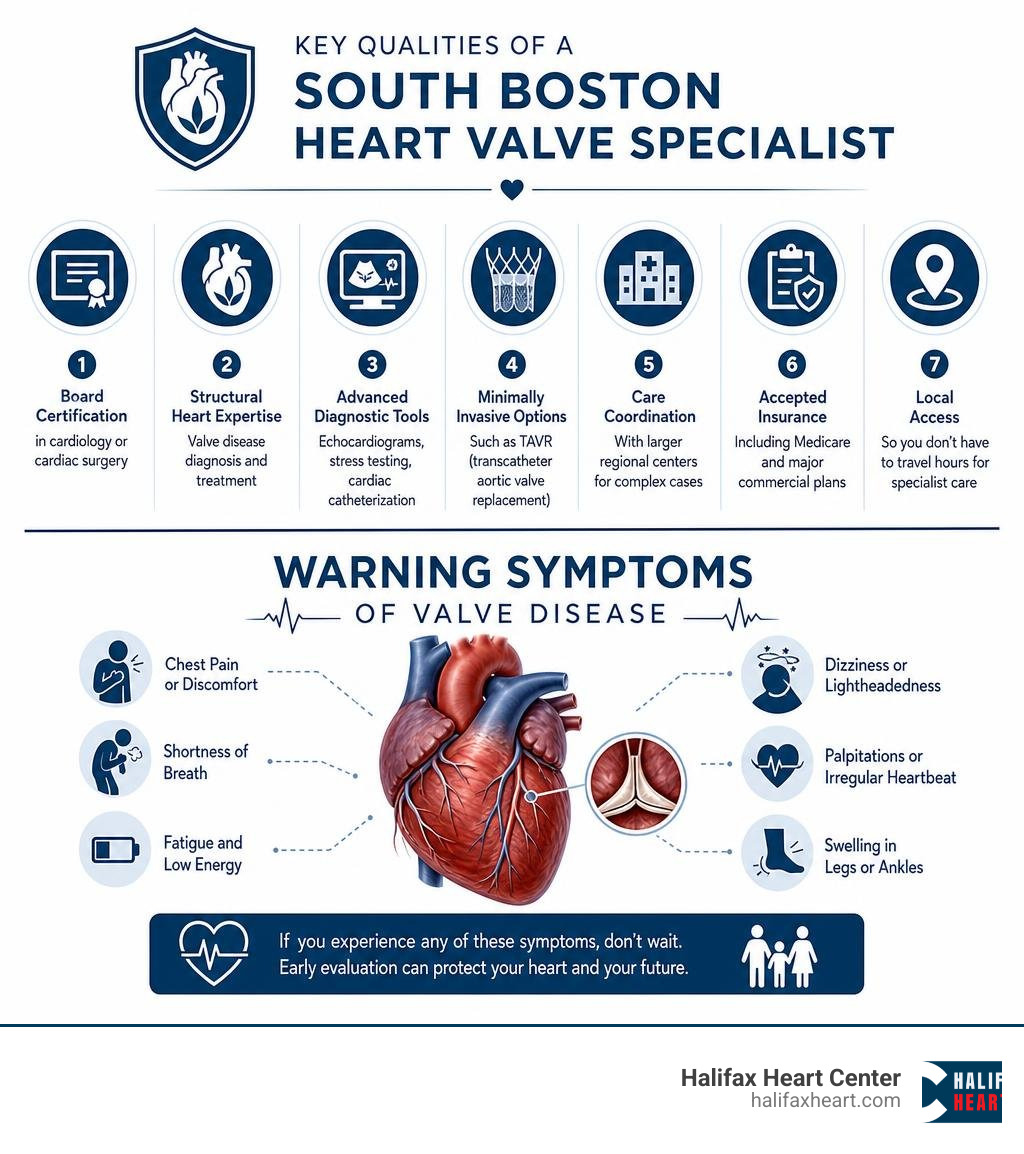
Here are the top qualities to look for when choosing a heart valve specialist in South Boston, VA:
- Board certification in cardiology or cardiac surgery
- Structural heart expertise — including valve disease diagnosis and treatment
- Advanced diagnostic tools — echocardiograms, stress testing, cardiac catheterization
- Minimally invasive options — such as TAVR (transcatheter aortic valve replacement)
- Care coordination with larger regional centers for complex cases
- Accepted insurance — including Medicare and major commercial plans
- Local access — so you don’t have to travel hours for specialist care
Heart valve disease affects how well your heart pumps blood. If a valve becomes too narrow or starts leaking, your heart has to work harder — and over time, that causes real damage. The good news: with the right specialist, most valve conditions are very treatable.
At Halifax Heart Center, we provide compassionate, expert cardiovascular care right here in South Boston, VA, serving patients throughout Halifax County and Southside Virginia — and our team has deep experience evaluating and treating the full spectrum of heart valve conditions that our community faces. As your trusted South Boston heart valve specialist, we’re committed to helping you get the right diagnosis, the right treatment, and the right support close to home.
1. Board Certification and Specialized Structural Heart Credentials
When you begin your search for a South Boston heart valve specialist, the very first thing you should look at is their credentials. You wouldn’t hire a plumber to fix your computer, and you certainly don’t want a general practitioner trying to navigate the delicate leaflets of your aortic valve.
Ideally, you want a cardiologist who is board-certified in cardiovascular disease. Board certification means the physician has gone through rigorous, voluntary testing to prove they have the exceptional knowledge and skills required to provide top-tier care.
Furthermore, you should seek out a specialist with dedicated training in “structural heart disease.” While general cardiologists focus on the plumbing of the heart (like blocked arteries) or the electrical system (like arrhythmias), structural heart specialists focus on the physical parts of the heart—the valves, walls, and chambers.
When you evaluate Heart Providers South Boston VA, look for those who have spent years focused on structural heart care. This focus ensures they understand the latest guidelines, are skilled in advanced imaging, and know exactly when a valve needs to be watched and when it needs to be repaired.
Finding a South Boston Heart Valve Specialist with Advanced Training
Advanced fellowship training is another gold standard. Many structural heart specialists complete extra years of training in interventional cardiology or adult congenital heart disease.
For example, across the country, leading experts like Dr. Piotr Sobieszczyk, MD and adult congenital heart specialists like Dr. Anne Marie Valente, MD | Adult Congenital Heart Disease Specialist in Boston, MA (who also shares her expertise through Anne Marie Valente | Boston Children’s Hospital) have dedicated decades to researching and treating complex valve and structural issues. Similarly, pediatric and congenital experts like Christopher Valle | Boston Children’s Hospital emphasize how early structural differences shape heart health later in life.
While these national figures practice at major academic hubs, they represent the level of training and clinical excellence you should look for locally. To see how local providers stack up and to explore your options right here in Southside Virginia, you can consult resources like the 20 Best Cardiologists Near South Boston, VA – Healthgrades directory.
When you Choose Cardiologist in South Boston VA, make sure they are well-versed in these advanced structural protocols so you receive world-class care without the long-distance drive.
2. Comprehensive Diagnostic Capabilities and Valve Disease Expertise
A great heart valve specialist is only as good as the diagnostic tools at their disposal. Heart valve disease can be incredibly sneaky. It often develops slowly over several years, and your body might adapt to the changes so gradually that you don’t even realize you are getting sicker.
To catch these issues early, your specialist must have expertise in identifying and treating the three most common types of valve issues:
- Aortic Stenosis: A narrowing of the aortic valve that restricts blood flow from your heart to the rest of your body.
- Mitral Regurgitation: A leaky mitral valve that allows blood to flow backward into the lungs, causing shortness of breath.
- Tricuspid Valve Disease: Issues with the valve on the right side of the heart, which can lead to severe swelling in the legs and abdomen.
At Halifax Heart Center, we emphasize the importance of early and accurate detection. You can learn more about how we identify these conditions on our dedicated Heart Disease Diagnosis Treatment South Boston VA page.
Diagnostic Tests Used by a South Boston Heart Valve Specialist
To pinpoint exactly what is going on inside your heart, a specialist will use a variety of tests. Here is what you can expect during an evaluation:
- Echocardiogram: This is the absolute gold standard for valve disease. It uses ultrasound waves to create real-time images of your heart’s valves and chambers, showing how well blood is moving through them.
- Electrocardiogram (EKG/ECG): A simple, painless test that records the electrical signals in your heart to check for abnormal rhythms or signs of strain.
- Stress Testing: This test monitors how your heart and valves perform when you are exercising (usually walking on a treadmill). It helps determine if your symptoms are truly coming from your heart.
- Cardiac Catheterization: A minimally invasive procedure where a thin tube (catheter) is guided to your heart to measure pressures and take detailed pictures of your valves and blood vessels.
By combining these tests, a specialist can build a highly personalized treatment plan. To explore the diagnostic services we offer locally, visit our Heart Services South Boston VA page.
3. Access to Minimally Invasive Treatment Options
Gone are the days when treating a damaged heart valve automatically meant a major open-heart surgery, a week in the hospital, and a grueling three-month recovery. Today, advanced medicine allows us to repair or replace valves using tiny incisions and flexible tubes called catheters.
When choosing your specialist, ask if they have experience with or provide access to these cutting-edge, minimally invasive procedures:
- Transcatheter Aortic Valve Replacement (TAVR): Instead of cutting open the chest to remove a damaged aortic valve, a specialist inserts a new, collapsible valve through a small incision in the groin or chest. The new valve is guided through a blood vessel, expanded inside the old valve, and takes over the job of pumping blood immediately.
- Transcatheter Edge-to-Edge Repair (TEER): Often referred to using devices like the MitraClip, this procedure repairs a leaky mitral valve by clipping its leaflets together, significantly reducing backward blood flow.
- Left Atrial Appendage Occlusion (LAAO): For patients with atrial fibrillation (AFib) who cannot tolerate long-term blood thinners, a quarter-sized implant can be placed to seal off the left atrial appendage, drastically reducing the risk of stroke.
To help you visualize the difference, here is a quick comparison of what these modern options look like compared to traditional surgery:
| Feature | Traditional Open-Heart Surgery | Minimally Invasive Procedures (TAVR / TEER) |
|---|---|---|
| Incision Size | Large chest incision (sternotomy) | Tiny puncture in the groin or small chest incision |
| Anesthesia | General anesthesia | Conscious sedation or light general anesthesia |
| Hospital Stay | 5 to 7 days | 1 to 2 days (often discharged within 30 hours) |
| Recovery Time | 8 to 12 weeks | 1 to 2 weeks |
| Pain & Scarring | Significant | Minimal |
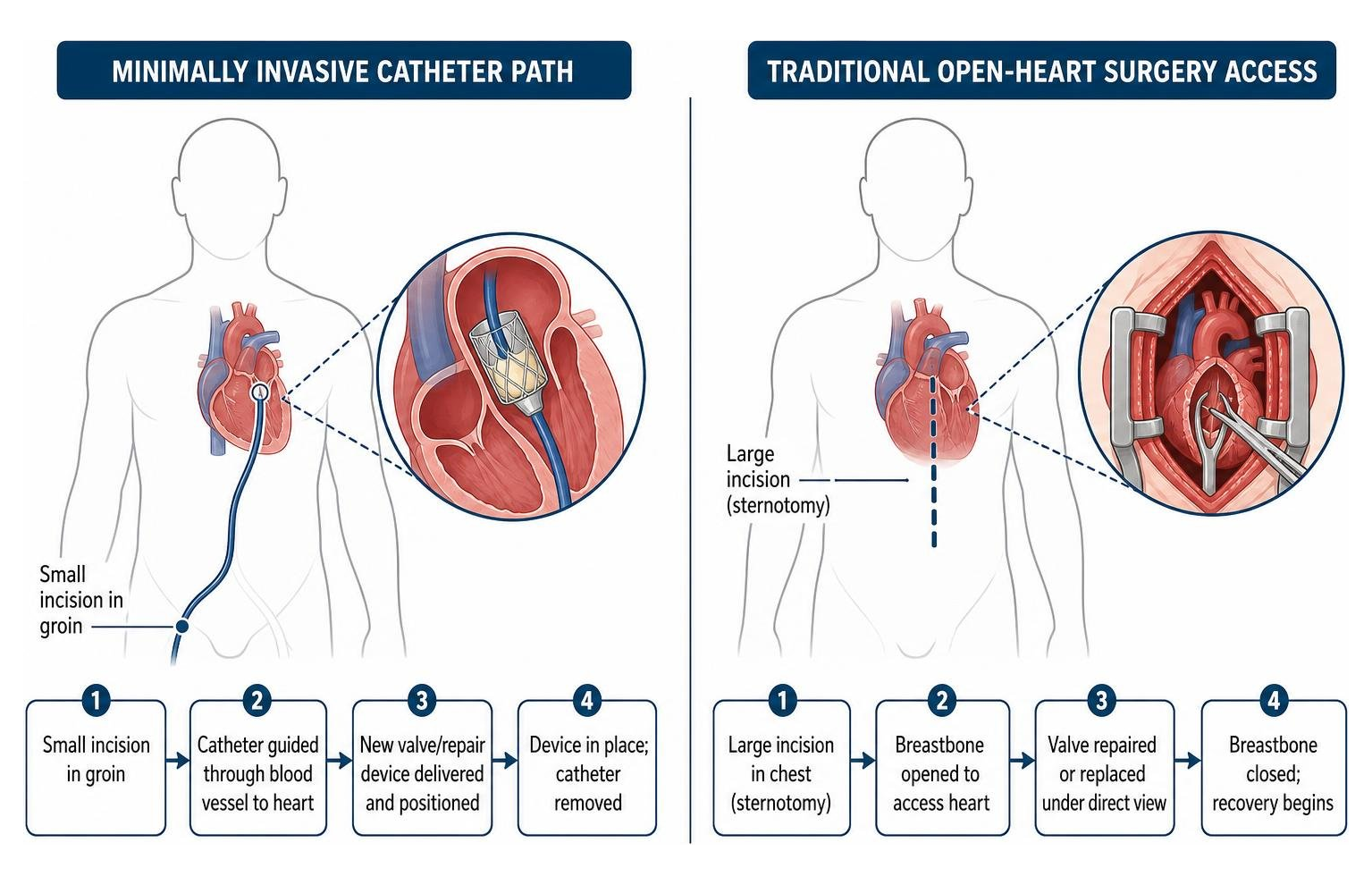
These modern procedures have revolutionized cardiac care, allowing even high-risk or elderly patients to receive life-saving treatments safely and get back to their normal lives in record time.
4. Seamless Care Coordination with Major Regional Medical Centers
While we are proud to offer comprehensive diagnostic testing and preventive care locally, some highly complex structural heart cases or advanced surgeries require the specialized resources of major tertiary medical centers (such as those in Richmond or other major hubs).
A top-tier South Boston heart valve specialist understands this and maintains close, collaborative relationships with regional surgical teams.
Our care model is designed to give you the best of both worlds:
- Local Convenience: We perform your initial evaluations, diagnostic imaging, and routine follow-up care right here in South Boston, saving you from making multiple exhausting trips to a distant city.
- Expert Coordination: If you require an advanced procedure like a TAVR or complex surgical reconstruction, we coordinate directly with elite regional surgeons. We share your records, discuss your case in multidisciplinary meetings, and help schedule your procedure.
- Seamless Transition: After your procedure is complete, you transition back to our local clinic for your recovery, medication adjustments, and cardiac rehabilitation.
For complex congenital cases or highly specialized reconstructions, having a local doctor who knows how to navigate the wider medical landscape is invaluable. Leading surgeons like Dr. Serguei Melnitchouk, MD – Boston, MA – Cardiac Surgery emphasize that a multidisciplinary approach—where local cardiologists and urban surgical centers work hand-in-hand—consistently yields the best long-term outcomes for patients.
When you work with a dedicated Heart Doctor South Boston VA, you are never left to navigate this complex system alone.
Choosing Your South Boston Heart Valve Specialist
As you make your decision, technical skill is only half of the equation. You also want a care team that listens to your concerns, explains your options in plain English, and respects your time. Look for a practice with positive patient testimonials, convenient scheduling, and a supportive administrative staff.
Additionally, make sure the practice accepts your insurance. At Halifax Heart Center, we work with a wide range of providers, including Medicare, Medicaid, and major commercial insurance plans, to ensure our community has affordable access to life-saving cardiac care. If you are searching for a trusted Cardiologist Near Me South Boston VA, we are here to provide the personalized, high-quality care you deserve.
Frequently Asked Questions About Heart Valve Care
What symptoms should prompt an evaluation for heart valve disease?
You should schedule an evaluation with a specialist if you experience any of the following warning signs:
- Shortness of breath, especially during physical activity or when lying flat
- Unexplained chest pain, pressure, or tightness
- Severe fatigue or feeling unusually tired during routine daily tasks
- Dizziness, lightheadedness, or fainting spells
- Swelling in your ankles, feet, or abdomen
What is the recovery process like after a transcatheter valve procedure?
Because procedures like TAVR are minimally invasive, recovery is remarkably fast. Many patients are up and walking within hours of the procedure and are safely discharged from the hospital within 30 hours. Once home, you will participate in a medically supervised cardiac rehabilitation program to safely rebuild your strength and improve your overall cardiovascular health.
How do I schedule an appointment or get a referral?
Getting started is simple. While many patients are referred to us by their primary care doctors, you can also reach out to us directly. To take the first step toward protecting your heart health, visit our Halifax Heart Center Appointment page to request a consultation.
Conclusion
Your heart valves work tirelessly every second of the day to keep you moving. If you suspect you have a valve issue, or if you have already been diagnosed and want an expert local opinion, finding the right South Boston heart valve specialist is the best way to regain your energy and peace of mind.
At Halifax Heart Center, we combine advanced diagnostic capabilities with a warm, personalized approach to care. We are proud to serve South Boston, Halifax County, and the broader Southside Virginia community, ensuring you never have to travel far for world-class heart care.
If you are ready to discuss your heart health with a team that puts you first, explore our Heart Disease Diagnosis Treatment South Boston VA options and schedule your evaluation with us today.